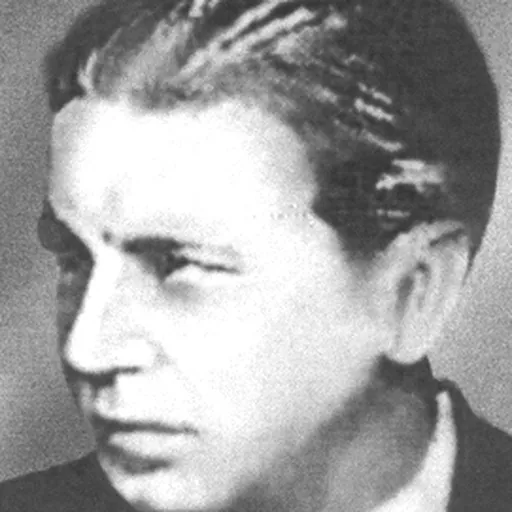
About Rudolf von Scheliha
Lived 1897 – 1942 (aged 45). Rudolf von Scheliha was a diplomat, resistance fighter, politician, legationsrat, jurist and german resistance to Nazism, known for Gestapo.
Rudolf "Dolf" von Scheliha (31 May 1897 – 22 December 1942) was a German aristocrat, cavalry officer and diplomat who became a resistance fighter and anti-Nazi who was incorrectly linked to the Red Orchestra espionage group.
He fought in World War I, an experience that defined his politics and made him a pacifist. He joined the German Foreign Office, was trained to be a diplomat and was sent to the embassy in Warsaw, in position of trust in the Foreign Office. In the years leading up to the Second World War, he became a committed opponent of the Nazi regime and of its antisemitic policies. In 1937, he was recruited by Soviet intelligence, while he served in Warsaw. When World War II started, he passed documents to Soviet intelligence through his contacts Rudolf Herrnstadt and later Ilse Stöbe.
In September 1939, he began working in the information department in the Foreign Ministry, which was established to counter enemy propaganda. As part of his position, photographs of atrocities against Jews and other people passed through his department and were used in propaganda. Appalled at what he saw, he began to resist and built a dossier of the worst images over several years. In 1940, he helped several of his Polish friends flee abroad after the Invasion of Poland, In 1941, when he learned of the murders of the Polish intelligensia during operation Sonderaktion Krakau, he protested to Reinhard Heydrich, which enabled him to save the lifes of several Polish academics. During that period, he continued to save documents for his portfolio. It was eventually smuggled to London in January 1942. Later in the war, he tried to warn Swiss diplomats about the Aktion T4 campaign. In June 1941, after the invasion of the Soviet Union, his controller Ilse Stöbe lost contact. Soviet intelligence tried several times to reinitiate communications with her but were unsuccessful. A blunder by Soviet intelligence that exposed Stöbe's address, led her and von Scheliha to being discovered in July 1942 by German military intelligence. Stöbe was arrested in 12 September 1942, Von Scheliha on 29 October 1942. He was tried by the Reichskriegsgericht and executed by hanging in Plötzensee Prison on 14 December 1942.
After the war, Von Scheliha was seen as a traitor and his wife Marie Louise von Scheliha and children were left destitute. In the decades after the war, she worked tirelessly to rehabilitate her husbands reputation, eventually succeeding in the late 1990's with the help of Ulrich Sahm, who wrote a biography of von Scheliha that described him as a "daring and honourable resistance fighter".
Life Rudolf von Scheliha was born in Zessel, Oels, Silesia (now Cieśle, Oleśnica, Poland), as the son of the Prussian aristocrat and officer Rudolph von Scheliha (1865–1946). His mother was the Marie Luise von Scheliha née Miquel (1876–1942) who was a daughter of Lord Mayor of Frankfurt and Prussian Finance Minister Johann von Miquel. His younger sister, Renata von Scheliha (1901–1967), was a classical philologist.
In 1927, Rudolf married the noblewomen Marie Louise von Scheliha (1904–2003) née von Medinger, the daughter of a large landowner and industrialist. The couple had two daughters: Sylvia, born on 14 November 1930, and Elisabeth, born in 1934. Sylvia became an engineer, and Elisabeth received a doctorate in chemistry, with the latter surviving to 2016 and dying in Adliswil.
Military He served as an army officer in World War I and volunteered after his graduation in 1915. Scheliha volunteered at the same regiment, the Cavalry Rifle Regiment, Guard Cavalry Rifle Division, in which his father and uncle had served; its officers were drawn from the nobility.
On 8 August 1918, he was shelled in a ditch with two brothers, who were blown up, and one brother died months later from his injuries. Scheliha was buried; when he was rescued, his hair had turned grey, and he was suffering from shell shock, a type of post-traumatic stress disorder. His parents were shocked at the change but he never spoke of his experiences. The experience left a pacifist. He was honoured for his efforts by both Iron Crosses and the Silver Wound Badge.
Education After the war, he studied law in Breslau. In May 1919, he moved to the University of Heidelberg, where he joined the Corps Saxo-Borussia that year and came in contact with republican and anti-totalitarian groups. He was elected to the AStA, the General Student Committee (Students Union), where he vehemently opposed the students' antisemitic riots.
Career
After his examination in 1921, he became first clerk at the Court of Appeal in 1922. In February 1922, von Scheliha joined the regional office of the Foreign Office in Hamburg. who worked as a trade envoy in trade policy department in Moscow. The murder spurred Von Scheliha to make a list of 22 Polish intellectuals that he wanted to place under police protection to ensure their protection. Von Scheliha wanted to save them and to stop enemy propaganda from reporting they had been killed. He hoped to recruit them as allies so they would report abroad on Nazi atrocities in Poland and at the same act as mouthpieces for German propaganda, in effect making them indispensable to the Nazi state. Amongst those on the list was the art historian Mieczysław Gębarowicz, the librarian and historian , the bibliologist and philosopher Aleksander Birkenmajer, Bishop Andrey Sheptytsky, historian of economics Franciszek Bujak and paediatrician . Von Scheliha added Countess Irene Poninski, the wife of Count Konstantin Bninski after the family fled to Lemberg in 1940. Von Scheliha submitted the list to the Reich Security Main Office (RSHA) on 7 October 1941 with the assurance that all the folk on the list were willing to describe Soviet atrocities to aid in the formation of German propaganda, thereby keeping them alive. However, from the perspective of the Polish resistance, Von Scheliha who can be attributed to the resistance "may have gone the furthest... but was largely an anonymous helper, even if his existence was known".
The Nazi Culture in Poland The German academic Susanne Kienlechner believes that von Scheliha along with his colleague, the diplomat, Johann von Wühlisch (1889–1943) were involved in the development of The Nazi Culture in Poland book. The document, whose writers are not fully known, is considered one of the most detailed contemporary accounts of the early Holocaust as well as "Operation Tannenberg" and the Intelligenzaktion in Poland between 1939 and 1942. It describes the persecution of the church, the school and the university system; the dark role of the Institute of German Ostarbeiter as the driver of cultural rescheduling; the relocation and the sacking of libraries; the devastation of monuments; the looting of archives, museums and the private collections of the Polish nobility; the subversion of Polish theatre, music and press; and the forcible destruction of other cultural institutions by the Nazi Party. The document was completed in January 1942 and then recorded onto microfilm and smuggled to Britain at a high personal risk to those involved.
Kienlechner's evidence for von Scheliha's involvement rests with the quality and precision of the information contained in the document. Kienlechner believes the precise dating of historical facts, the correct names of the Nazis involved and their victims, the details of the theft and destruction of cultural assets and the correct interpretation of Nazi occupation policy in Poland, along with photographs and Nazi newspaper cuttings points to von Scheliha and Johann von Wühlisch as one source for the 200,000 word document.
In autumn 1941, Von Scheliha invited his Polish friend, Count Konstantin Bninski, to Berlin under the pretext of writing propaganda texts for the Foreign Office against the Polish resistance. The German diplomat and historian considered it probable in his 1990 biography that von Scheliha passed material to Bninski in Warsaw that contained a comprehensive documentation of crimes during the German occupation. Kienlechner believes that Bninski then brought that material to Berlin to write The Nazi Culture in Poland for the Polish government-in-exile, who in turn published the document as a novel from 1944 to 1945.
Swiss warnings In February 1942, von Scheliha ended his attempts to name and send out exiled Poles as helpers for German propaganda to stop endangering them and himself. At the same time, he closed the small Polish research department in the foreign office for fear of its members' lives. He began to despair and realised his powerlessness. That spring, he travelled to Switzerland, where his sister lived and provided Swiss diplomats with information on Aktion T4, including sermons by Bishop Clemens August Graf von Galen on the murders of the mentally ill. He also sent reports on the Final Solution, including the construction and the operation of more extermination camps, and on Hitler's order to exterminate European Jews.
Von Scheliha made further trips to Switzerland in September and October 1942. On his final trip he warned Carl Jacob Burckhardt of the International Committee of the Red Cross about the Final Solution. Burckhardt in turn informed the American consul in Geneva which was the first news of the Nazi extermination camps reaching the allies.
No contact Shortly after the German invasion of the Soviet Union on 22 June 1941, the Soviet embassy in Berlin ceased operation and its legation expelled. At that point Soviet intelligence lost the connection with Stöbe. At the end of August 1941, Soviet intelligence sent GRU agent Anatoly Gurevich to Berlin to reestablish contact with Stöbe, but couldn't locate her. In May 1942, Bernhard Bästlein assisted Erna Eifler and Wilhelm Fellendorf who were Soviet agents who had parachuted into Germany in May 1942 with wireless telegraphy sets and been instructed to find Ilse Stöbe to re-establish communications. Eifler failed to contact Stöbe, who was then in Dresden. Eifler was arrested on 15 October and Fellendorf a short while later. Another Soviet agent, Heinrich Koenen, was dropped on 23 October in a third attempt to find Stöbe. Koenen was on a mission to pass all material that had been collected by Stöbe from von Scheliha, but he was arrested in Berlin on 26 October 1942.
Shortly after von Scheliha had returned from Switzerland, Stöbe was arrested on 12 September, followed by von Scheliha on 29 October in the office of the Foreign Office's personnel director.
Arrest and death He was charged by the Second Senate of the Reichskriegsgericht (Reich Military Court) and falsely charged to have been a member of the Red Orchestra and sentenced to death on 14 December 1942 for "treason for money" (Landesverrat gegen Geld). At the trial conducted by Manfred Roeder, von Scheliha was described as a bon vivant whose need for money brought him into the sphere of Soviet intelligence resulting in him eventually becoming an informant, that led him to take considerable sums of money to betray German secrets. That statement is based on a 1954 affidavit written by Judge who was one of the presiding judges at von Scheliha's secret trial. He also stated that political considerations played no part in the trial. The supposed evidence for von Scheliha's arrest was a payment slip found in the pocket of Heinrich Koenen. However, there was no evidence for connecting von Scheliha to the Red Orchestra, which was the supposed reason the death penalty. The indictment, Gestapo files, the court testimonies, the judgement and the reasons for the judgement have not been found, so it impossible to determine if the verdict was correct. Ulrich Sahm believes that von Scheliha was arrested and tried, so as to remove a politically dangerous anti-nazi, who by 1942 was seen as an enemy of the Nazi state.
In a written statement of 12 July 1952, judge and diplomat stated that von Scheliha was tortured by the Gestapo to obtain a confession and believed that he wasn't allowed a defence lawyer during trial. Another person who attended the trial was the Foreign Office legal representative . After the war, he informed the director of personnel at Foreign Office, Hans Schroeder (who wasn't allowed to attend), that he considered the sentence as effectively "judicial murder". At best, von Scheliha should have been subject to an internal disciplinary hearing at the Foreign Office as the only thing they could prove was a dalliance with Ilse Stöbe. Simply, there was no evidence for the death penalty sentence.
On 22 December 1942, he was executed by hanging in Plötzensee Prison.
His wife, Marie Louise, was arrested on 22 December 1942 and taken to the women's prison in Charlottenburg. There, she was repeatedly interrogated and threatened but released on 6 November 1943. In the last days of the war, she fled with her daughters to Niederstetten via Prague. In Haltenbergstetten Castle, the former castle of the principality of Hohenlohe-Jagstberg, the family lived in a cellar mainly on mushrooms, berries and fruit.
Reappraisal
In West German historiography, in particular by the German historians Hans Rothfels, Peter Hoffman and the Dutch historian , von Scheliha was not seen as a resistance fighter but as a spy for the Soviet services. In the process, the acts of interrogation and the Gestapo records continued to be uncritically classified as "sources" that were adopted by journalists and historians, to which former Nazi prosecutors such as Manfred Roeder and , the former president of the Second Senate of the Reichskriegsgericht, contributed after 1945.
Reparations In 1952, Von Scheliha's widow Marie Louise von Scheliha applied for compensation but was refused as her husband was not classified as a resistance fighter, but as a traitor. The Foreign Office adopted this attitude and for more than 50 years it refused to recognise Von Scheliha due to the findings of the 1942 Gestapo investigation. This was illustrated on 20 July 1961, when the Foreign Office in Bonn commemorated eleven of its employees, who were executed as resistance fighters, with a plaque, including Albrecht Graf von Bernstorff, Ulrich von Hassell, Adam von Trott zu Solz and Friedrich-Werner Graf von der Schulenburg. Von Scheliha was not mentioned because he continued to pass on information to the Soviet Union, which was considered a betrayal. In 1956, Marie Louise von Scheliha petitioned the West German president Theodor Heuss who granted her a "revocable maintenance contribution amounting to the legal widow's daily needs". The size of the contribution left her impoverished at the same time as widows of Nazis prosecutors had received full pension rights. In 1993, Von Scheliha made a request to the Württemberg State Office for a full pension benefits and was again refused as Rudolf von Scheliha has been subject to a "proper trial".
Trial From the mid-80's onwards, the retired diplomat Ulrich Sahm campaigned to rehabilitate von Scheliha. It wasn't until 1990, that he was rehabilitated in the eyes of historians with the publication of Sahm's meticulously researched book, "Rudolf von Scheliha 1897–1942. Ein deutscher Diplomat gegen Hitler" (Rudolf von Scheliha 1897-1942: A German diplomat against Hitler). Sahm reframes von Scheliha as a "daring and honourable resistance fighter". The release of the book was the likely basis for the 8th Chamber of (reference number 8K 5055/94), to rule on 25 October 1995 that Scheliha had been sentenced to death not for espionage but in a sham trial for his opposition to Nazism, which overturned the 1942 verdict and legally rehabilitated von Scheliha. The court ruled that von Scheliha has acted out of ideological motives, not for monetary reasons, i.e. "Scheliha had been persecuted because of his political opposition". According to witness statements and Sahm's historical research it was proved that von Scheliha did not even know that the information he had passed on to Ilse Stöbe and Rudolf Herrnstadt had been passed on to the Soviet Union. This proved that it was inconceivable that he committed "paid treason".
Awards and honours
On 21 December 1995 at the Foreign Office, in a ceremony with State Secretary , attached an additional board with the inscription "Rudolf von Scheliha 1897–1942". On 18 July 2000 in a ceremony at the new Foreign Office in Berlin, both boards were brought together and the names listed in the sequence of death dates. Von Scheliha's name leads the list. On 9 July 2014 Ilse Stöbe received the same honour at the Foreign Office.
Odonymy In Neuallermöhe, a street was named in memory of von Scheliha on 5 May 1997. There is a street in Gotha named Schelihastraße, but is named after the Oberhofmeister Ludwig Albert von Scheliha, who owned a large garden plot on the street on which the Protestant church stands today.
Don’t just read it —
keep it.
Full-length biographies made to live with: read them, listen on the way to work, watch them tonight.
- E-book
- Audio
- Video
Instant download · yours to keep · every purchase keeps this site free
Important facts
People in Rudolf von Scheliha's life
Named in this biography and alive at the same time
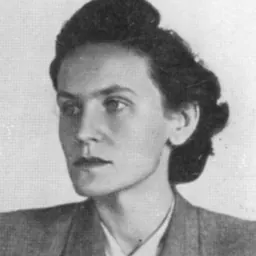



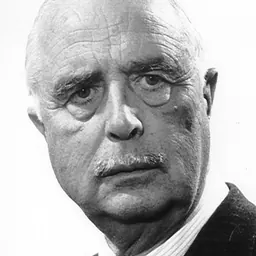
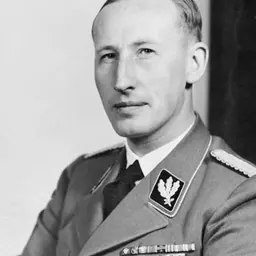
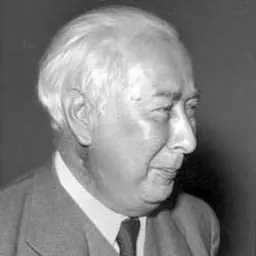
Related people
Same field, nearest in time

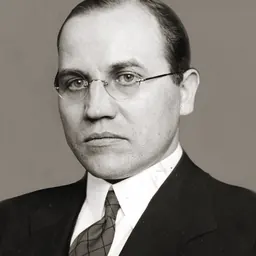
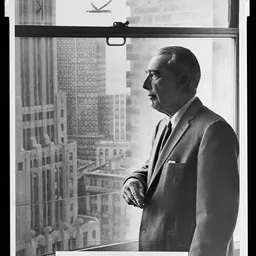
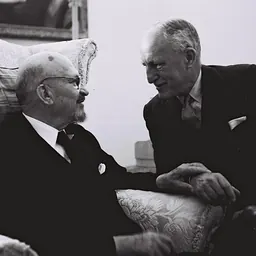
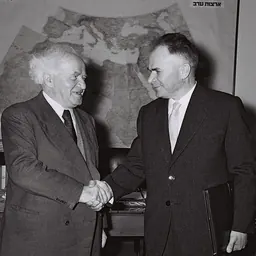
Contemporaries
People whose lives overlapped Rudolf von Scheliha's

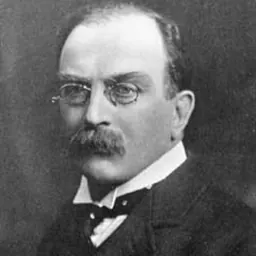

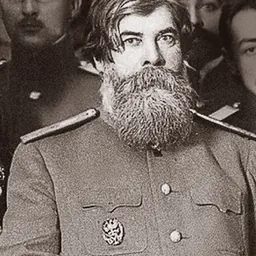
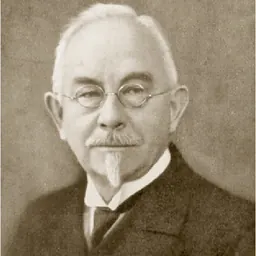

Frequently asked questions
Who was Rudolf von Scheliha?
German diplomat (1897-1942)
When was Rudolf von Scheliha born?
Rudolf von Scheliha was born on 31 May 1897 in Cieśle, Lower Silesian Voivodeship.
When did Rudolf von Scheliha die?
Rudolf von Scheliha died on 22 December 1942 in Berlin, Plötzensee Prison.
What was Rudolf von Scheliha's occupation?
Rudolf von Scheliha was a diplomat, resistance fighter, politician, legationsrat, jurist and german resistance to Nazism.
What was Rudolf von Scheliha known for?
Rudolf von Scheliha was known for Gestapo.
What nationality was Rudolf von Scheliha?
Rudolf von Scheliha's recorded nationality: German Reich.
Sources & further reading
· Wikipedia: Rudolf von Scheliha
· DBpedia: Rudolf von Scheliha
Cite this page
APA: Biography.guide. (2026). Rudolf von Scheliha. https://biography.guide/rudolf-von-scheliha/
MLA: "Rudolf von Scheliha." Biography.guide, https://biography.guide/rudolf-von-scheliha/.
Chicago: "Rudolf von Scheliha." Biography.guide. https://biography.guide/rudolf-von-scheliha/.
Data last updated: 2026-09-23 · Spot an error? Report a correction.
Portrait: Wikimedia Commons · author & licence
Page generated 2026-09-27 05:08 UTC