
About Rudolf Pleil
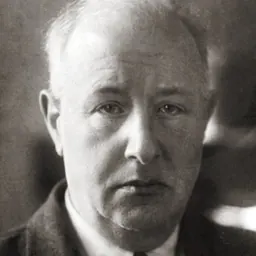
Lived 1924 – 1958 (aged 33). Rudolf Pleil was a German serial killer.
Rudolf Pleil (7 July 1924 – 18 February 1958) was a German serial killer known as Der Totmacher (literally: "The Deadmaker"). He was convicted of killing a salesman and nine women, but claimed to have killed 25 people. Many of his crimes took place in the Harz mountain range.
Early life Pleil was born on 7 July 1924, in a small village close to the border of the former Czechoslovakia. His father was an industrial worker and communist. After the seizure of control by the Nazis, he was arrested and then moved with his family to the neighbouring Czech town of Vejprty. At the age of nine, Pleil had to support his parents through border smuggling and was repeatedly arrested. He did not attend school regularly because he had to earn money for his unemployed parents and his sister. His brother died prematurely and his older sister submitted to forced sterilization due to her epilepsy, according to Nazi law. At the age of 13, he had his first sexual experience with a prostitute.
In 1939, when he was 15, he left home and began working as a butcher, but quit after a few weeks. He worked as a shipboy on barges on the Elbe and Oder. Here too, he operated smaller, illegal businesses. In the summer of 1939, he was hired as a machine boy on a merchant ship to South America. After the beginning of the Second World War, he came to the Kriegsmarine, where he was sentenced to one year in prison for theft. On 26 October 1943, he was found unfit for service due to epileptic seizures. After his dismissal worked as a waiter, he continued to suffer from seizures, which is why, according to a medical report, he was supposed to be sterilized. A bomb attack destroyed the operating room a few days before the scheduled appointment. Pleil had previously fathered an illegitimate child, which was taken care of by his sister.
Murders Pleil became a cook in a labor camp, where he killed and ate cats. After the invasion of the Red Army, he was hired as an auxiliary policeman in his home village. During this time he claimed that in his hometown to have shot and killed a drunken looting Soviet soldier while robbing him. However, he managed to escape punishment for this crime, as local residents helped bury the body in the forest. Pleil married a young woman whom he had impregnated. Around the same time, he began sexually assaulting women at night. He admitted to having committed murders as early as 1945, but this could not be proven.
After the war, he worked as a sales representative, eventually starting his own small business on the side; he was soon fired, however, and his enterprise went out of business. In 1946, he moved from Zöblitz to Zorge in the southern Harz.
Murders From 1945 to 1950, 13 police officers were murdered in the border area of this region, which led to the fact that police went on patrol only in groups. It was not difficult for frontier workers such as Pleil and his two accomplices to evade the patrols, especially as police authority ended at the zonal border. In addition, individual police departments, such as the Kriminalpolizei and the police, did not cooperate effectively. So it came to an investigation of murders of women at the border area to a more serious one, as a Schutzpolizist from Vienenburg reported that body parts were found in a well there. In fact, the corpses of two women whom Pleil had killed on that mountain were also found. Pleil and his accomplices killed at least three other women before they were arrested. When Pleil worked in a Celle prison as an executioner, he boasted that he had prior experience with killing, and had left two of his victims in the Vienenburg Well. Shortly afterwards, he was arrested and charged with the murders of several women in the border area. Pleil had already been sentenced to 12 years in prison on a manslaughter charge by the Landgericht Braunschweig.
Background to the arrest The most frequent references to Rudolf Pleil came from the Harz, but also in other regions, one knew about him and pointed towards this person. A resident of Hof, who maintained a small pension for returnees in the 1940s and was informed about the conditions on the border, thought that he still had an impressive memory of Pleil.
Pleil's arrest was initially arrested for killing Hermann Bennen during a physical altercation at a border crossing; Pleil had killed Bennen with a hatchet. Bennen was his second male victim. The court found him guilty of manslaughter, as he was heavily intoxicated at the time. If he had been found guilty of murder, he could have received a death sentence, as the West German judiciary still permitted capital punishment at the time. The remaining crimes remained unsolved, for which the police and judicial authorities shared a superficial approach. The fact that many of the victims were not from the area was also considered, as they were often people uprooted as a result of the war and post-war conditions.
While in custody in Celle, Pleil finally confessed to further murders. In a memoir titled Mein Kampf - after Adolf Hitler’s autobiography - he claimed to have committed a total of 25 murders, and thus one more than Fritz Haarmann. In the book, he referred to himself as the "greatest murderer".
The accomplices
Karl Hoffmann, born in 1913 in Hausdorf, was a tailor of women's clothing by profession. He was considered brutal and callous, and killed to get stolen goods. He died in prison in 1976. Konrad Schüßler, from Leukersdorf, was an 18-year-old butcher. He was pardoned in the late 1970s.
During the trial, Pleil claimed to suffer from mental illness, in the hopes of being institutionalized in lieu of prison. This ploy was unsuccessful, however; three weeks after the start of the trial, on 17 November 1950, Pleil and his two accomplices were each sentenced to life imprisonment for multiple murders.
Death On 16 February 1958, Pleil hanged himself in his cell. Erich Helmer, a former prison chaplain, remembered that he was allowed to visit Pleil only under official supervision, as Pleil was considered dangerous. Helmer recalled that during one such visit, Pleil sat in his cell crying and showed him a letter from England in which Christian women wrote that they were praying for him. On that day, Pleil gave Helmer three notebooks, in which he had written a kind of autobiography entitled Mein Kampf - in which he boasted of having committed 25 murders. Another notebook bore the title “Without mercy I will kill the child and the old man, and after a hundred years one should still speak of me”. The criminal psychologist Ulrich Zander said in his analysis of Pleil that he was not stupid, but rather very devious. He examined a letter from Pleil and described it as showing a clear picture of Pleil's narcissism and egomania, particularly in his boasting of having a “special talent” as a "deadmaker". In 2007, filmmaker Hans-Dieter Rutsch directed the documentary film Der Totmacher Rudolf Pleil about the life of Rudolf Pleil for the Das Erste series Die großen Kriminalfälle. Hella Mock, the daughter of one of Pleil's victims, tells in a newspaper article about her mother's diaries.
Literature Wolfgang Ullrich: The case of Rudolf Pleil and comrades. In: Archive for Criminology, Volume 123, 1959, pp. 36–44, 101–110. Christian Zentner : Illustrated history of the Adenauer era. Munich 1984, , p 92ff. Gerhard Feix: Death came by mail. From the history of the FRG-Kripo. Publisher Das Neue, Berlin 1988. Hans Pfeiffer: The compulsion to the series - serial murderers without mask, Militzke publishing house, OA (1996), , (on- line (P. 163 ff.)), Retrieved on May 30, 2014 Kathrin Kompisch, Frank Otto: Monster for the masses the Germans and their serial killers. Militzke, Leipzig 2004. Kathrin Kompisch, Frank Otto: devil in human form. The Germans and their serial killers. Bastei-Lübbe, Bergisch Gladbach 2006. Reinhold Albert, Hans-Jürgen Salier: The "Deadmaker" Rudolf Pleil. In: border experiences compact: the border regime between South Thuringia and Bavaria / Hessen from 1945 to 1990. Leipzig / Hildburghausen 2009, , P. 277ff. Does the herring have a soul? In: Der Spiegel. No. 29, 1958 (online - Pleil Memoiren). Wiltrud Wehner-Davin: The case Rudolf Pleil, Totmacher aD, in: Kriminalistik - independent journal for the criminal science and practice 1985, pp. 339–341.
Don’t just read it —
keep it.
Full-length biographies made to live with: read them, listen on the way to work, watch them tonight.
- E-book
- Audio
- Video
Instant download · yours to keep · every purchase keeps this site free
Important facts
People in Rudolf Pleil's life
Named in this biography and alive at the same time




Related people
Same field, nearest in time



Contemporaries
People whose lives overlapped Rudolf Pleil's



Frequently asked questions
Who was Rudolf Pleil?
German serial killer (1924-1958)
When was Rudolf Pleil born?
Rudolf Pleil was born on 7 July 1924 in Bärenstein.
When did Rudolf Pleil die?
Rudolf Pleil died on 16 February 1958 in Celle.
What was Rudolf Pleil's occupation?
Rudolf Pleil was a serial killer.
What nationality was Rudolf Pleil?
Rudolf Pleil was German.
Sources & further reading
Cite this page
APA: Biography.guide. (2026). Rudolf Pleil. https://biography.guide/rudolf-pleil/
MLA: "Rudolf Pleil." Biography.guide, https://biography.guide/rudolf-pleil/.
Chicago: "Rudolf Pleil." Biography.guide. https://biography.guide/rudolf-pleil/.
Data last updated: 2026-09-20 · Spot an error? Report a correction.
Page generated 2026-09-27 04:58 UTC