
About Rudall Hayward
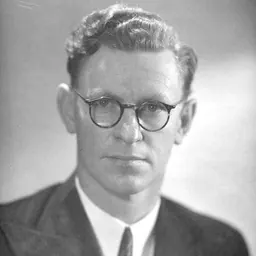
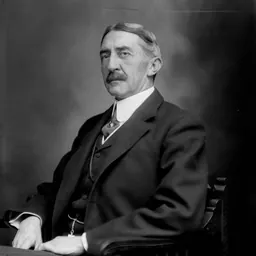
Lived 1900 – 1974 (aged 73). Rudall Hayward was a British film director, screenwriter, cinematographer and documentarian.
Rudall Charles Victor Hayward (4 July 1900 – 29 May 1974) was a pioneer New Zealand filmmaker from the 1920s to the 1970s, who directed seven feature films and numerous others.
Biography Hayward was born in Wolverhampton, England, and died in Dunedin while promoting his last film.
He was the son of Rudall and Adelina Hayward, who came to New Zealand in 1905. With Henry John Hayward (1866–1945) Rudall senior's brother, his parents were involved with entertainment and silent cinema in New Zealand, in West's Pictures and "The Brescians", a family of variety performers.
Rudall (junior) was educated at Wanganui Collegiate School from 1916 to 1917 and the Waihi School of Mines. He worked in Australia under Raymond Longford (who in 1915–16 was filming in New Zealand), on some of Longford's films: The Sentimental Bloke, On Our Selection, and Rud's New Selection.
He made his first two-reel comedy The Bloke from Freeman's Bay in 1920 (which his uncle Henry offered him £50 to burn). He was prosecuted by the Auckland City Council in the Police Court and fined £1 on each of two charges for putting up posters for The Bloke from Freeman's Bay in unauthorised places contrary to city by-laws, in October 1921.
His first feature was My Lady of the Cave (1922). In 1923 he married Hilda Moren and she worked with him on his later projects as an editor and producer: Rewi's Last Stand (1925), The Te Kooti Trail (1927), and The Bush Cinderella (1928).
In 1928–30 the couple made 23 two-reel "community comedies" with local settings and actors at various towns, and titles like: Tilly of Te Aroha, Hamilton’s Hectic Husbands, A Daughter of Dunedin, Winifred of Wanganui, Natalie of Napier, and Patsy of Palmerston. Lee Hill worked with Hayward on these, then went into competition with him.
His first sound film was On the Friendly Road (1936) with Colin Scrimgeour, and he remade Rewi's Last Stand with sound (1939). In 1943 he married the star of the movie, Ramai Te Miha.
After World War II he worked in England, then made his most successful film The Amazing Dolphin of Opononi about Opo the dolphin. He made educational films in New Zealand and overseas, then his final film To Love a Maori (1972), which was shot on 16 mm.
In the 1973 Queen's Birthday Honours, Hayward was appointed a Member of the Order of the British Empire, for services to the community.
Don’t just read it —
keep it.
Full-length biographies made to live with: read them, listen on the way to work, watch them tonight.
- E-book
- Audio
- Video
Instant download · yours to keep · every purchase keeps this site free
Important facts
Family & relationships
People in Rudall Hayward's life
Named in this biography and alive at the same time






Related people
Same field, nearest in time


Contemporaries
People whose lives overlapped Rudall Hayward's




Frequently asked questions
Who was Rudall Hayward?
New Zealand filmmaker (1900–1974)
When was Rudall Hayward born?
Rudall Hayward was born on 4 July 1900 in Wolverhampton.
When did Rudall Hayward die?
Rudall Hayward died on 29 May 1974 in Dunedin.
What was Rudall Hayward's occupation?
Rudall Hayward was a film director, screenwriter, cinematographer and documentarian.
What nationality was Rudall Hayward?
Rudall Hayward was British.
Sources & further reading
Cite this page
APA: Biography.guide. (2026). Rudall Hayward. https://biography.guide/rudall-hayward/
MLA: "Rudall Hayward." Biography.guide, https://biography.guide/rudall-hayward/.
Chicago: "Rudall Hayward." Biography.guide. https://biography.guide/rudall-hayward/.
Data last updated: 2026-09-22 · Spot an error? Report a correction.
Page generated 2026-09-27 05:32 UTC