
About Rubens Siqueira Maia
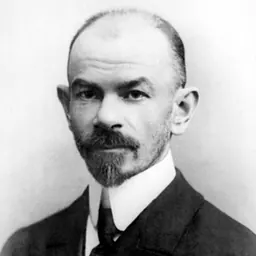
Lived 1908 – 1982 (aged 73). Rubens Siqueira Maia was a Brazilian physician and politician.
Rubem Siqueira Maia (February 15, 1908, in Curvelo – January 20, 1982, in Coronel Fabriciano) was a Brazilian physician and politician. After living in São João del-Rei during his childhood and graduating from the School of Medicine of Federal University of Minas Gerais (UFMG), he moved to Vale do Rio Doce to work on the construction of the Vitória-Minas Railway (EFVM) in the 1930s.
Later, he settled in Antônio Dias, where he was elected mayor. He stood out as one of the creators of the Hospital Siderúrgica (currently Doutor José Maria Morais Hospital) next to Belgo-Mineira Steel Company in the district of Melo Viana. He also created a pro-emancipation commission for the district, supported by his childhood friend and state deputy Tancredo Neves. This process culminated in the creation of the current municipality of Coronel Fabriciano in 1948, with Rubem being the first mayor elected the following year.
Origin and background Stretch of the Rubem Siqueira Maia Avenue in the Santa Helena neighborhood, in Coronel Fabriciano, Minas Gerais, Brazil. Rubem Siqueira Maia, son of José Ferreira Maia and Ana Siqueira Maia, was born in the city of Curvelo, in the state of Minas Gerais, on February 15, 1908. He was married to Nilza Winter Maia, with whom he had four children (Yole, Walter, Ana Lúcia, and Rubem Filho). After living in São João del-Rei during his childhood, he graduated from the School of Medicine of Federal University of Minas Gerais (UFMG)
Later on, he moved to the then district of Melo Viana, motivated by the implementation of the Belgo-Mineira Steel Company industrial complex in the town. He stood out as one of the first health professionals of the Hospital Siderúrgica (currently the Doutor José Maria Morais Hospital), created by the company in 1936 with the objective of fighting an epidemic of tropical diseases which advanced in the area. Rubem also worked in the district as a trader and contractor for Acesita in the 1940s.
Public life and politics Facade of the Costão in the House Saint Gerald, in Coronel Fabriciano, Minas Gerais, Brazil. The building, built in 1948, served as the first city hall. While working at the Hospital Siderúrgica, Rubem was elected mayor of Antônio Dias, affiliated to the Social Democratic Party (PSD); he conciliated the city administration and his work as a physician.
On March 15, 1949, Rubem Siqueira Maia became the first elected mayor of Coronel Fabriciano, next to Silvino Pereira as vice-mayor. He succeeded the intendant Antônio Gonçalves Gravatá, who had been sworn in after the city was established with the task of structuring the administration of the government until the first election was held. Rubem remained in the position until January 30, 1953, when he stepped aside to run, unsuccessfully, for state deputy, being succeeded by the then vice-mayor Lauro Pereira da Conceição. After the defeat in the legislative elections, he was nominated as the local superintendent of Belgo-Mineira by the company's president at the time, Louis Ensch, a position he held until 1964. During his mandate in the city, the highlights were the installation of the Professor Pedro Calmon State School (the first school building in the town), the structuring of the public electricity supply, and the paving of downtown Fabriciano. The José Ferreira Maia State School, located in the district of Cachoeira do Vale, in Timóteo, is named after the politician's father. This educational institution was created in 1955, initially named Doutor Rubem Siqueira Maia Rural School. On June 25, 2020, the Doutor Walter Luiz Winter Maia Emergency Care Unit (UPA) was inaugurated, named after one of Rubem's sons, also a physician and former director of the former Hospital Siderúrgica, who died in 2014. The health center is located in the neighborhood Silvio Pereira II, in Coronel Fabriciano.
Don’t just read it —
keep it.
Full-length biographies made to live with: read them, listen on the way to work, watch them tonight.
- E-book
- Audio
- Video
Instant download · yours to keep · every purchase keeps this site free
Important facts
People in Rubens Siqueira Maia's life
Named in this biography and alive at the same time





Related people
Same field, nearest in time


Contemporaries
People whose lives overlapped Rubens Siqueira Maia's


Frequently asked questions
Who was Rubens Siqueira Maia?
Brazilian doctor and politician
When was Rubens Siqueira Maia born?
Rubens Siqueira Maia was born on 15 February 1908 in Curvelo.
When did Rubens Siqueira Maia die?
Rubens Siqueira Maia died on 20 January 1982 in Coronel Fabriciano.
What was Rubens Siqueira Maia's occupation?
Rubens Siqueira Maia was a physician and politician.
What nationality was Rubens Siqueira Maia?
Rubens Siqueira Maia was Brazilian.
Sources & further reading
· Wikipedia: Rubens Siqueira Maia
· DBpedia: Rubem Siqueira Maia
Cite this page
APA: Biography.guide. (2026). Rubens Siqueira Maia. https://biography.guide/rubens-siqueira-maia/
MLA: "Rubens Siqueira Maia." Biography.guide, https://biography.guide/rubens-siqueira-maia/.
Chicago: "Rubens Siqueira Maia." Biography.guide. https://biography.guide/rubens-siqueira-maia/.
Data last updated: 2026-09-20 · Spot an error? Report a correction.
Page generated 2026-09-27 05:32 UTC