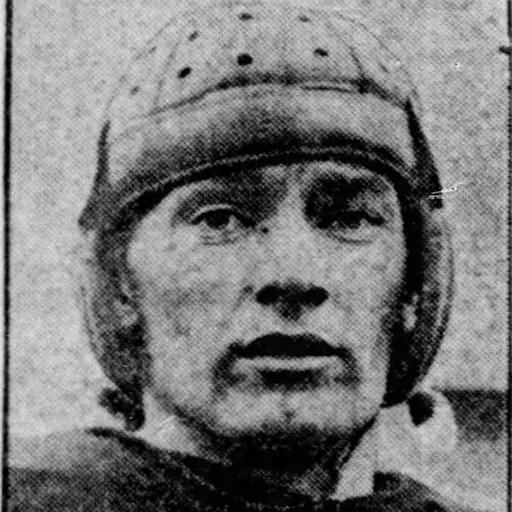
About Roy Simmons, Sr.
Lived 1901 – 1994 (aged 92). Roy Simmons, Sr. was an American boxer and american football player.
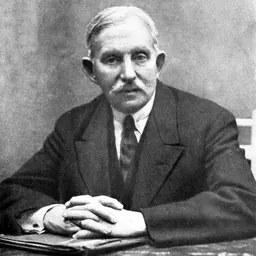
Roy D. Simmons Sr. (September 27, 1901 – August 20, 1994) was an American lacrosse coach who was the head coach of the Syracuse Orangemen men's lacrosse team from 1931 to 1970. Simmons's teams posted more than 250 wins in his career, and he is a member of the National Lacrosse Hall of Fame. As a lacrosse player, he was an All-American in 1924 and a member of Syracuse's 1924 and 1925 national championship-winning teams. Simmons was also a quarterback for the Syracuse football team, and a boxing and football assistant coach at the university for more than 30 years.
Early life Simmons was born in Philadelphia, Pennsylvania on September 27, 1901, according to the National Lacrosse Hall of Fame; The New York Times placed his birth year at 1899 or 1900. Simmons then enrolled at Syracuse and played quarterback for the university's football team. In three seasons, the Orangemen went 22–4–3 with him on the team; Simmons was referred to as the "Hobo Quarterback". Originally, he intended to only play football at Syracuse. However, he took up lacrosse after finding a stick. Simmons was named to the United States Intercollegiate Lacrosse Association (USILA) All-American Team as a defender in 1924, and played on the 1924 and 1925 Orangemen teams that were named national champions by USILA. In addition, he began the university's boxing team in 1925, and played baseball and basketball.
Coaching career Simmons graduated from Syracuse in 1926. Post-graduation, he accepted an assistant coaching position for the Syracuse football team; he remained with that program for more than 40 years. In 1931, Simmons was named the head coach of the Orangemen. The first Syracuse team coached by Simmons was 7–4 in the 1931 season, ending the year with a four-game winning streak. The Orangemen had a 6–1–1 record in 1932. By 1934, the Orangemen had improved to 10–2. The team did not win more than seven games in any of the next nine seasons, but did not post more losses than wins until 1942, when the Orangemen went 3–4. During this period, Simmons's 1936 team had the best record, at 7–2. The 1942 team was coached by Simmons only in its first game; he left the team to enter the military and Fred Schermahorn guided the Orangemen in their remaining six games. After the Orangemen won 7 of 12 games in 1946, Simmons led the team to 10 wins in 1957 and 11 the following year. In 1949, the Orangemen were a two-point loss to Army away from going undefeated; their 14 wins were tied for the second-most in program history, equaling the total of the 1925 national championship-winning team. Syracuse went 11–2 in 1950, as that squad matched the prior year's team in having seven players selected as All-Americans. Simmons had played a role in recruiting Brown to Syracuse; after Brown was refused a football scholarship due to his skin color, Simmons provided money that he had left over for lacrosse recruiting, with other money provided by the track coach. According to Syracuse football alumnus Joe Ehrmann, Simmons was "one of the most instrumental men in [Brown's] life." The team finished with a perfect 10–0 record in 1957,
Along with his lacrosse position, Simmons was a coach in multiple other sports at Syracuse. After organizing the school's boxing team in 1925, he became the coach and led the university to the 1936 national championship and 14 championships in the eastern region. Seven boxers coached by Simmons won individual national championships. In recruiting fighters for Syracuse, he traveled to numerous northeastern gyms, and was said to prefer boxers without evident facial damage, as "that proved they knew how to dodge a blow." Simmons served as boxing coach until 1955, when Syracuse ended the program. In addition, he became an assistant coach of the football team following his graduation, and remained with the program for 41 seasons. He was a coach on the 1959 team that won a national championship. The following year, Syracuse University built a coaches center that was named in his honor.
Coaching style To recruit players for the Orangemen, Simmons often chose players from the existing body of students attending Syracuse. He supplemented his rosters with college football players who had finished their senior seasons and had no spring practice sessions. In practices, Simmons frequently had the Orangemen play against local Indian lacrosse teams. He said of Brown's lacrosse play, "Big Jim learned a lot from the Indians."
Don’t just read it —
keep it.
Full-length biographies made to live with: read them, listen on the way to work, watch them tonight.
- E-book
- Audio
- Video
Instant download · yours to keep · every purchase keeps this site free
Important facts
People in Roy Simmons, Sr.'s life
Named in this biography and alive at the same time


Related people
Same field, nearest in time




Contemporaries
People whose lives overlapped Roy Simmons, Sr.'s

Frequently asked questions
Who was Roy Simmons, Sr.?
American lacrosse player and coach
When was Roy Simmons, Sr. born?
Roy Simmons, Sr. was born on 27 September 1901 in Philadelphia.
When did Roy Simmons, Sr. die?
Roy Simmons, Sr. died on 20 August 1994.
What was Roy Simmons, Sr.'s occupation?
Roy Simmons, Sr. was a boxer and american football player.
What nationality was Roy Simmons, Sr.?
Roy Simmons, Sr. was American.
Sources & further reading
Cite this page
APA: Biography.guide. (2026). Roy Simmons, Sr.. https://biography.guide/roy-simmons-sr/
MLA: "Roy Simmons, Sr.." Biography.guide, https://biography.guide/roy-simmons-sr/.
Chicago: "Roy Simmons, Sr.." Biography.guide. https://biography.guide/roy-simmons-sr/.
Data last updated: 2026-09-20 · Spot an error? Report a correction.
Portrait: Wikimedia Commons · author & licence
Page generated 2026-09-27 04:58 UTC