
About Roy Ames
Lived 1937 – 2003 (aged 66). Roy Ames was an American record producer.
Roy Clifton Ames (April 8, 1937 – August 14, 2003) was an American record producer and convicted child pornographer. As a producer, Ames was prominent in the Texas blues scene and was most famous for signing musician Johnny Winter in the mid-1960s. As a criminal, Ames was arrested multiple times for producing and distributing child pornography involving young boys. He was also known for his alleged ties to serial killer Dean Corll and some of his victims.
During a 1977 United States Senate subcommittee hearing, gay rights activist and sex offender Guy Strait testified that Ames was one of four major producers of child pornography in the 1970s. (The other three being himself, Jerry Richards, and a man named "Walter" operating in the New Jersey area.)
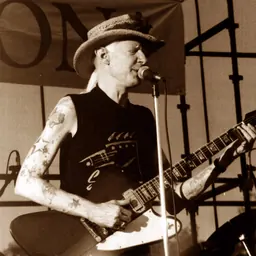
Johnny Winter In 1963, after a brief but successful stint in Chicago, Winter returned to his home state of Texas. He soon encountered Ames, who signed Winter to Duke Records, apparently promising access to Don Robey's Houston-based record labels. The two began recording songs using the studio of Houston-based producer and Ames' collaborator, Huey P. Meaux. Winter later claimed that he never met Meaux, himself later convicted of child sex offenses; he and Ames worked together on producing some of Winter's songs, with Meaux making copies of the records and putting out his own versions concurrently with Ames. Winter and Ames went on to produce many songs and albums together, oftentimes under interchanging band names. Some of the work they produced was Gone for Bad, Leavin' Blues, and Comin' Up Fast.
Ames worked with Winter until the singer left Texas in the early 1970s, specifically to get away from Ames: "He was my manager but never got anything done as far as my career; he just got a percentage of my records. Roy was also a pornographic artisthe took pictures of little boys to sell to perverts. He did that all the time, even when he was doing records. I don't think he ever stopped taking pictures. We recorded some songs for Roy but never made a penny. He said he was putting too much money into promotion and wasn't recouping enough back." Winter subsequently moved to New York City.
Early crimes On August 28, 1964, Ames was found to be in possession of lewd photos, resulting in a $100 fine. He was arrested again on July 13, 1965, after police received information that he was taking nude photographs of young boys, for which he was not charged. On November 26, 1968, the United States Attorney in Houston stated he would take no action in the case and ordered the evidence to be disposed of.
Alleged ties to Dean Corll On December 22, 1973, a phone call was made to the Houston Police Department (HPD) from a probation officer from California on behalf of a 25-year-old inmate named Richard Van Payne. Officers were told that Payne had been in a warehouse in Houston, where he claimed to have seen photographs of the teenaged boys and young men murdered by serial killer Dean Corll. Five days before the HPD received the tip, Ames had been arrested for sending child pornography through the mail. His arrest resulted in the seizure of approximately four tons of child pornography from his warehouse at 406 Oxford Street, Houston. Ames' arrest followed a series of similar arrests in light of the Corll investigation, resulting in one of the largest takedowns of its time in Los Angeles in October 1973. Ames considered the subjects arrested to be "small time" compared to the scope of his operation.
The Waldrop Brothers
On February 8, 1971, Everett Waldrop, the father of Corll victims Jerry and Donald Waldrop, contacted the HPD and stated in his missing persons report that he believed his sons were with Ames. Waldrop called police again on March 7, reporting that he had received a telephone number from a reliable source and called a man named Bill Walls. During the call, he claimed that he heard a sex party in the background and to have heard one of his sons speaking. He gave an address to police, who found that it was not in the area that Waldrop claimed it was.
The Waldrop brothers were eventually recovered from a mass grave under Corll's boat shed on August 9, 1973, and were eventually identified through dental records. A partially filled-out HPD offense report was found with one of these bodies. That same day, Everett Waldrop called the HPD wondering if his sons may be in the mass grave. He reiterated to officers that his sons were mixed up with Ames and Walls and that he was unable to stop them. The Waldrop brothers' causes of death were ruled as asphyxiation.
Steven Dale Ahern allegations On August 31, 1973, police began investigating a lead sent to them from a letter postmarked August 24 from a California man named Steven Dale Ahern, who was a homosexual prostitute and pornographic model. In his letter, Ahern alleged the existence of a large organization in Houston producing pornographic material involving children, stating that he would be able to identify Corll victims in these magazines. He further stated that in 1971, he had been flown out to Houston with his fare paid to meet Ames and his partner, Charles Anson, after putting a classified ad in the gay magazine The Advocate. Ahern was photographed by Anson and stayed the night with him and Ames. He claimed that Ames knew Dean Corll and used him to exploit young boys. Police elected to not follow up on the lead, with the head juvenile officer stating, "The parents of the boys have suffered enough; there would be problems with positive identification; and we had the leader of the porno ring anyway."
The discovery of the warehouse resulted in Ames' arrest in March 1975, along with four other men out in Santa Clara, California, including a high school teacher and photographer who had been running an operation for more than ten years. Ames was discovered to have operated direct mail services in Beverly Hills and San Francisco through his firm, New Atlas Distributors. Ames was held on a $150,000 bond, facing two counts of sexually abusing children and one count of employing a child to sell and distribute pornographic literature.
Ames was arrested again in April 1975, this time at a warehouse located at 4932 Glenmont, Houston, where two tons of child pornography were seized. Ames was charged with mailing obscene material and forcing boys into prostitution. He pleaded guilty to federal charges of mailing obscene films and magazines involving homosexual acts with young boys on July 25. In court, Assistant United States Attorneys Scott Campbell and Ronald J. Waska said that the government had evidence that Ames recruited boys from the Houston area and paid them to perform homosexual acts with each other and with adults while Ames filmed and photographed them. Campbell also stated that Ames was a national distributor of obscene material based in Houston. Ames' sentencing was set for August 25. He would be free on a $310,000 bond in the interim in response to Corll's murders would spur on public outcry that led to government hearings on the subject of child exploitation in 1977.
In 1993, Susan McLemore, the younger sister of Corll victim Willard Branch, mentioned that while attending a party at Corll's home, she recalled observing four men who were often in his bedroom. Though she could not remember the fourth man, reporter Evan Moore mentioned that he thought one name mentioned in the 1973 police report, which was Ames, matched the man.
1981 arrest On March 19, 1981, Ames was indicted by a federal grand jury on a single count of interstate transport of an obscene film after he sent a pornographic film featuring two boys under the age of 16 to an informant in Springfield, Massachusetts. The informant then led U.S. Customs agents to the mailbox containing the parcel sent by Ames. On March 24, Ames was arrested in a Houston parking lot when he tried to sell twenty-five pornographic films to undercover Customs and Postal Service agents. Ames faced up to ten years in prison and $10,000 in fines. He was held on a $100,000 bail while awaiting a removal hearing on April 2 to determine if he would be extradited to Massachusetts.
Ames was extradited to Massachusetts, where he would go on trial. Isaac Peyton Sweat, a former bassist for Johnny Winter, testified that he was aware of Ames' pornography stash in his Houston warehouse but advised him against selling it. Ames had planned to use the proceeds to finance Sweat's career. A man by the name of Jim Dolan acted as an intermediary between Ames and undercover agents. A $700 check endorsed by Ames to facilitate the purchase was used as evidence against him in court. The trial concluded on May 22, with Ames' conviction on all counts. On June 15, he was sentenced to five years in prison. Sweat was later found dead of a gunshot wound in his garage on June 23, 1990.
On July 26, 1983, Ames issued an appeal to reduce or end his sentence, claiming that it was illegally imposed. On July 29, the courts rejected his appeal, stating that they found his sentencing to be fair and reasonable. He attempted another appeal on June 8, 1984, this time adding that he believed his conviction by the district court was unjust since it relied on "an ex parte report forwarded to the Parole Commission, which contained material misrepresentations as to [the] appellant's identity and character" and therefore was illegal. The court disagreed with his assessment, and on September 12, they again rejected his appeal.
Music lawsuits Following his parole in 1986, Ames did not incur further charges relating to child pornography or similar offenses. With his newfound freedom, he attempted to make a comeback in the Texas blues scene, amassing a collection of over 8,000 master tapes and various pieces of vintage memorabilia that he started to sell under his new label, Home Cooking Records.
In the early 1990s, numerous artists and their surviving relatives filed a class action lawsuit against Ames for the unlawful use of their images and music. Multiple plaintiffs had accidentally stumbled across Ames' compilations; one such person was the widow of the then-deceased Hop Wilson, after a blues fan pointed out that her late husband's songs were being sold by Ames' label. Many other artists, including Joe Hughes and Juke Boy Bonner, made similar discoveries.
It was revealed during the lawsuit that Ames would often not sign his artists to a proper contract and used demo recordings that he copyrighted and sold as part of his catalogue, even to overseas outfits, all without paying royalties to the artists. This was a practice common in the blues scene, but Ames' case set a new legal precedent against these practices. Ames also sold unauthorized memorabilia, such as a supposed vintage concert poster featuring Hughes. Hughes claimed that the poster was a complete fraud, citing the use of "Guitar" in his stage name before he began using it in 1985. In December 1998, he received his third DWI and pleaded guilty, subsequently suspending his license for two years and leaving him on community supervision for a ten-year period. In September 2000, Ames received his last conviction for driving with a suspended license.
On August 14, 2003, at the age of 66, Roy Ames died of natural causes at his home in West University, Texas. He left behind no heirs. Upon hearing the news of Ames' passing, Johnny Winter would comment, "He died unhappyat least that's good", adding, "He died out of jail though, which is amazing. It's funny he didn't die of AIDS, as promiscuous as he was."
Don’t just read it —
keep it.
Full-length biographies made to live with: read them, listen on the way to work, watch them tonight.
- E-book
- Audio
- Video
Instant download · yours to keep · every purchase keeps this site free
Important facts
People in Roy Ames's life
Named in this biography and alive at the same time






Related people
Same field, nearest in time




Contemporaries
People whose lives overlapped Roy Ames's



Frequently asked questions
Who was Roy Ames?
American record producer
When was Roy Ames born?
Roy Ames was born on 8 April 1937.
When did Roy Ames die?
Roy Ames died on 14 August 2003.
What was Roy Ames's occupation?
Roy Ames was a record producer.
What nationality was Roy Ames?
Roy Ames was American.
Sources & further reading
Cite this page
APA: Biography.guide. (2026). Roy Ames. https://biography.guide/roy-ames/
MLA: "Roy Ames." Biography.guide, https://biography.guide/roy-ames/.
Chicago: "Roy Ames." Biography.guide. https://biography.guide/roy-ames/.
Data last updated: 2026-09-20 · Spot an error? Report a correction.
Page generated 2026-09-27 05:24 UTC