
About Rowland Prothero, 1st Baron Ernle
Lived 1851 – 1937 (aged 85). Rowland Prothero, 1st Baron Ernle was a British cricketer, politician, journalist, writer, barrister and author.
Rowland Edmund Prothero, 1st Baron Ernle (6 September 1851 — 1 July 1937) was an English agriculturalist, author, barrister, cricketer, cricket administrator, journalist, and Unionist politician. Following a brief career as a barrister after his graduation from the University of Oxford, Prothero became an author who published several works on agriculture, amongst other publication genres. His literary career largely came to an end in 1898, when he became land agent for the 11th Duke of Bedford. Prothero then moved into politics, where he represented the Conservative Party. After unsuccessfully contesting Biggleswade in the January 1910 general election, he successfully entered the House of Commons when elected unopposed as the second Member of Parliament for Oxford University in June 1914. His interest and expertise in agriculture led to him being appointed by Prime Minister David Lloyd George as President of the Board of Agriculture in December 1916, and with it a seat in the cabinet. His efforts to introduce a guaranteed price for wheat and the successful implementation of his "plough campaign" during the First World War helped to sustain the United Kingdom for the remainder of the conflict. In January 1919 he was raised to the peerage as Baron Ernle, and subsequently resigned his parliamentary seat, followed by his presidency of the Board of Agriculture in May 1919. Prothero served as president of the Marylebone Cricket Club in 1924 and 1925, having previously played first-class cricket in his youth for the Gentlemen of England and Hampshire.
Background and education Prothero was the son of the Reverend Canon George Prothero, Rector of St. Mildred's Church, Whippingham on the Isle of Wight, and his wife, Emma, only daughter of the Reverend William Money-Kyrle, of Homme House in Herefordshire. He was born on 6 September 1851 in Clifton upon Teme, Worcestershire. Amongst his four siblings were the historian Sir George Prothero and the Royal Navy admiral Arthur William Edward Prothero. Prothero was first educated at home by his mother, before proceeding at the age of 10 to board at Temple Grove School in East Sheen. However, his education at Temple Grove was interrupted by his affliction with a prolonged illness, From Marlborough, he matriculated to Balliol College, Oxford, where he gained a First–Class Honours degree in Modern History in 1875. Shortly after his graduation in 1875, he was elected a Fellow of All Souls' College, Oxford. He met with success in the match, taking 5 wickets for 34 runs with his medium pace bowling in Oxford's first innings, whilst in their second innings he took 3 for 44, contributing to the Gentlemen's victory by 9 wickets. During the year of his graduation, he played a first-class match for Hampshire against Sussex at Winchester,
Academic, legal and literary careers Following his studies at Oxford, Prothero spent a year in Darmstadt in Germany to better his proficiency in German. His brief legal career came to an end in 1881, when his declining eyesight led him to give up practising law.
However, in 1898 Prothero's literary career largely came to an end when he accepted a "handsome offer" by the 11th Duke of Bedford to become chief agent on his estate, though he continued to dedicate a few hours each day to reading and writing. His 1888 work The Pioneers and Progress of English Farming would evolve to become English Farming Past and Present, which was hailed as a "classic" upon its publication in 1912. Following the death of incumbent Member of Parliament (MP) for Oxford University Sir William Anson in June 1914, who was one of two MPs returned for the constituency, Prothero was stood unopposed for the Unionists as his replacement in the subsequent by-election on 30 June. His time as an MP coincided with the First World War, which began a month after his election. He on served two agricultural committees during the early years of the war, headed by Viscount Milner and the 2nd Earl of Selborne;
Prothero's appointment coincided with the German policy of unrestricted submarine warfare, which placed food supplies under severe threat and necessitated the need to expand agricultural production at home. Prothero was ultimately successful in bringing about its implementation via the Corn Production Act in 1917, while the "plough campaign" was successful in adding nearly of arable farmland; both are considered important achievements in helping to sustain the United Kingdom for the remainder of the war.
In the December 1918 general election which followed a month after the cessation of hostilities, Prothero retained his Oxford University seat when he and fellow Unionist Hugh Cecil defeated the Liberal Gilbert Murray and Labour candidate Henry Sanderson Furniss. The following month on 11 January he was raised to the peerage as Baron Ernle, of Chelsea in the County of London, a title chosen in reflection of his pride in his own matrilineal descent from the Ernle family, one of the historic landed families of Wiltshire. During a speech in Maidstone on 29 May 1919, he announced his resignation from the presidency, and was subsequently succeeded by The Lord Lee of Fareham.
Later life, death and legacy After his elevation to the peerage, Prothero served on the 1920–1922 Royal Commission on the Universities of Oxford and Cambridge, headed by Asquith. In 1921 and 1922, he served as president of the English Association, which aimed to further the study and enjoyment of English language and literature. His one-year term came to an end in 1925, and he was succeeded by Sir John de Robeck. He additionally held the vice-presidencies of both the Royal Literary Fund and the Land Agents' Society. Many of the agricultural measures that he introduced during the First World War to meet food demands were reintroduced during the Second World War. and one daughter. After her death in May 1899, he married secondly Barbara Jane, daughter of Colonel Charles O. Hamley, in 1902. They had no children; she died in November 1930. His son, who served in the First World War as a lieutenant with the 7th Hussars, was killed in action during the Mesopotamian campaign. Thus, upon his own death, the barony became extinct.
Don’t just read it —
keep it.
Full-length biographies made to live with: read them, listen on the way to work, watch them tonight.
- E-book
- Audio
- Video
Instant download · yours to keep · every purchase keeps this site free
Important facts
People in Rowland Prothero, 1st Baron Ernle's life
Named in this biography and alive at the same time


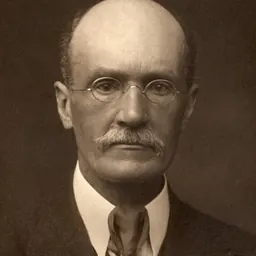

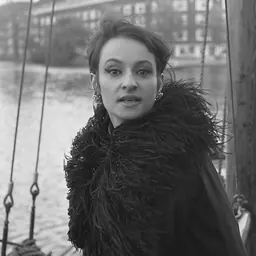
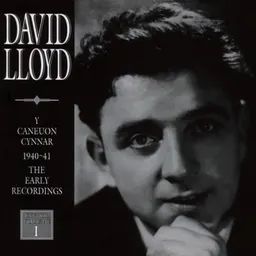


Related people
Same field, nearest in time
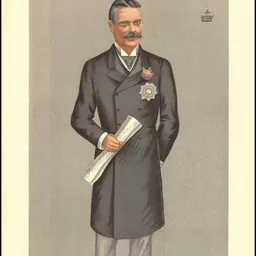

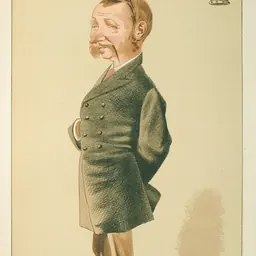


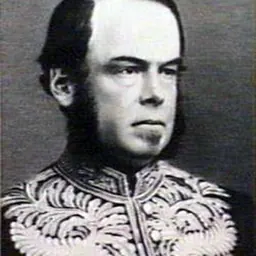
Contemporaries
People whose lives overlapped Rowland Prothero, 1st Baron Ernle's


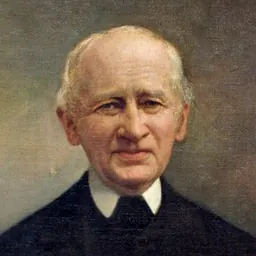
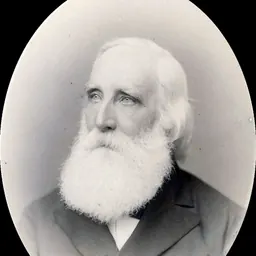
Frequently asked questions
Who was Rowland Prothero, 1st Baron Ernle?
English cricketer (1851-1937)
When was Rowland Prothero, 1st Baron Ernle born?
Rowland Prothero, 1st Baron Ernle was born on 6 September 1851.
When did Rowland Prothero, 1st Baron Ernle die?
Rowland Prothero, 1st Baron Ernle died on 1 July 1937.
What was Rowland Prothero, 1st Baron Ernle's occupation?
Rowland Prothero, 1st Baron Ernle was a cricketer, politician, journalist, writer, barrister and author.
What nationality was Rowland Prothero, 1st Baron Ernle?
Rowland Prothero, 1st Baron Ernle was British.
Sources & further reading
· Wikipedia: Rowland Prothero, 1st Baron Ernle
· DBpedia: Rowland Prothero, 1st Baron Ernle
Cite this page
APA: Biography.guide. (2026). Rowland Prothero, 1st Baron Ernle. https://biography.guide/rowland-prothero-1st-baron-ernle/
MLA: "Rowland Prothero, 1st Baron Ernle." Biography.guide, https://biography.guide/rowland-prothero-1st-baron-ernle/.
Chicago: "Rowland Prothero, 1st Baron Ernle." Biography.guide. https://biography.guide/rowland-prothero-1st-baron-ernle/.
Data last updated: 2026-09-20 · Spot an error? Report a correction.
Page generated 2026-09-27 05:05 UTC