
About Rowland Hayward
Lived 1520 – 1593 (aged 72–73). Rowland Hayward was an English politician.
Sir Rowland Hayward (c. 15205 December 1593) was a London slave merchant, and Lord Mayor of the City in both 1570 and 1591. Through his commercial activities he acquired considerable wealth, and was able to loan money to Queen Elizabeth I and purchase properties in several counties as well as houses in and near London. He entertained the Queen at King's Place in 1587.
Family Hayward was the eldest son of George Hayward (d. 1557) of Bridgnorth, Shropshire, by Margaret Whitbrooke, the daughter of John Whitbrooke. George Hayward carried on the trade of shoemaker in Bridgnorth, was Member of Parliament for Bridgnorth in 1529 and alderman of the town about 1543.
Career Hayward was educated locally at Bridgnorth Free School. He moved to London when he was about twelve years of age, In 1559 he was Master of the Clothworkers. In 1560, he was elected Alderman, a dignity to which no citizen worth less than 2000 marks could then attain, and in the same year, together with another Alderman, loaned the City £1000 towards the purchase of wheat. In 1561, he became President of Bridewell Hospital, and remained involved in the administration of London's hospitals until his death.
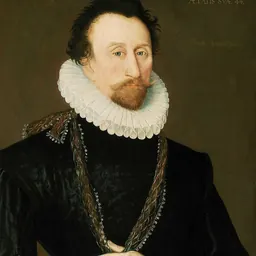
In 1567, he was one of the promoters of Sir John Hawkins' third slave-trading voyage. In 1572 he was elected to Parliament for the City, where he played an active role on several committees, and in the same year became President of St Bartholomew's Hospital, a post he continued to hold until his death.
In 1582, he was among the investors in Edward Fenton's 'disastrous' voyage to the Far East. He served as lord mayor again in 1591, taking over when Sir John Allot died in September without having completed his term.
According to Jay, 'No mention of Sir Rowland's specific services to London can give any idea of his unwearying devotion to the city of his adoption'. and to acquire considerable property over the years. By 1553 he had purchased property in four counties, some of which had become available through the dissolution of the monasteries. At the time of his death in 1593 he owned seventeen manors in several counties, as well as a house in London and another just outside the City.
His London house was on the site of the former Priory of St Mary the Virgin, founded in 1332 by William Elsing, for canons regular, (originally a Hospital for one hundred blind men, known as "Elsing's 'Spital") situated at the north end of Gayspur Lane, which ran down to London Wall. The Priory was suppressed at the dissolution of the monasteries and turned into a mansion house. The house was in Philip Lane, London Wall, and adjoined the church of St Alphage; Hayward purchased it for £700 from Margery Williams, the daughter of John Williams, 1st Baron Williams of Thame, and wife of Henry Norris, 1st Baron Norris. Hayward's country home was King's Place in Hackney, which had earlier been owned by King Henry VIII and was the scene, in July 1536, of a reconciliation between the King and his elder daughter, Mary. Hayward purchased it from Henry Carey, 1st Baron Hunsdon in 1583.
Hayward died 5 December 1593 at King's Place in Hackney, and was buried at the church of St Alphage London Wall. A monument depicting Hayward with his two wives on either side, each with her eight children, was erected to his memory by two of his executors, William Pilsworth and William Cotton, in the wall of the choir on the south side of the church.
In his will, dated 17 November 1592 and proved 4 March 1594, he left a third of his property to his wife and another third to his children, according to the custom of the City of London, with the remaining third devoted to his own personal bequests, including gifts for charitable purposes. He directed that his house of King's Place in Hackney be sold. In 1596, Elizabeth Trentham, Countess of Oxford, purchased it from his executors; she lived in it for more than a decade, and sold it in 1609 to Fulke Greville, 1st Baron Brooke. Among the overseers named in Hayward's will were Thomas Owen (died 1598) and William Sebright (died 1620). to Joan Tyllesworth, daughter and coheir of the London goldsmith William Tyllesworth. crowned or''), for his wife Elizabeth Hayward
Elizabeth Hayward, who married firstly Sir Richard Warren (died March 1597) of Claybury, Essex, and secondly, on 21 July 1597, Thomas Knyvet, 1st Baron Knyvet of Escrick. Her kneeling effigy survives together with that of her second husband on his monument in Stanwell Church, Surrey. Susan Hayward (died 1592), who married Sir Henry Townshend (1537?–1621), by whom she was the mother of Hayward Townshend, (c. 1577–1603x21). Joan Hayward, who married John Thynne on (probably) 26 February 1576.
Hayward married secondly, when she was only sixteen years of age, Katherine Smythe, the daughter of Thomas Smythe, Customer of London, by whom he had a son and a daughter who died as infants, and two surviving sons and four surviving daughters, all young and unmarried at the time of his death: Sir John Hayward He inherited an estate said to be worth £80,000 from his elder brother, Sir George Hayward, in July 1615, but died without issue, the last of the male heirs in his line. Katherine Hayward, who married Richard Scott, son of Sir Thomas Scott. son of Sir Anthony St. Leger (died 1603) and Mary Scott, and grandson of Sir Warham St Leger by his first wife, Ursula Neville, youngest daughter of George Neville, 5th Baron Bergavenny.
Don’t just read it —
keep it.
Full-length biographies made to live with: read them, listen on the way to work, watch them tonight.
- E-book
- Audio
- Video
Instant download · yours to keep · every purchase keeps this site free
Important facts
People in Rowland Hayward's life
Named in this biography and alive at the same time



Related people
Same field, nearest in time
Contemporaries
People whose lives overlapped Rowland Hayward's

Frequently asked questions
Who was Rowland Hayward?
London merchant and Lord Mayor
When was Rowland Hayward born?
Rowland Hayward was born in 1520.
When did Rowland Hayward die?
Rowland Hayward died on 5 December 1593.
What was Rowland Hayward's occupation?
Rowland Hayward was a politician.
What nationality was Rowland Hayward?
Rowland Hayward was English.
Sources & further reading
Cite this page
APA: Biography.guide. (2026). Rowland Hayward. https://biography.guide/rowland-hayward/
MLA: "Rowland Hayward." Biography.guide, https://biography.guide/rowland-hayward/.
Chicago: "Rowland Hayward." Biography.guide. https://biography.guide/rowland-hayward/.
Data last updated: 2026-09-20 · Spot an error? Report a correction.
Page generated 2026-09-27 05:14 UTC