
Rowland Baker
Baker, Sir Rowland (1908–1983), naval architect
About Rowland Baker
Lived 1908 – 1983 (aged 75).
Sir Rowland Baker, KCB, RCNC, (3 June 1908 – 25 November 1983) was a renowned naval architect for the Royal Navy. He was project director for the design and construction of the Royal Navy's first nuclear submarines in the 1950s. He also developed a full range of landing craft used by the Allies in World War II.
Early Life Rowland Baker was born in Sheerness, Kent. His father, Issac, was the master of an Eastwood sailing barge. He could have continued in his father's career on the barges, but his parents encouraged him in his studies.
He attended Rochester Technical School. In 1923, he joined Sheerness Dockyard as an apprentice shipwright, a significant achievement that would lead to secure lifetime employment. Exceptionally, in 1927 he was selected as a cadet for the Royal Corps of Naval Constructors. He attended a four-year naval architecture course at the Royal Naval College, Greenwich. As part of his training, he was required to go to sea with the Royal Navy, which he did in the Mediterranean. It was typical that Assistant Constructors were rotated through different jobs in the Admiralty, experiencing working in dockyards and design departments (where they were sometimes referred to as calculators). After the dockyard, he moved to Whitehall and worked on the designs of sloops and minesweepers . In 1937 he returned to Sheerness Dockyard.
In 1948, Baker was seconded to the Royal Canadian Navy. He was commissioned as a Constructor Captain in the RCN(R), with seniority back dated to 9 November 1941. He acted as Constructor-in-Chief from 1950. He was promoted to Constructor Commodore in 1956. He remained in Canada until either 1956 or 1958. He became the leader and driving force of the project. He brought the DPT team together at the Admiralty complex at Foxhill, Bath. Foxhill, in particular C Block, became the home of submarine directorate for the next 60 years.
As a result of his success with Dreadnought, Baker's role transformed into the Technical Director of the Polaris Executive (DPT) for the development of the ballistic submarines. After that, his role was extended further to cover all submarine project as Director Project Team (Submarines) (DPT). Over the next very busy decade, he led the projects for five classes of submarine (, , , and ).
Baker continued in charge of DPT submarine projects until his retirement in 1968. In the year of his retirement, he was awarded a Knight Commander of the Bath.
Landing craft projects In World War II, Winston Churchill made the development of landing craft a priority. Baker was tasked with designing a full range of landing craft for personnel and vehicles. The pre-war craft were too slow and had very dubious stability. (Baker once saw a whole line of five turn over when under tow, due to free water on the deck.) Baker realised the need for cross-Channel landing craft carrying the biggest tanks envisaged, 40 tons and landing them on a beach with a slope of 1:35. Baker set out his plan as: "My innovations related to the features as follows:
a) The appearance of the craft, flush deck with a hold.
b) Floating dock type section, 'i' could never approach 'I'. [the loss of stability to due to water in the hold (i) could never approach that due to the complete waterplane (I)]
c) Acceptance of the fact that the Bow Ramp would always leak, so I arranged the Tank Deck [bottom of the hold] above the hinge at the bow and fitted with preventative watertight doors at the highest point. Between the ramp and door drains overboard. This system worked like a charm. Baker designed a family of Landing Craft for Tanks. Baker started with the basic design LCT(1), capable of carrying 3 (40 ton) tanks. This he developed into a bigger craft LCT(2) capable of carrying 7 tanks and with a greater range. In turn, was stretched by an extra 32ft for the design of the LCT(3), capable of carrying 11 Sherman tanks or 5 Churchill tanks. Finally, the beam was widen for the design of the LCT(4), capable of carrying 9 Sherman tanks or 6 Churchill tanks. This demonstrates Baker's outstanding ability to develop and improve designs to meet the colossal logistical demand for the Sicily and Normandy landings.
It became clear there was a need for a 'mother' craft to carry smaller landing craft across the oceans. Baker again showed his ingenuity and skill by developing the Landing Ship Dock concept. Baker was sent to the USA with sketch designs, which he developed with the Americans into the Atlantic LST(2). These were built in the US and used in the amphibious landings In Sicily and Normandy on D-Day. For his work, Baker was awarded the US Medal of Freedom with Silver Palm.
Submarine projects Baker was appointed Project Manager for in 1958, forming the Dreadnought Project Team (DPT). He was responsible for driving through the design and building of the submarine. Baker described his appoint with mixed feelings that 'alternated between elation at the prospect and terror' (p184): "Terror because just when they were about to sign a government to government agreement, I realised that not one of those who would have on my staff ... approved of me in any way, or of the scheme. They had pottered about for several years, and now had not only a solution, but a chieftain imposed on them. Of course, they all hated it ... My terror derived in part from the conviction that even if we had the Rickover reactor, all and sundry would want to 'improve' it and feed in their national ideas through the ship." Baker's leadership and determination avoided the above loss of clarity. The design was completed and the submarine laid down in June 1959, less than two years from his appointment as project manager. To achieve this the design combined the unchanged 'back end' US reactor and propulsion with the British design of the 'front end'.
Dreadnought was followed by the first fully British nuclear submarines, the Valiant-class submarines. The British reactor and propulsion design was adopted, including the 'machinery raft' to reduce noise transmission. A stronger pressure hull was chosen for greater diving depths. Notably the pressure hull was a combination of different diameters for different compartments. Given the drive for the Royal Navy to have its own nuclear submarine fleet, the design was completed and Valiant was laid down in January 1962, only two and half years after Dreadnought.
In 1962, the US agreed to sell the Polaris ballistic missile system to the UK. Baker was appointed as Technical Director, Polaris Executive (DPT). It was a national priority to get the new deterrent to sea in the Resolution-class submarine. Urgency required that the design combined the US missile compartment with the UK Valiant class reactor and propulsion, along with the UK front end. Therefore, there continued to be sections of pressure hull sections with differing diameter. The design was completed and Resolution was laid down in February 1964, less than 18 months from the signing of the sale agreement. Resolution was launched in September 1966, commissioned in October 1967, and operational after weapon live firing in February 1968.
The DPT organisation was renamed Director Project Team (Submarines), managing the full portfolio of submarine designs. Baker took on responsibility for the final two submarine classes developed in the 1960s.
The Churchill-class submarines were a repeat of the Valiant-class design with improvements to sonars and periscopes. Their design was delayed until the Resolution-class design was completed. Churchill was laid down in June 1967, launched in December 1968, commissioned in July 1970. Most notable of this class was , which sank in the Falklands War in 1982.
The Swiftsure class was a radical new submarine design. The pressure hull was the same diameter throughout, simplifying the structure design and the construction. The design focused on reducing the noise signature of the submarines, reducing the chances of detection distance materially. Swiftsure was laid down in June 1969, launched in September 1971, and commissioned in April 1973. The class operated from the 1970s Cold War through to Persian Gulf patrols in the 2000s.
Class designs
Landing Craft Tanks: LCT(1) to LCT(4). Landing Ship Dock: LST(2). Naval architect/Chief Constructor: RJ Daniel. ballistic missile submarine Naval architect/Chief Constructor: SJ Palmer. Naval architect/Chief Constructor: RJ Daniel. Naval architect/Chief Constructor: N Hancock. Naval architect/Chief Constructor: N Hancock.
Don’t just read it —
keep it.
Full-length biographies made to live with: read them, listen on the way to work, watch them tonight.
- E-book
- Audio
- Video
Instant download · yours to keep · every purchase keeps this site free
Important facts
People in Rowland Baker's life
Named in this biography and alive at the same time
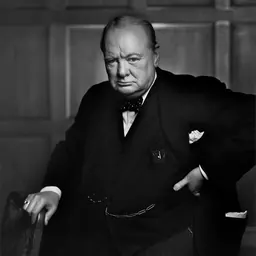
Contemporaries
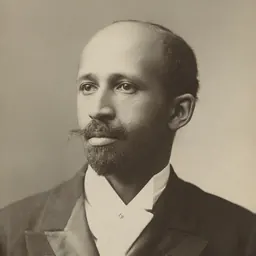
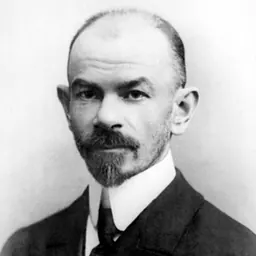
People whose lives overlapped Rowland Baker's



Frequently asked questions
Who was Rowland Baker?
Baker, Sir Rowland (1908–1983), naval architect
When was Rowland Baker born?
Rowland Baker was born on 6 March 1908.
When did Rowland Baker die?
Rowland Baker died on 25 November 1983.
Sources & further reading
Cite this page
APA: Biography.guide. (2026). Rowland Baker. https://biography.guide/rowland-baker/
MLA: "Rowland Baker." Biography.guide, https://biography.guide/rowland-baker/.
Chicago: "Rowland Baker." Biography.guide. https://biography.guide/rowland-baker/.
Data last updated: 2026-09-20 · Spot an error? Report a correction.
Page generated 2026-09-27 05:11 UTC