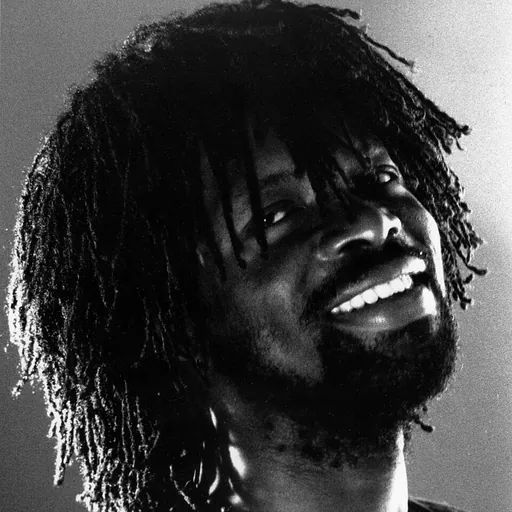
About Rotimi Fani-Kayode
Lived 1955 – 1989 (aged 34). Rotimi Fani-Kayode was a British photographer, known for Autograph ABP.
Rotimi Fani-Kayode (20 April 1955 – 21 December 1989), born Oluwarotimi Adebiyi Wahab Fani-Kayode, was a Nigerian photographer who at the age of 11 moved with his family to England, fleeing from the Biafran War. His father, Chief Babaremilekun Adetokunboh Fani-Kayode (1921–1995), was a politician Rotimi had four siblings, including Femi Fani-Kayode, his younger brother.
The Fani-Kayode family moved to Brighton, England, in 1966, after the military coup and the ensuing civil war in Nigeria. and his MFA degree in Fine Arts and Photography at the Pratt Institute in 1983.
Work After graduating from Pratt, Fani-Kayode returned to the UK, sexuality, racism, colonialism and the tensions and conflicts between his homosexuality and his Yoruba upbringing. His relationship with the Yoruba religion began with his parents. Fani-Kayode stated that his parents were devotees of Ifa, the oracle orisha, and keepers of Yoruba shrines, His goal was to communicate with the audience's unconscious mind and to combine Yoruba and Western ideals (specifically Christianity), fusing aesthetic and religious eroticism.
Describing his art as "Black, African, homosexual photography", Fani-Kayode and many others considered him to be an outsider and a depiction of diaspora. He believed that due to this depiction of himself, it helped shape his work as a photographer. In interviews, he spoke on his experience of being an outsider in terms of the African diaspora. His exile from Nigeria at an early age affected his sense of wholeness. He experienced feeling as if he had "very little to lose".
Yoruba Influences In "Sonponnoi" (1987), there is a headless black figure, decorated in white and black spots, holding three burning candles on his groin. Sonponnoi is one of the most powerful orishas in the Yoruba pantheon; he is the god of smallpox. Fani-Kayode adorned the figure with spots to represent a Sonponnoi's smallpox and Yoruba tribal marks. The triple-burning candle on his groin evokes the sense that sexuality continues even in sickness/otherness. It also represents how the Christian faith replaced the Yoruba tradition while also bringing disease with it during colonialism. Speaking on Esu, he insists: "Eshu presides here [...] He is the Trickster, the Lord of the Crossroads (mediator between the genders), sometimes changing the signposts to lead us astray [...] It is perhaps through that rebirth will occur." Esu also appears in Fani-Kayode's photography, Nothing to Lose IX. The presence of Esu is understood in the colouring of the mask; using white, red, and black stripes the mask stands as a representation of the deity Esu. Although these colours symbolise Esu, the mask itself has no precedence in traditional African mask-making; this subtle theme is almost flattening the mask to represent an overarching "African-ness" (a critique of the notion of "primitiveness" that was widely digested by a European audience).
Fani-Kayode's "Bronze Head" (1987) shows a cropped figure's black body that reveals his legs and butt as he is about to sit on top of a bronze Ife sculpture. The Ife sculpture is placed on a round platter, stool, or pedestal, and is placed strategically at the centre of the picture frame. Typically, the bronze head in the photograph is meant to honour the Ife king. However, in the context of Fani-Kayode's photograph, it satirizes the Yoruba kingship institution. The photograph represents both his exile and homosexuality, two core parts of his world. He does this through the fragmented representation of the Black male body as it relates to power, desire, and sexuality. Fani-Kayode's work was largely displayed in intimate publications and gallery spaces. His work was primarily for the Queer community and later gained a global audience.
Notable Works
Adebiyi Every Moment Counts II Collection at the Tate
Death Fani-Kayode died at Coppetts Wood Hospital, North London, of a heart attack while recovering from an AIDS-related illness on 21 December 1989. At the time of his death, he was living in Brixton, London, with his partner of six years and frequent collaborator Alex Hirst,
Legacy In 1988, Fani-Kayode with a number of other photographers, including Sunil Gupta, Monika Baker, Merle Van den Bosch, Pratibha Parmar, Ingrid Pollard, Roshini Kempadoo and Armet Francis, co-founded the Association of Black Photographers (now known as Autograph ABP). A prominent figure in the Black British art scene, He was able to show the world and those in the art world just how much queer black voices matter. Telling their sides of the story and not just being the subject of someone else's depiction of them.
Not only is Fani-Kayode praised for his conceptual imagery of Africanness and queerness (and African queerness), he is also praised for his ability to fuse racial and sexual politics with religious eroticism and beauty. One critic has also described his work as "neo-romantic", with the idea his images evoke a sense of fleeting beauty.
Collections Fani-Kayode is considered to be one of the most important artists of the 1980s,
Exhibitions Fani-Kayode started to exhibit in 1984, and participated in numerous exhibitions up until the time of his death in 1989. His work has been exhibited in the United Kingdom, France, Austria, Italy, Nigeria, Sweden, Germany, South Africa, and the US.
No Comment, group show, Brixton Artists Collective, December 1984 Seeing Diversity, group show, Brixton Artists Collective, February 1985 Annual Members Show, group show, Brixton Artists Collective, November 1985 South West Arts, group exhibition, Bristol, 1985 Oval House Theatre, group exhibition, London, 1987 ÁBÍKU - Born to Die, one-person show, Centre 181 Gallery (Hammersmith), September/October 1988 US/UK Photography Exchange, touring group show, Camerawork & Jamaica Arts Centre, New York, 1989 African Pavilion, group exhibition, Venice Biennale, 2003 Rotimi Fani-Kayode, one person show, Hales Project Room, New York, 2018 Rotimi Fani-Kayode, 1955–1989, Iceberg Project, Chicago, IL, 2020 Greater New York 2022, a group show of 47 artists and collectives, MoMA PS1, New York, 2022 The Studio – Staging Desire, Autograph Gallery, Shoreditch, London, 2024–2025. Rotimi Fani-Kayode: Tranquility Of Communion, The Polygon Gallery, Vancouver, 2025 Rotimi Fani-Kayode: Forest of Metaphor, one person show, Hales Gallery, New York, 2026
Publications Communion. London: Autograph, 1986. Bodies of Experience: Stories about Living with HIV – a group show at Camerawork in 1989 Autoportraits. Camerawork RF-K March 1990 (He was included in the publicity for the exhibition but work was not shown due to his sudden death in December 1989). Memorial Retrospective Exhibition. 198 Gallery, December 1990 (Brian Kennedy, City Limits magazine, makes a request for donations to fund the exhibition.) Poster-catalogue essays by Alex Hirst and Stuart Hall. (With Alex Hirst) Rotimi Fani-Kayode and Alex Hirst: Photographs. Autograph ABP, London, 1996. Decolonising the Camera. Lawrence & Wishart: 2019. By Mark Sealy, pages 226–232. And Bloodflowers: Rotimi Fani-Kayode, Photography and the 1980s. Duke University Press: 2019. By W Ian Bourland.
Don’t just read it —
keep it.
Full-length biographies made to live with: read them, listen on the way to work, watch them tonight.
- E-book
- Audio
- Video
Instant download · yours to keep · every purchase keeps this site free
Important facts
People in Rotimi Fani-Kayode's life
Named in this biography and alive at the same time





Related people
Same field, nearest in time

Contemporaries
People whose lives overlapped Rotimi Fani-Kayode's


Frequently asked questions
Who was Rotimi Fani-Kayode?
Nigerian photographer (1955–1989)
When was Rotimi Fani-Kayode born?
Rotimi Fani-Kayode was born on 20 April 1955 in Lagos.
When did Rotimi Fani-Kayode die?
Rotimi Fani-Kayode died on 21 December 1989 in London.
What was Rotimi Fani-Kayode's occupation?
Rotimi Fani-Kayode was a photographer.
What was Rotimi Fani-Kayode known for?
Rotimi Fani-Kayode was known for Autograph ABP.
What nationality was Rotimi Fani-Kayode?
Rotimi Fani-Kayode was British.
Sources & further reading
· Wikipedia: Rotimi Fani-Kayode
Cite this page
APA: Biography.guide. (2026). Rotimi Fani-Kayode. https://biography.guide/rotimi-fani-kayode/
MLA: "Rotimi Fani-Kayode." Biography.guide, https://biography.guide/rotimi-fani-kayode/.
Chicago: "Rotimi Fani-Kayode." Biography.guide. https://biography.guide/rotimi-fani-kayode/.
Data last updated: 2026-09-22 · Spot an error? Report a correction.
Portrait: Wikimedia Commons · author & licence
Page generated 2026-09-27 05:04 UTC