
About Ross Gunn
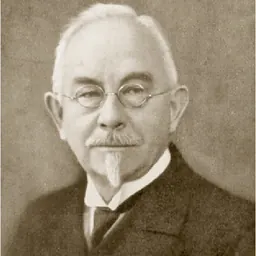
Lived 1897 – 1966 (aged 69). Ross Gunn was an American physicist, engineer and nuclear physicist.
Ross Gunn (May 12, 1897 – October 15, 1966) was an American physicist who worked on the Manhattan Project during World War II. The New York Times described him as "one of the true fathers of the nuclear submarine program".
From 1927 to 1947, Gunn worked at the Naval Research Laboratory. He was the author of over 28 papers, and received 45 patents. He designed radio devices for controlling aircraft, which were used in the development of the first drones. He was one of the first to appreciate the possibility of using nuclear power for submarine propulsion. During World War II he was involved in the development of thermal diffusion technology for isotope separation.
After the war Gunn became director of the Weather Bureau's Physical Research Division, where he carried out a series of studies into atmospheric phenomena. In 1958 he became a professor of physics at American University, a position he held until his death in 1966.
Early life Ross Gunn was born in Cleveland, Ohio, on May 12, 1897, the son of R. D. A. Gunn, a physician, and his wife Lora Conner Gunn. He was one of four children, with an older brother and sister and a younger brother. His parents also had a set of twins who died at birth. When he was seven years old, the family moved to Oberlin, Ohio, where his father had a medical practice. He attended Oberlin High School, from which he graduated in 1915, and then attended Oberlin College for two years. As a teenager, he was interested in amateur radio, which in those days meant building as well as operating your own set. During summer vacations he worked as a radio operator on the SS Seeandbee, a passenger ship on the Great Lakes, and for the Glenn L. Martin Company. After two years at Oberlin, he transferred to the University of Michigan because it had a better electrical engineering program.
When the United States entered World War I in 1917, Gunn enlisted in the United States Army Signal Corps, but remained at the University of Michigan as a military radio instructor. He returned to his studies when the war ended, his income supplemented by work as an instructor, and received his Bachelor of Science in Electrical Engineering (BSEE) degree from the University of Michigan in 1920. He then studied physics there, earning a Master of Science (MS) in 1921. He started work on his doctorate, but became bored, and accepted an offer from the Army to work at McCook Field as an aircraft radio research engineer. He developed various forms of aircraft instrumentation, participated in a number of cross-country instrument flights, and designed radio devices for controlling aircraft, for which he received the first of 45 patents that he would eventually accumulate. These were used in the development of the first drones, which were used as practice targets for antiaircraft gunnery.
Later life Gunn left the NRL for the United States Weather Bureau in February 1947. Although he had only a small staff and limited funds, he carried out a series of studies into atmospheric phenomena. He was director of the United States Air Force-Weather Bureau Cloud Physics Project from 1947 to 1949, and was a member of the Air Force's Scientific Advisory Board from 1948 to 1953. He was also a consultant for the United States Atomic Energy Commission from 1958 to 1965. His interest in atmospheric physics continued after 1958, when he left the Weather Bureau to become a research professor in physics at the American University in Washington, DC. He remained in this job until his death there on October 15, 1966.
Don’t just read it —
keep it.
Full-length biographies made to live with: read them, listen on the way to work, watch them tonight.
- E-book
- Audio
- Video
Instant download · yours to keep · every purchase keeps this site free
Important facts
Related people
Same field, nearest in time

Contemporaries
People whose lives overlapped Ross Gunn's



Frequently asked questions
Who was Ross Gunn?
American physicist
When was Ross Gunn born?
Ross Gunn was born on 12 May 1897 in Cleveland.
When did Ross Gunn die?
Ross Gunn died on 15 October 1966 in New York City.
What was Ross Gunn's occupation?
Ross Gunn was a physicist, engineer and nuclear physicist.
What nationality was Ross Gunn?
Ross Gunn was American.
Sources & further reading
Cite this page
APA: Biography.guide. (2026). Ross Gunn. https://biography.guide/ross-gunn/
MLA: "Ross Gunn." Biography.guide, https://biography.guide/ross-gunn/.
Chicago: "Ross Gunn." Biography.guide. https://biography.guide/ross-gunn/.
Data last updated: 2026-09-25 · Spot an error? Report a correction.
Page generated 2026-09-27 05:12 UTC