
Roshan Lal Shorey
Indian filmmaker and studio executive (1890s–1978)
About Roshan Lal Shorey
Lived 1890 – 1978 (aged 87–88). Roshan Lal Shorey was a film producer and film director.
Roshan Lal Shorey (1890 or 1897 – October 1978) was an Indian filmmaker and studio executive. Film historian Gautam Kaul refers to him as an pioneer of short film in India, while academic Rachel Dwyer identifies him and his son Roop K. Shorey as the key figures of the pre-independence Lahore film industry. After studying filmmaking and photography in the United States and working for the Fox Film Corporation, he returned to British India in 1921 to begin his career in silent documentaries and newsreels. Among his notable early works were films covering key Indian National Congress sessions, the 1923 kar sewa at Amritsar, and Mahatma Gandhi's 1930 Salt March.
Shorey played a foundational role in building the film infrastructure of Lahore. He established early production companies and studios, including the Punjab Film Corporation and Shorey Studios, the latter with his son. In the 1930s, Shorey transitioned to feature films and helped introduce talkies to Lahore, directing and producing Radhe Shyam (1932), one of India's earliest sound films. Following the Partition of India in 1947, he documented the refugee crisis in Millions On The Move (1948) while relocating to Bombay, later spending his final working years with the Government of Punjab in Shimla, and other organisations.
Life and career Shorey was born in Lahore, British India, in either 1890 or 1897. He initially worked in the photolithography department of the Military Staff College in Quetta, Balochistan. After graduating, Shorey travelled to the United States, where he studied filmmaking and photography; he received training in New York City and earned a diploma of merit in motion picture production. He then worked as a cameraman for the Fox Film Corporation.
Returning to India in 1921, Shorey began his filmmaking career in the silent-film era; his work was mostly sponsored by the Government of British India. He produced documentary films such as Criminal Tribes and Their Reform and Awakening of the Sleepy Hollow (on the Kangra Valley railway extension). In 1923, The Golden Temple authorities commissioned him to film the kar sewa at Amritsar.
Shorey founded Kamala Movietone in Lahore in 1924. Two years later, he established the Punjab Film Corporation (PFC), a fully equipped studio in Lahore where he served as technical director. Conceived as a government-supported organisation that provided facilities for nearly forty registered production companies, PFC played an important role in the development of the early Punjabi film industry.
During the late 1920s, Shorey covered several Indian National Congress sessions, notably at Gaya, Calcutta, Karachi and Lahore. In 1930, he was sent by the Punjab Government to film Mahatma Gandhi's Salt Movement, which film historian Gautam Kaul describes as the high point of Shorey's documentary career. In addition to this work, Shorey was also invited by several princely rulers to film state functions.
Shorey turned to feature filmmaking in the early 1930s, with his first production Kismet ke Here Phere (1931), a silent comedy with "suspense, stunts and thrills". In the early 1930s, Shorey became one of the early filmmakers who introduced sound films in Lahore, alongside Dalsukh M. Pancholi. His first sound film was Radhe Shyam (1932), a Hindu mythological film that was shot in Bombay. It is regarded as one of India's earliest talkies. His eldest son, Roop Kishore, assisted his father before making his directorial debut with Majnu (1935). The father-son duo established Shorey Studios in Lahore, equipping it with modern facilities and equipment.
Shorey later made films such as Swarg Ki Seedhi (1935) and Ik Musafir (1940). Beginning in 1942, Shorey Pictures grew into what The Encyclopaedia of Indian Cinema describes as "a major financier and distributor of post-independence Hindi film", with Roop serving as its in-house director. During the Partition of India in 1947, Shorey and his son migrated to Bombay, while he filmed the documentary Millions On The Move.
In his later years, Shorey moved to Shimla, where he worked for the Government of Punjab from 1948 to 1955. He also made films for several organisations including Information Films of India, Films Division of India, Technical Co-operation Mission and the Government of Afghanistan. Shorey died in October 1978 in Bombay, Maharashtra, India.
Filmography Documentary and short films According to Sanjit Narwekar's work A Directory of Indian Documentary (1998): Year Film Language Notes 1922 Criminal Tribes of India 1923 Kar Sewa 1930s Himalayan Wool 1941 Awakening of Sleepy Hollow 1944 Land of the Five Rivers 1944 Singing Punjab 1948 Millions on the Move 1948 Refugee 1949 Punar Jeevan Hindi 1949 Ishq-O-Dosti Persian 1949 Jashan Ishtaqlal 1949 Kabul 1950 Good and Bad Garden 1951 Progressive Punjab 1952 Progressive Uttar Pradesh Grow More Food 1952 Kulu: The Happy Valley 1953 Jal Shakti Labour Welfare Plant Protection Enemies of Our Lives 1954 Community Projects Road to Tibet Jail Sudhar Nangal Dam 1955 Thal Mein Jal 1956 Govind Sagar Harijan Electricity How to Make Better Gur Hamare Ban 1956 Criminal Tribes 1958 Kal Ke Nagarik
Feature films As director Year Film Language Notes Ref. 1931 Kismet Ke Here Phere Silent Shorey's first feature film Across The River 1932 Radhe Shyam (also released as Zulm-i-Kans) Hindi One of India's earliest talkies; co-directed with A. P. Kapur 1935 Swarg Ki Seedhi (also known as Sati Vimala) 1939 Sohni Mahiwal Punjabi Produced by Kamala Movietone 1939 Puran Bhagat 1940 Ik Musafir Co-directed with Roop K. Shorey
Footnotes
Don’t just read it —
keep it.
Full-length biographies made to live with: read them, listen on the way to work, watch them tonight.
- E-book
- Audio
- Video
Instant download · yours to keep · every purchase keeps this site free
Important facts
People in Roshan Lal Shorey's life
Named in this biography and alive at the same time



Related people
Same field, nearest in time


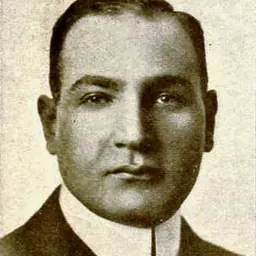

Contemporaries
People whose lives overlapped Roshan Lal Shorey's




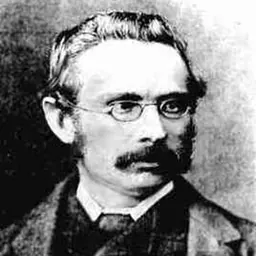
Frequently asked questions
Who was Roshan Lal Shorey?
Indian filmmaker and studio executive (1890s–1978)
When was Roshan Lal Shorey born?
Roshan Lal Shorey was born in 1890.
When did Roshan Lal Shorey die?
Roshan Lal Shorey died in 1978.
What was Roshan Lal Shorey's occupation?
Roshan Lal Shorey was a film producer and film director.
Sources & further reading
· Wikipedia: Roshan Lal Shorey
Cite this page
APA: Biography.guide. (2026). Roshan Lal Shorey. https://biography.guide/roshan-lal-shorey/
MLA: "Roshan Lal Shorey." Biography.guide, https://biography.guide/roshan-lal-shorey/.
Chicago: "Roshan Lal Shorey." Biography.guide. https://biography.guide/roshan-lal-shorey/.
Data last updated: 2026-09-20 · Spot an error? Report a correction.
Page generated 2026-09-27 05:13 UTC