
About Rosario Morales
Lived 1930 – 2011 (aged 80). Rosario Morales was an American poet and writer.
Rosario Morales (August 23, 1930 – March 23, 2011) was a Puerto Rican author and poet. She is best known for her book Getting Home Alive which she co-authored with her daughter Aurora Levins Morales in 1986. She was also significant within the Latina feminist movement and the Communist Party. She describes her own complicated identity in her poem "I am what I am", “I am Puerto Rican I am U.S. American… I am Boricua as Boricuas come… I am naturalized Jewish American… I am what I am. Take it or leave me alone."
Biography
Early life and childhood Rosario Morales was born in August 1930 to two immigrants from Naranjito, Puerto Rico, both from landholding families. Her mother worked in a hospital laundry, and later in a garment factory. Her father was a janitor and then an electrician. She was raised Catholic, and, although the family was not very devout, Rosario was very firm in her religious beliefs and even considered becoming a nun early in her life, although this religious fervor diminished over time. She grew up in El Barrio of New York City at a time when the Puerto Rican population was still very small. This profoundly impacted her identity; she learned to identify with other minority groups such as her Eastern European Jewish neighbors. The Morales family spoke Spanish at home until the children entered primary school. Once in English-speaking public school, Rosario and her sister began to primarily speak English, because it was the language they used for the longest parts of their day. She describes her feelings in her work “Puerto Rican Journal”: “This is not home eleven years couldn’t make it home. I’ll always be clumsy with the language always resentful of the efforts to remake me.”
In 1961, the family returned to Puerto Rico, where Dick joined the faculty of the University of Puerto Rico. Rosario pursued her interests in visual art and women's crafts, and began studying anthropology on her own, and during summers at the University of Michigan. Rosario and Dick's third child, Alejandro Rubén, was born in 1965, during an anti-war teach-in at the University of Puerto Rico, in which Dick played a leading role. Dick drove back and forth between the teach-in and the hospital during Rosario's labor.
In 1967, Dick was denied tenure at the University of Puerto Rico because of his political activism. Rosario wanted to go to graduate school in anthropology, and was concerned about the role models available to her daughter in rural Puerto Rico, so they decided to leave.
They moved to Chicago in June, 1967, and Rosario started graduate school at the University of Chicago. Within the first weeks of the semester, the students went on strike to protest the fact that many of the anthropology faculty were away doing field work, and few classes were being offered, and Rosario found herself in a leadership role in campus activism. Her prose poem "Concepts of Pollution" in Getting Home Alive describes her experience with the racism of anthropology. Her Masters thesis was a critique of the racism of French anthropologist Claude Levi-Straus, entitled "Tropes Tipique," a satirical play on his famous work, Tristes Tropiques.
Morales and her daughter Aurora became active in the women's movement in the late 1960s through their membership in the Chicago Women's Liberation Union. In 1975, Rosario and Dick moved to Cambridge, Massachusetts, where Dick joined the faculty of the Harvard School of Public Health. Rosario loved New England and it became the place she felt most at home. The couple also had a cabin in Marlboro, Vermont, where they spent summers.
In 1981, Rosario and Aurora were both contributors to This Bridge Called My Back: Writings by Radical Women of Color edited by Cher'rie Moraga and Gloria Anzaldúa. In 1983, they were approached by Nancy Bereano, a feminist editor, soon to be founder of Firebrand Books, who invited them to submit a joint manuscript. Getting Home Alive was published in 1986.
In 1995, she took a leadership role with the Women's Community Cancer Project partially due to her own health decline, but also as an attempt to revitalize her old interest in a more scientific field.
An artist and intellectual with wide-ranging interests, Rosario Morales studied botany, philosophy of science, feminist history and political writings, and fiber arts.
Career
Involvement in the Communist Party
During her schooling at Hunter College, Rosario began to lose faith in her religious beliefs. She cites this as one of the reasons she became so deeply involved in the Communist Party: it gave her something new in which to put her faith and passion.
She first discovered her interest in socialist ideology when two of her close friends in college enrolled her a course at the Jefferson School – a program run by the Communist Party. She fell in love with the philosophy she learned there.
In addition, it was through her new activism and friends that she met Dick Levins. Together, they joined the Communist Party on July 29, 1949. One of their early dates was the so-called Peekskill Riots, in which white supremacists tried to prevent a concert by Paul Robeson in Peekskill, New York.
After their move to Puerto Rico, both Rosario and Dick became members of the Puerto Rican Communist Party (1951–1956). Their involvement in communist activism at this time decreased due to the small size of the Puerto Rican Communist Party and its structure. The party in Puerto Rico was run by a very small core group, in which the participation of women was uncommon and discouraged. Rosario and Dick became close friends with César Andreu Iglesias, a prominent labor leader and journalist, who was in the leadership of the Party, and his wife, Jane Speed, an Alabama communist organizer.
In 1956, Jane attempted to get a leadership position within the party and, subsequently, was forced out of involvement. Both couples left the Communist Party, partially due to this incident, and also because of their disapproval of the factions forming within party leadership.
Later life Rosario stopped writing publicly and publishing before she died; she wanted to write because she had something poignant to say rather than because she thought of herself as a writer. Instead, she began to read a lot and took a bigger role in editing her husband's work on communism in Puerto Rico and Cuba.
Published works This Bridge Called My Back: Writings by Radical Women of Color, contributor (Persephone Press, 1981; Kitchen Table: Women of Color Press, 1983). Getting Home Alive, coauthor with Aurora Levins Morales (Firebrand Books, 1986).
Don’t just read it —
keep it.
Full-length biographies made to live with: read them, listen on the way to work, watch them tonight.
- E-book
- Audio
- Video
Instant download · yours to keep · every purchase keeps this site free
Important facts
Family & relationships
People in Rosario Morales's life
Named in this biography and alive at the same time
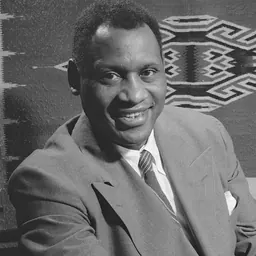


Related people
Same field, nearest in time

Contemporaries
People whose lives overlapped Rosario Morales's

Frequently asked questions
Who was Rosario Morales?
Puerto Rican writer and poet
When was Rosario Morales born?
Rosario Morales was born on 23 August 1930 in New York City.
When did Rosario Morales die?
Rosario Morales died on 23 March 2011.
What was Rosario Morales's occupation?
Rosario Morales was a poet and writer.
What nationality was Rosario Morales?
Rosario Morales was American.
Sources & further reading
Cite this page
APA: Biography.guide. (2026). Rosario Morales. https://biography.guide/rosario-morales/
MLA: "Rosario Morales." Biography.guide, https://biography.guide/rosario-morales/.
Chicago: "Rosario Morales." Biography.guide. https://biography.guide/rosario-morales/.
Data last updated: 2026-09-20 · Spot an error? Report a correction.
Page generated 2026-09-27 05:28 UTC