
About Ronglu
Lived 1836 – 1903 (aged 67). Ronglu was a Chinese military personnel and politician.
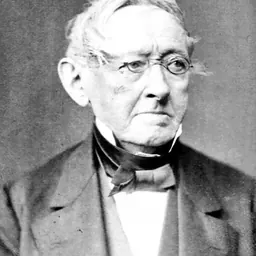
Ronglu (6 April 1836 – 11 April 1903), courtesy name Zhonghua, was a Manchu political and military leader of the late Qing dynasty. He was born in the Guwalgiya clan, which was under the Plain White Banner of the Manchu Eight Banners. Deeply favoured by Empress Dowager Cixi, he served in a number of important civil and military positions in the Qing government, including the Zongli Yamen, Grand Council, Grand Secretary, Viceroy of Zhili, Beiyang Trade Minister, Secretary of Defence, Nine Gates Infantry Commander, and Wuwei Corps Commander.
Ronglu did not want to antagonise Empress Dowager Cixi, but was not sympathetic towards the Boxers. Like the leading governors in the south, he felt that it was foolish for the Qing Empire to take on all the eight foreign powers at once. When Dong Fuxiang's Gansu Army was eager to attack the legations, Ronglu made sure that the siege was not pressed home. The xenophobic Prince Duan, who was a close friend of Dong Fuxiang, wanted Dong's forces to be equipped with artillery to destroy the legations. Ronglu blocked the transfer of artillery to Dong Fuxiang, preventing him from destroying the legations. When artillery was finally supplied to the Qing imperial forces and Boxers, it was only done so in limited quantities.
Ronglu also kept Nie Shicheng from finding out about an imperial decree that ordered him to stop fighting the Boxers. Nie Shicheng continued to fight the Boxers and killed many of them. Ronglu also ordered Nie Shicheng to protect foreigners and protect the railway from attacks by the Boxers. Ronglu had effectively derailed Prince Duan's efforts to capture the legations, and as a result, saved the foreigners inside. He was shocked that he was not welcome after the war; however, the foreign powers did not demand that he, unlike Dong Fuxiang, be punished.
In 1901, Empress Dowager Cixi issued five imperial decrees. The first ordered Ronglu to "command various imperial forces, including the Beijing Field Force, the Hushenying, with cavalry and the Wuwei Corps, to suppress these rebels (Boxers), to intensify searching patrol; to arrest and execute immediately all criminals with weapons who advocate killing." The fourth decree ordered Ronglu to "send efficient troops of the Wuwei Corps swiftly, to the Beijing Legation Quarter, to protect all the diplomatic buildings."
Later career and death In late 1900, Empress Dowager Cixi summoned Ronglu to Xi'an, where he was warmly received. He was awarded a yellow jacket, a two-eyed peacock feather, and a purple girdle. He escorted the Empress Dowager and the Guangxu Emperor back to the capital later.
In 1901, Ronglu was put in charge of the Ministry of Revenue. Later that year, he supported the reforms proposed by Liu Kunyi and Zhang Zhidong in their memorial titled Jiang Chu Hui Zou Bian Fa San Zhe (江楚會奏變法三折). In 1902, he was given additional honorary appointments as Crown Prince's Grand Protector (太子太保) and Grand Secretary of Wenhua Hall (文華殿大學士).
Ronglu died in 1903 and was posthumously granted the honorary appointment of Grand Tutor (太傅). He was also awarded the posthumous name "Wenzhong" (文忠) and posthumously enfeoffed as a first class baron (一等男爵).
Relationship with Empress Dowager Cixi Before Lady Yehenara (the future Empress Dowager Cixi) became a consort of the Xianfeng Emperor, Ronglu was allegedly in a romantic relationship with her. During Empress Dowager Cixi's tenure as regent of the Qing dynasty, Ronglu joined the Empress Dowager's conservative faction at the imperial court and opposed the Hundred Days' Reform in 1898. The Empress Dowager always remembered Ronglu's support for her, even when they were young, and rewarded him by allowing his only surviving child, his daughter Youlan, to marry into the imperial clan.
Through Youlan's marriage to Zaifeng (Prince Chun), Ronglu was the maternal grandfather of Puyi, the last emperor of the Qing dynasty.
Family Consorts and issue(s):
Wife, of the Sakda clan (正室薩克達氏) Wife of the Aisin-Gioro clan (正室愛新覺羅氏) Concubine, of the Liu clan (妾劉氏) Youlan, Imperial Princess Consort Chun (亲王福晋瓜爾佳幼蘭; 1884 – 30 September 1921), 2nd daughter Married Zaifeng, Prince Chun, grandson of Daoguang, and had issue (two sons and three daughters) Unknown Lunhou (纶厚), 1st son Second daughter
Portrayal in media Leo Genn portrayed Jung-lu (Ronglu) in the 1963 film 55 Days at Peking. Feng Shaofeng also portrayed Ronglu in the 2006 television series Sigh of His Highness. Portrayed by Han Xinmin in the 2006 television series Princess Der Ling. Portrayed by Mark Kitto in his one-man play Chinese Boxing.
Don’t just read it —
keep it.
Full-length biographies made to live with: read them, listen on the way to work, watch them tonight.
- E-book
- Audio
- Video
Instant download · yours to keep · every purchase keeps this site free
Important facts
Family & relationships
People in Ronglu's life
Named in this biography and alive at the same time



Related people
Same field, nearest in time


Contemporaries
People whose lives overlapped Ronglu's




Frequently asked questions
Who was Ronglu?
Qing Dynasty politician (1836-1903)
When was Ronglu born?
Ronglu was born on 6 April 1836.
When did Ronglu die?
Ronglu died on 11 April 1903 in Beijing.
What was Ronglu's occupation?
Ronglu was a military personnel and politician.
What nationality was Ronglu?
Ronglu was Chinese.
Sources & further reading
Cite this page
APA: Biography.guide. (2026). Ronglu. https://biography.guide/ronglu/
MLA: "Ronglu." Biography.guide, https://biography.guide/ronglu/.
Chicago: "Ronglu." Biography.guide. https://biography.guide/ronglu/.
Data last updated: 2026-09-20 · Spot an error? Report a correction.
Page generated 2026-09-27 05:23 UTC