
About Ronald Lockley
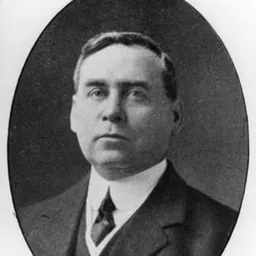
Lived 1903 – 2000 (aged 96). Ronald Lockley was a British and New Zealand ornithologist, writer, natural history and ornithology.
Ronald Mathias Lockley (8 November 1903 – 12 April 2000) was a Welsh ornithologist and naturalist. He wrote over fifty books on natural history, including a study of shearwaters, and the book The Private Life of the Rabbit, which was used in the development of his friend Richard Adams's children's book Watership Down.
Life and career Lockley was born in Cardiff and grew up in the suburb of Whitchurch, where his mother ran a boarding school. While still at school, he spent his weekends and summer holidays living rough in the woods and wetlands that now form the Glamorganshire Canal local nature reserve.
After leaving school, he established a small poultry farm with his sister near St Mellons, Cardiff.
His son is the palaeontologist Martin Lockley.
Skokholm
In 1927, with his first wife Doris Shellard, he took a 21-year lease of Skokholm, a small island some off the western tip of Pembrokeshire, which was inhabited only by rabbits and seabirds. Attempts to make a living from catching and selling rabbits and breeding chinchilla rabbits were abandoned when he found he could make a better living writing articles and books. He began to study migratory birds from 1928, establishing the first British bird observatory in 1933, and carrying out extensive pioneering research on breeding Manx shearwaters, Atlantic puffins and European storm-petrels. He was encouraged to record the exact incubation and fledging period of the Manx shearwater by Harry Witherby, the then editor of British Birds.
He provided the initial catalyst for the British Bird Observatory movement which, following the wartime interruption, reached its zenith in the fifties. He described his research in several books, including Dream Island (1930), Island Days (1934) and I Know an Island (1938). The work brought him to the notice of a wider circle of conservationists and naturalists, among them Peter Scott and Julian Huxley. Lockley's notable scientific monograph Shearwaters is a result of a twelve years' study. He founded the Pembrokeshire Bird Protection Society which later became the West Wales Field Society. He urged the broadening of the activities of the original Society and the extension of its area to include the whole of West Wales and it was at his insistence that the West Wales Field Society was incorporated as the West Wales Naturalists' Trust.
With Julian Huxley he made one of the first professional (BFI) nature films, The Private Life of the Gannets (1934), which won an Oscar.
Postwar Lockley continued farming on the mainland when Skokholm was used by the military during the Second World War. He played a key part in the preliminary survey of the natural history of Skomer Island in 1946, re-establishing Skokholm as a bird observatory and establishing the Council for the Promotion of Field Studies in Dale Fort. He played a role in setting up the Pembrokeshire Coast National Park in 1952, and in mapping out the coastal footpath around the county. Living at Orielton, a large estate near Pembroke, he undertook a four-year scientific study of rabbit behaviour for the British Nature Conservancy during the 1950s. As chairman of the West Wales Field Society, he also led an unsuccessful campaign against the building of a large oil refinery at Milford Haven. In 1993 he was awarded the Union Medal of the British Ornithologists' Union. He died in 2000, aged 96. His ashes were scattered from the boat Dale Princess, in the waters just off Skokholm Island in 2000.
In popular culture Lockley's The Private Life of the Rabbit (1964) played a role in the plot development of his friend Richard Adams's children's book Watership Down. The New York Times obituary observed "It was a rigorously factual work with none of the anthropomorphic sentimentality that infused Watership with its charm, but it bristled with insights." With Lockley's permission, Adams introduced him (alongside Sir Peter Scott) as a character in his later novel The Plague Dogs (1977).
Don’t just read it —
keep it.
Full-length biographies made to live with: read them, listen on the way to work, watch them tonight.
- E-book
- Audio
- Video
Instant download · yours to keep · every purchase keeps this site free
Important facts
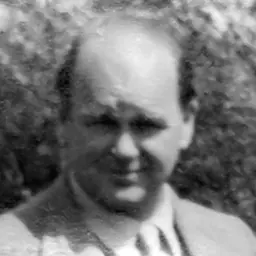
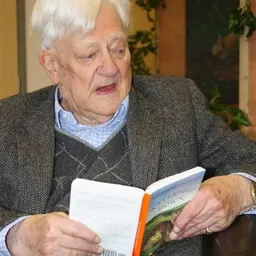
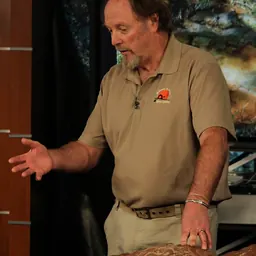
People in Ronald Lockley's life
Named in this biography and alive at the same time


Related people
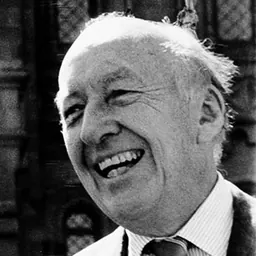
Same field, nearest in time



Contemporaries
People whose lives overlapped Ronald Lockley's

Frequently asked questions
Who was Ronald Lockley?
Welsh naturalist and author
When was Ronald Lockley born?
Ronald Lockley was born on 8 November 1903 in Cardiff.
When did Ronald Lockley die?
Ronald Lockley died on 12 April 2000 in Te Puke.
What was Ronald Lockley's occupation?
Ronald Lockley was an ornithologist, writer, natural history and ornithology.
What nationality was Ronald Lockley?
Ronald Lockley was British and New Zealand.
Sources & further reading
Cite this page
APA: Biography.guide. (2026). Ronald Lockley. https://biography.guide/ronald-lockley/
MLA: "Ronald Lockley." Biography.guide, https://biography.guide/ronald-lockley/.
Chicago: "Ronald Lockley." Biography.guide. https://biography.guide/ronald-lockley/.
Data last updated: 2026-09-20 · Spot an error? Report a correction.
Page generated 2026-09-27 05:27 UTC