
About Ron Herron
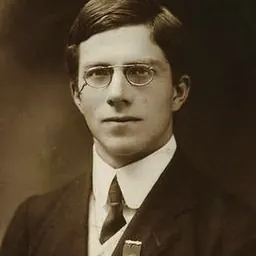
Lived 1930 – 1994 (aged 64). Ron Herron was a British architect, writer, teacher and author.
Ronald James Herron was an English architect and teacher. He is perhaps best known for his work with the seminal experimental architecture collective Archigram, which was formed in London in the early 1960s. Herron was the creator of one of the group's best known and celebrated projects, the Walking City.
Early life and education Ron Herron was born in London on 12 August 1930, to a leather-working family. He studied draughtsmanship at the Brixton School of Building and architecture at the Regent Street Polytechnic in London.
Academic career Herron taught at the Architectural Association in London from 1965 until 1993, when he was appointed as professor and Head of the School of Architecture at the University of East London.
Professional career Herron formed Herron Associates with his sons Andrew and Simon in 1981. The firm built the acclaimed Imagination Headquarters in London and were involved in the design for Canada Water station.
Archigram
Shortly after finishing his architectural studies, Herron went to work for London County Council, alongside Warren Chalk and Dennis Crompton.
Architects Peter Cook, Mike Webb, and David Greene had been meeting regularly as a group at a greasy spoon in Swiss Cottage, and had already self-published a pamphlet called "Archigram" (from "architecture" + "telegram"). After they published the second issue they sought out Herron, Chalk and Crompton, who they knew by reputation. These six formed the core of Archigram. In 1963 the group was invited by Theo Crosby to exhibit on "The Living City" at the Institute of Contemporary Arts, which became a manifesto of sorts.
Walking City Herron is remembered for his "Walking City", later described as "the international icon of radical architecture of the Sixties". While highly detailed, the drawings show little about how the ideas are meant to work in practice. Resembling the Maunsell Forts, they appeared warlike to some, leading Herron to be heckled at a conference in Folkestone in 1966 when he spoke about the Walking City. However, they were intended to be more like "survival pods" than weapons.
Personal life Herron married Pat Ginn in 1954 and they were together until he died. They had two sons.
Herron died at Woodford Green, Essex on 1 October 1994.
Don’t just read it —
keep it.
Full-length biographies made to live with: read them, listen on the way to work, watch them tonight.
- E-book
- Audio
- Video
Instant download · yours to keep · every purchase keeps this site free
Important facts
People in Ron Herron's life
Named in this biography and alive at the same time







Related people
Same field, nearest in time



Contemporaries
People whose lives overlapped Ron Herron's

Frequently asked questions
Who was Ron Herron?
British architect (1930–1994)
When was Ron Herron born?
Ron Herron was born on 12 August 1930 in London.
When did Ron Herron die?
Ron Herron died on 2 October 1994.
What was Ron Herron's occupation?
Ron Herron was an architect, writer, teacher and author.
What nationality was Ron Herron?
Ron Herron was British.
Sources & further reading
Cite this page
APA: Biography.guide. (2026). Ron Herron. https://biography.guide/ron-herron/
MLA: "Ron Herron." Biography.guide, https://biography.guide/ron-herron/.
Chicago: "Ron Herron." Biography.guide. https://biography.guide/ron-herron/.
Data last updated: 2026-09-20 · Spot an error? Report a correction.
Page generated 2026-09-27 05:34 UTC