
About Ron Grant
Lived 1940 – 1994 (aged 53–54). Ron Grant was an American motorcycle racer.
Ronald J. Grant (20 February 1940 – 27 December 1994) was a British-born American professional motorcycle racer and racing team manager. He competed in the AMA road racing national championships during the 1960s and early 1970s. In , he became the first American competitor to finish on the podium in a World Championship Grand Prix road race, when he finished in second place at the 250cc United States Grand Prix, held at the Daytona International Speedway. After his racing career, Grant became a racing team manager and respected engine tuner.
Motorcycle racing career Early British racing career Grant was born in East Croydon, South London on February 20, 1940. As a young boy, he attended speedway races with his father at New Cross Stadium, where he cheered for his idol Johnson and dreamed of becoming a racer himself.
Through an American friend, Grant received a job offer at a motorcycle garage in Hollywood, California, and in November 1961 at the age of 21, he loaded his Norton Manx aboard the SS Rotterdam and emigrated to the United States.
In , the FIM upgraded the Daytona race to world championship status by making it the opening round of the 1964 Grand Prix motorcycle racing season. A feud between the FIM and the AMA meant that AMA competitors such as Gary Nixon, Dick Mann and Roger Reiman were prevented from entering the FIM sanctioned event. Grant, by then a naturalized American citizen, became the first American competitor to finish on the podium in a World Championship Grand Prix road race, when he finished in second place behind Alan Shepherd (MZ) at the 1964 250cc United States Grand Prix. He also had an impressive victory at the 1964 Dodge City National, where he won the 250cc Amateur Class after starting the race from the last row on the grid.
Grant was offered a contract to race for Suzuki's American distributor in 1965. Grant participated in the 1967 Canadian Grand Prix at the Mosport Circuit, taking over Gary Nixon's Daytona-winning Triumph T100R when the latter was forced to ride the Oklahoma City National in order to clinch the AMA Grand National Championship. He was battling for third place behind the leading duo of Mike Hailwood and Giacomo Agostini, when he crashed out of the 500cc race.
At the 1968 Daytona 200, Grant put in an impressive performance riding an underpowered Suzuki T500 two-stroke motorcycle against larger and more powerful 750cc four-stroke motorcycles. Despite starting on the last row of the starting grid and making two pit stops for fuel, he managed to climb to fifth place by the end of the race.
Grant performed even better in the 1969 Daytona 200 where he was lying in second place behind Cal Rayborn, when he suffered a near disaster during a fuel stop after his pit attendant failed to tighten the fuel tank cap. The Suzuki T500 began to show its potential at the National road race in Indianapolis, when both Grant and his teammate Art Baumann finished in second and third places behind Cal Rayborn.
Grant then took his Suzuki motorcycles to the Bonneville Salt Flats and set three land speed records for stock production motorcycles, as well as modified, partially streamlined motorcycles.
At the final road race of the season held at Sears Point Raceway, Baumann and Grant were running in first and second places, however Grant had placed such confidence in his Suzuki, that he neglected to service the motorcycle after his land speed records and a mechanical failure forced him to abandon the race. Baumann went on to score the first AMA National road racing victory for the Suzuki factory. The race attracted road racing world champions such as Mike Hailwood and Kel Carruthers, and attendance began to surge with a record 30,000 spectators in 1970. Grant won the only AMA National of his career at the 1970 Pacific Raceways National near Kent, Washington, riding a Suzuki T500 to victory over Yvon Duhamel (Yamaha) and Gary Nixon (Triumph), two of the fiercest competitors in AMA racing.
For Grant and the Suzuki team, the 1971 AMA road racing championship was filled with misfortune and mechanical failures. At the season-ending race held at the Ontario Motor Speedway, Grant placed third behind John Cooper (BSA) and Kel Carruthers (Yamaha).
As motorcycle engine technology transitioned from the 60 horsepower four-stroke motorcycles of the 1960s, to the 100 horsepower two-stroke motorcycles of the 1970s, tire manufacturers struggled to keep pace with the surge in power. At the 1972 Daytona 200, Suzuki introduced the TR750 which was clearly the fastest motorcycle in the field. Suzuki teammates Art Baumann, Jody Nicholas and Geof Perry qualified first, second and third, with Grant qualifying just off the first row, however the Suzuki team struggled with tires that only lasted for a few laps.
In November 1972, Grant traveled to Australia to win in the inaugural Pan Pacific Series, a four-round series featuring races at Oran Park, Calder Park, Adelaide International Raceway, and Wanneroo Raceway. At the first round at Oran Park, he finished second to local rider Bryan Hindle (Yamaha), then won the second round with a dramatic, last-corner pass of Ginger Molloy (Kawasaki). At the 1973 Transatlantic Trophy, Grant took the lead at the first heat race at the Brands Hatch Circuit, but was struck by Paul Smart as they entered the first turn, causing him to crash. Grant was shaken up badly and missed the second heat race, and the crash affected his performance for the remaining four races of the series. Grant met Hennen while he was living in the San Francisco Bay Area, and hired him to help prepare racing motorcycles out of Grant's home garage. Grant then prepared a Suzuki T500 for Hennen as well as a Suzuki GT750 engine in a Rickman Brothers chassis. In 1974 Grant sponsored Hennen on a Yamaha TZ700, on which the latter scored the first major victory of his motorcycle racing career at the Daytona International Speedway when he set the fastest qualifying time and won the Junior Class event. Grant later invited a 16-year-old Randy Mamola to participate in the New Zealand Marlboro Series, providing him with valuable racing experience.
Grant returned to Britain in 1986 where he lived in Louth, Lincolnshire while working for several motorcycle racing teams as a team manager and became known as a talented engine builder and tuner. He also briefly lived in Italy working for the RUMI Honda team with rider Fred Merkel.
Grant drowned in a boating accident on Strangford Lough in Northern Ireland in 1994. Grant boarded a speedboat with five other passengers for a trip to a pub on Sketrick Island. Upon their return trip in darkness, the boat encountered problems and sank. Grant was 54-years-old. His ashes were scattered at the Daytona International Speedway.
Don’t just read it —
keep it.
Full-length biographies made to live with: read them, listen on the way to work, watch them tonight.
- E-book
- Audio
- Video
Instant download · yours to keep · every purchase keeps this site free
Important facts
People in Ron Grant's life
Named in this biography and alive at the same time






Related people
Same field, nearest in time

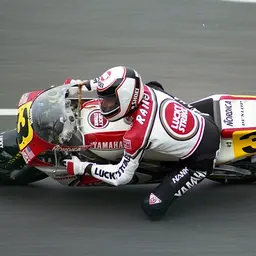
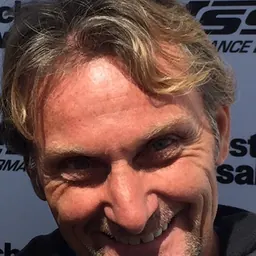
Contemporaries
People whose lives overlapped Ron Grant's
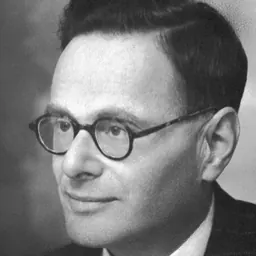
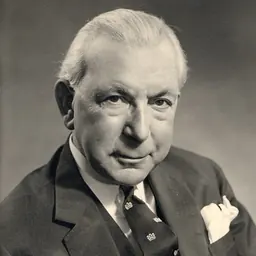

Frequently asked questions
Who was Ron Grant?
American motorcycle racer
When was Ron Grant born?
Ron Grant was born in 1940 in London.
When did Ron Grant die?
Ron Grant died on 27 December 1994 in Strangford Lough.
What was Ron Grant's occupation?
Ron Grant was a motorcycle racer.
What nationality was Ron Grant?
Ron Grant was American.
Sources & further reading
· DBpedia: Ron Grant (motorcyclist)
Cite this page
APA: Biography.guide. (2026). Ron Grant. https://biography.guide/ron-grant/
MLA: "Ron Grant." Biography.guide, https://biography.guide/ron-grant/.
Chicago: "Ron Grant." Biography.guide. https://biography.guide/ron-grant/.
Data last updated: 2026-09-20 · Spot an error? Report a correction.
Page generated 2026-09-27 04:59 UTC