
Ron Bailey
British environmental and democratic reform campaigner (born 1943)
About Ron Bailey
Born 1943. Ron Bailey is an environmentalist.
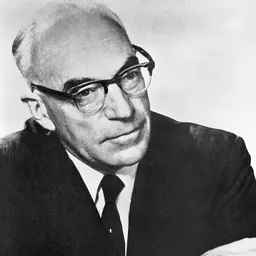
alt=Ron Bailey, parliamentary campaigner, at his 80th birthday celebration in Westminster, London (March 2023). Ron Bailey, parliamentary campaigner, at his 80th birthday celebration in Westminster, London (March 2023). Ronald Edward Bailey (born 7 March 1943) is a British campaigner and author associated with cross-party legislation. He first became known for his involvement in the family squatting movement of the 1970s, and later, for UK Parliament campaigns on energy conservation, sustainable transport and democratic reform.
Bailey has estimated his involvement in the passage of around 16 Acts of Parliament, with a hand in some 25 further legislative changes,
Early activism Bailey's brother, a folk singer, first introduced him to politics; his own early wariness of authority was reinforced after he was asked to leave grammar school for misbehaviour. Among his earliest campaigns was one supporting homeless families forcibly separated under hostel rules at King Hill, Kent. He has described spending long periods researching property law in the British Library, tracing precedent back to the 14th century so as to be prepared with legal argument when challenged. In June 1969, Bailey organised squatters' defences in Redbridge, in which squatters successfully repelled a private security force employed by the council to evict them. According to fellow campaigner Jim Radford, Bailey researched trespass law and developed the legal strategy used by family squatting campaigners.
In the 1970s, Bailey was linked with campaigns concerning tenant organisation and community self-management. In January 1974, with Jack Dromey and Jim Radford, Bailey co-organised a mass occupation of Centre Point in a high-profile protest against homelessness and property speculation in the capital.
In March 1982, he co-organised a protest outside Parliament The protest saw protesters dressed as judges board a public London bus in a symbolic demonstration against the ruling. The protest was supported by Ken Livingstone, Tony Banks and Valerie Wise.
Green Party involvement Bailey was active in the Green Party of England and Wales. In 1992, he was the party's campaigns officer and joined its executive committee as campaigns coordinator the following year. Green Party historian, Peter Barnett, has credited Bailey's "energetic campaigns department" with helping party branches during the late 1980s and 1990s; a period associated with the party's opposition to the community charge. and stood as a Green candidate for Leiston at the 2015 Suffolk Coastal District Council election.
Access to information campaigns Bailey was involved in campaigns for freedom of information and local government transparency during the 1980s, working with the Southwark-based Community Rights Project (CRP) - which he set up - and the Campaign for Freedom of Information.
Local Government (Access to Information) Act 1985 Through the CRP, Bailey played a central role in the campaign for Robin Squire's Local Government (Access to Information) Act 1985, which widened the rights of the press and public to attend local authority meetings and access councils' documents.
The campaign had its roots in 1983, when the Greater London Council's Grants Committee funded one of Bailey's projects with enough money to rent an office and employ staff; he used the funding to campaign for the GLC itself to hold its meetings in public, before building this into the wider national campaign. Bailey's methods included distributing files on councils' closed-door business to hundreds of local groups, generating enough correspondence that he says MPs were overheard complaining about the volume of letters in a parliamentary bar. He has said that his team deliberately amended the bill's wording during the campaign to allow ministers to present the change as their own rather than a concession, easing its passage through a government that had initially opposed it. which extended public access rights to the joint health and local authority committees responsible for overseeing the coordination of services for elderly, mentally ill and disabled people. Squire's tribute to CRP was referenced by Baroness Carnegy in the Bill's second reading debate in the Lords. The 1986 Act was repealed under the Health Act 1999.
Community Health Councils (Access to Information) Act 1988 A similar access to information framework was extended to community health councils (the statutory patient watchdog bodies) by Terry Lewis's Community Health Councils (Access to Information) Act 1988 which was steered through the House of Lords by Lord Stallard.
Environmental campaigns From the mid-1980s, Bailey worked on campaigns related to energy efficiency, sustainable transport and environmental legislation with the Sustainable Energy Partnership and the Sustainable Energy Association, which credited him for supporting the enactment of minimum energy performance standards in domestic buildings.
Home Energy Conservation Act 1995 and Energy Conservation Act 1996
Bailey's campaign for home energy conservation legislation included working with Cynog Dafis from 1992, who presented a Bill in 1993 – and with Alan Beith – who took it up in 1994, though his Bill was "talked out" after wrecking amendments were tabled at report stage. which required energy conservation authorities to improve the energy efficiency of residential accommodation in their areas. Peter Barnett described the 1995 Act as the result of three years of campaigning and coalition-building led by Bailey – noting it was the first time a non-parliamentary party's efforts had achieved legislation. Later, in 2020, Lord Foster praised Bailey for his assistance with the Domestic Premises (Energy Performance) Bill, whilst Lord Best described him as "a wonderful advocate for sustainable energy". In 2023, during the second reading of her Minimum Energy Performance of Buildings Bill, Sarah Olney thanked Bailey for his "time and commitment" to that campaign.
Road Traffic Reduction Acts 1997 and 1998 Bailey was involved in Don Foster's Road Traffic Reduction Act 1997, which required local authorities to consider policies for reducing road traffic growth. The campaign was promoted as a Green Party and Friends of the Earth initiative. credited Bailey with developing the Act's campaign strategy, describing his work with Bailey as producing "the most significant achievements" of his parliamentary career.
Bailey also supported Dafis's Road Traffic Reduction (National Targets) Act 1998 which required the government to set national targets for reducing road traffic. He later described the 1998 Act as "so watered down as to constitute a failure of the broader campaign for road traffic reduction",
Private Hire Vehicles (London) Act 1998
Bailey supported George Young and Jenny Tonge on the Private Hire Vehicles (London) Act 1998 which introduced a licensing regime for minicabs operating in London. Environmental supporters argued that licensing would reduce dependence on private cars in the capital. The campaign was obstructed by Eric Forth, which prompted critical early day motions signed by MPs and an Opposition Day debate led by Paul Tyler – which noted the Prime Minister's personal support for the Bill. As a result, the Government allocated committee stage time, allowing the Bill to complete its remaining stages. which allowed local authorities to take steps to reduce the generation of waste in their areas.
Warm Homes and Energy Conservation Act 2000 With Charles Secrett and others at Friends of the Earth, Bailey was involved in the campaign for David Amess's Warm Homes and Energy Conservation Act 2000,
Sustainable Energy Act 2003 and Climate Change and Sustainable Energy Act 2006 Bailey supported Brian White's Sustainable Energy Act 2003
Planning and Energy Act 2008
Bailey was associated with Michael Fallon's Planning and Energy Act 2008, which gave local planning authorities the power to set renewable energy and energy efficiency requirements above the national minimum. Alan Simpson said he owed Bailey "a particular debt of gratitude" for his assistance with that Bill. The Act sought to remove planning barriers to microgeneration and address a disincentive where householders and businesses that installed energy-saving technologies faced higher council tax or business rates as a result.
Electrical safety, climate and community energy campaigns Joan Ruddock credited him in 2009 with having worked closely with her on two of her own successful private member's bills – the Control of Pollution (Amendment) Act 1989 on fly-tipping and the Household Waste Recycling Act 2003, which placed a duty on local authorities to introduce doorstep recycling.
Bailey has been a parliamentary adviser to Electrical Safety First (ESF) and worked with the charity on electrical safety standards and lithium-ion battery safety campaigns. In 2022, Lord Foster thanked ESF and "especially Mr Ron Bailey" during a debate on his Domestic Premises (Electrical Safety Certificate) Bill. In 2024, during the second reading of Lord Redesdale's Lithium-ion Battery Safety Bill, Foster praised Bailey for raising awareness of lithium-ion battery safety.
Bailey has been associated with the Climate and Nature Bill through the environmental group, Zero Hour. In 2023, Redesdale thanked Bailey during the third reading of the Bill through the House of Lords, describing him as "a seasoned campaigner who has brought so many [ private members' bills] before Parliament". Bailey has led the parliamentary strategy for Power for People, a community energy organisation directed by Steve Shaw. The organisation campaigned for community energy system reform through David Johnston's Local Electricity Bill.
Democratic reform and localism campaigns Bailey was associated with constitutional reform and democratic participation campaigns linked to Charter 88 and Unlock Democracy, where he was co-director and campaigns director respectively, advocating for decentralisation, participatory democracy, citizens' initiatives and a Citizens' Convention Bill.
Sustainable Communities Act 2007 and (Amendment) Act 2010
In 2004, Bailey co-founded Active Citizens Transform (ACT) with Charles Secrett, which supported Nick Hurd's Sustainable Communities Act 2007. The Act aimed to increase the influence of local authorities and communities over local economic and environmental policy. Bailey was also the national organiser for Local Works, which coordinated support for Hurd's legislation. Bailey was described as securing broad parliamentary backing for the Bill, which was supported by Friends of the Earth, the Campaign to Protect Rural England and the National Federation of Women's Institutes.
During a 2010 debate on Alistair Burt's Sustainable Communities Act 2007 (Amendment) Bill, Nick Hurd said that Local Works was represented around Westminster "mostly in the person of Ron Bailey", describing his knowledge of parliamentary procedure as beneficial to supporting MPs. During a debate on the (Amendment) Bill, Lord Whitty said that Bailey was "one of the super-lobbyists for private members' bills", doing such work at "no gain whatsoever to himself, but to the great benefit of the community at large".
Campaigning approach Bailey has said he does not consider himself a lobbyist, describing his role instead as a "community mobiliser", on the basis that campaigns are won through public pressure outside Parliament rather than through Parliament itself. award to people "who have influenced Parliament for the welfare of society". In 1998, he received an Institute for Social Inventions award parliamentary campaigning, and in 1999 he received a (Green Futures magazine) Green Ribbon Political Award for parliamentary influencing. In 2009, he received a Lifetime Achievement Award by the APPG on Renewable and Sustainable Energy.
Books and reports alt=Parliamentary launch of Bailey's book, Institutionalised Deceit, in Committee Room 16, House of Commons on 3 June 2026 with Roz Savage, Simon Opher, Ellie Chowns, Lord Foster and Tom Brake. Parliamentary launch of Bailey's book, Institutionalised Deceit, in the House of Commons on 3 June 2026 with Roz Savage, Simon Opher, Adrian Ramsay, Ellie Chowns, Lord Foster and Tom Brake. Bailey's 1973 book The Squatters documented the British squatting movement and was cited in studies of housing and urban protest. He wrote The Homeless and the Empty Houses (1977), which was praised during a House of Lords debate in November 1977 by Lord Soper, and in 1994 he wrote Homelessness: What can be done?. He published two reports with Shelter: The Grief Report (1972) with Joan Ruddock on sheltered accommodation and Bed and Breakfast (1974) with Mary Evans Young.
In 1980, he wrote Dictators in the Town Hall, a critical study of local government secrecy in the London Borough of Redbridge, followed by the pamphlet Abolition of the Metropolitan Counties in 1984. Bailey contributed a chapter to The Secrets File (1984) which examined access to official information and critiqued the evidence base used by governments to justify new nuclear power stations in the report A Corruption of Governance?.
Legislative record Bailey's legislative campaigns have resulted in Acts of Parliament, successful Bills and amendments to legislation across housing, energy, environmental and democracy issues. An account of his parliamentary campaigns is provided in his book Institutionalised Deceit. 1985 Robin Squire and Baroness Carnegy of Lour Health Service Joint Consultative Committees (Access to Information) Act (repealed under the Health Act 1999) 1995 Diana Maddock and Baroness Hamwee Energy Conservation Act 1996 Alan Simpson and Baroness Wilcox Road Traffic Reduction Act 1997 Don Foster and Baroness Hamwee Road Traffic Reduction (National Targets) Act 1998 Cynog Dafis and Lord Elis-Thomas Waste Minimisation Act 1998 Angela Smith and Lord Hardy of Wath Private Hire Vehicles (London) Act 1998 George Young and Baroness Gardner of Parkes Warm Homes and Energy Conservation Act 2000 David Amess and Lord Newton of Braintree Sustainable Energy Act 2003 Brian White and Baroness Maddock Climate Change and Sustainable Energy Act 2006 Mark Lazarowicz and Lord Whitty Sustainable Communities Act 2007 Nick Hurd and Lord Marlesford Planning and Energy Act 2008 Michael Fallon and Lord Hanningfield Green Energy (Definition and Promotion) Act 2009 Peter Ainsworth and Lord Whitty Sustainable Communities Act 2007 (Amendment) Act 2010 Alistair Burt and Lord Whitty
Successful Bills According to Institutionalised Deceit, Housing Associations (Access to Information) Bill 1989 Andrew Welsh Housing Corporation issued guidance on tenant information Building Conversion and Energy Conservation Bill 1994 John McAllion Extended insulation requirements in building regulations Energy Saving Materials (Rate of Value Added Tax) Bill 1995 John McAllion Implemented via statutory instruments in 1998 and 2000 Domestic Combined Heat and Power (Reduction in VAT) Bill 2003 Alan Simpson Government implemented related VAT relief measures Fuel Poverty and Energy Conservation Bill 1999 John McAllion Fuel poverty included in local authority annual reporting Energy Efficiency (Information) Bill 1998 Julia Drown Government revised building regulations to require energy ratings on new homes Management of Energy in Buildings Bill 2006 Alan Whitehead Incorporated into the Climate Change and Sustainable Energy Act 2006 Microgeneration (Definition) (Amendment) Bill 2008 David Drew Statutory instrument extended microgeneration to include air source heat pumps Public Sector Buildings (Energy Performance) Bill 2008 Anne Snelgrove Became an amendment to the Climate Change Act 2008 Domestic Properties (Minimum Energy Performance) Bill 2019 David Amess Established legal duty to bring fuel-poor homes to EPC band C by 2030
Amendments and other campaigns According to Institutionalised Deceit, which included an early day motion signed by 412 MPs. The Bill was credited with contributing to the Climate Change Act 2008. According to Bailey, his other campaigns resulted in electrical safety standards commitments via the Fire Safety Act 2021 and Building Safety Act 2022, improved pollution reporting for waste incinerators in 2018 with David Drew, and Government commitments via Roz Savage's Climate and Nature Bill in 2025.
Personal life Bailey lives in Bristol. Bailey, Ron (1980). Dictators in the Town Hall: Public participation or abuse of power in Redbridge?. London: Community Rights Project. Bailey, Ron (1984). Abolition of the Metropolitan Counties: The denial of civil liberties. London: Community Rights Project and London Planning Aid Service. Bailey, Ron (1984). "Secrecy in the town hall". In Wilson, Des (ed.). The Secrets File: The case for freedom of information in Britain today. London and Portsmouth, NH: Heinemann Educational. ISBN 9780435839390. Bailey, Ron (1994). Homelessness: What can be done? A radical programme of self-help and mutual aid. Oxford: Jon Carpenter Publishing. ISBN 9781897766095. Green Party Policy Pathway Series, No. 3. Bailey, Ron; Blair, Lotte (2012). A Corruption of Governance? How Ministers and Parliament were misled (Report). Unlock Democracy and Association for the Conservation of Energy. Bailey, Ron (2026). Institutionalised Deceit: Taking the lid off Westminster Governance. Cambridge: Cambridge Book Publishing. ISBN 9781807250683.
Don’t just read it —
keep it.
Full-length biographies made to live with: read them, listen on the way to work, watch them tonight.
- E-book
- Audio
- Video
Instant download · yours to keep · every purchase keeps this site free
Important facts
People in Ron Bailey's life
Named in this biography and alive at the same time







Related people
Same field, nearest in time
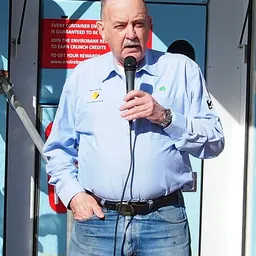



Contemporaries
People whose lives overlapped Ron Bailey's
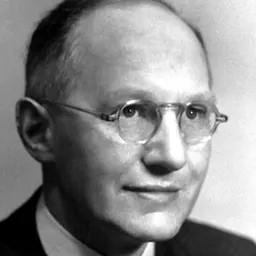

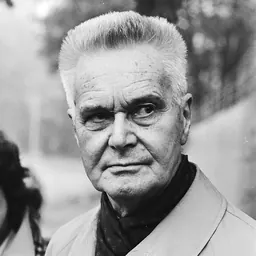
Frequently asked questions
Who is Ron Bailey?
British environmental and democratic reform campaigner (born 1943)
When was Ron Bailey born?
Ron Bailey was born in 1943.
What is Ron Bailey's occupation?
Ron Bailey is an environmentalist.
Sources & further reading
Cite this page
APA: Biography.guide. (2026). Ron Bailey. https://biography.guide/ron-bailey/
MLA: "Ron Bailey." Biography.guide, https://biography.guide/ron-bailey/.
Chicago: "Ron Bailey." Biography.guide. https://biography.guide/ron-bailey/.
Data last updated: 2026-09-20 · Spot an error? Report a correction.
Page generated 2026-09-27 05:21 UTC