
About Roland Burrage Dixon
Lived 1875 – 1934 (aged 59). Roland Burrage Dixon was an American anthropologist and university teacher.
Roland Burrage Dixon (November 6, 1875 – December 19, 1934) was an American anthropologist.
Early life and education Born at Worcester, Mass, in 1897 he graduated from Harvard University, where he remained as an assistant in anthropology, taking the degree of Ph. D. in 1900 and then serving as instructor and after 1906 as an assistant professor, rising to professor in 1915. Dixon spent his entire career at Harvard.
Peabody Museum In 1904, Dixon became Librarian of Harvard's Peabody Museum and has been credited for creating one of the most "comprehensive and functional anthropological libraries in the world". Dixon worked as a member of Boas's Jesup North Pacific Expedition, more specifically with the Huntington Expedition during the 1899-1905 field seasons with Native American groups in northeastern California. Dixon's early papers represent some of the earliest work inspired by Boas' views on culture. However, Boas did not fully articulate his views on culture until 1911, thus Dixon's work is less influenced by Boasian views than that of many of Boas' later students. Indeed, Boas and Dixon's views of culture clashed in numerous instances, in particular, over whether modern 'Stone Age' cultures could be used as analogs for prehistoric archaeological cultures. Boas was strongly opposed to this view. Dixon's approach towards cultures was geographic in orientation, and generally viewed cultures as static entities, with change primarily being induced by migration. Dixon's geographical-historical approach was not taken up by any later anthropologists.
Collaboration Dixon was fellow Boas student Alfred Kroeber's closest professional colleague from 1897 until about 1906. They coordinated closely, published a number of papers jointly, and had an explicit agreement not to duplicate one another's work, Dixon working on languages and cultures in northeastern California and the northern Sierra Nevada, Kroeber in the remainder of the state.
Travel and field work Dixon carried out ethnographic research in Siberia and Mongolia (1901); New Zealand, Tasmania, Australia, and Fuji (1909); Mexico (1910); Himalayas, Assam and Upper Burma, the Malay Peninsula and Java, China and Japan (1912-13).
Ideas on race Dixon was influenced in his ideas about race by his mentor, Putnam, who had been trained by Louis Agassiz and both of these 19th century anthropologists handed down a tradition of viewing the races as separate species. In his 1923 book, The Racial History of Man, Dixon disavowed earlier creationist polygenism while embracing a new evolutionary view of the races as coming from different fossil ancestors giving rise to different species of humans.
Recognition In 1910, Dixon was elected to the American Philosophical Society. He was vice president of the American Academy of Arts and Sciences in 1910–1911 and president of the American Folklore Society from 1907 to 1908. He was professor at Harvard after 1916 and member of the American Commission to Negotiate Peace (1916–1918) in Paris.
Selected works Maidu Myths (1902) The Chimariko Indians and Language (1910) Maidu Texts (1912) Oceanic Mythology (myths of the Indonesian, Oceanian, Australian region, published in 1916) Racial History of Man (1923)
Archive Dixon's ethnology and also his lecture notes and class materials are held at the Harvard University Archives.
Don’t just read it —
keep it.
Full-length biographies made to live with: read them, listen on the way to work, watch them tonight.
- E-book
- Audio
- Video
Instant download · yours to keep · every purchase keeps this site free
Important facts
Related people
Same field, nearest in time


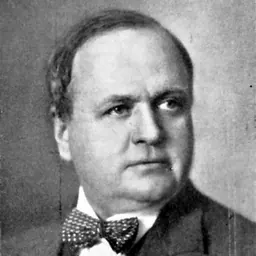


Contemporaries
People whose lives overlapped Roland Burrage Dixon's
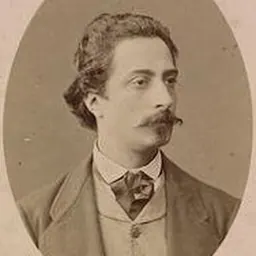


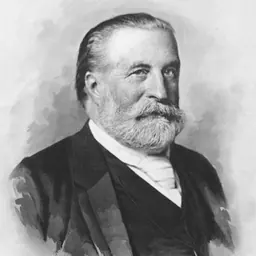
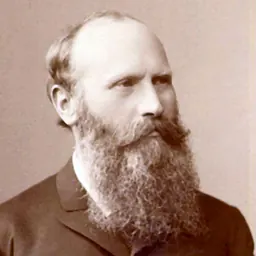
Frequently asked questions
Who was Roland Burrage Dixon?
American anthropologist (1875–1934)
When was Roland Burrage Dixon born?
Roland Burrage Dixon was born on 6 November 1875 in Worcester.
When did Roland Burrage Dixon die?
Roland Burrage Dixon died on 19 December 1934.
What was Roland Burrage Dixon's occupation?
Roland Burrage Dixon was an anthropologist and university teacher.
What nationality was Roland Burrage Dixon?
Roland Burrage Dixon was American.
Sources & further reading
· Wikipedia: Roland Burrage Dixon
· DBpedia: Roland Burrage Dixon
Cite this page
APA: Biography.guide. (2026). Roland Burrage Dixon. https://biography.guide/roland-burrage-dixon/
MLA: "Roland Burrage Dixon." Biography.guide, https://biography.guide/roland-burrage-dixon/.
Chicago: "Roland Burrage Dixon." Biography.guide. https://biography.guide/roland-burrage-dixon/.
Data last updated: 2026-09-26 · Spot an error? Report a correction.
Page generated 2026-09-27 05:16 UTC