
About Roger Schank
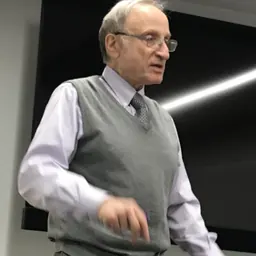
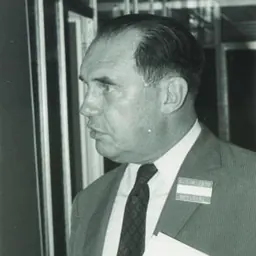
Lived 1946 – 2023 (aged 76). Roger Schank was an American computer scientist, university teacher, entrepreneur and artificial intelligence researcher.
Academic career For his undergraduate degree, Schank studied mathematics at Carnegie Mellon University in Pittsburgh PA, and later was awarded a PhD in linguistics at the University of Texas in Austin and went on to work in faculty positions at Stanford University and then at Yale University. In 1974, he became professor of computer science and psychology at Yale University. In 1981, Schank became Chairman of Computer Science at Yale and director of the Yale Artificial Intelligence Project.
In 1989, Schank was granted $30 million in a ten-year commitment to his research and development by Andersen Consulting, allowing him to leave Yale and set up the Institute for the Learning Sciences (ILS) at Northwestern University in Chicago, bringing along 25 of his Yale colleagues. ILS attracted other corporate sponsors such as IBM and Ameritech, as well as government sponsors such as the U.S. Army, EPA and the National Guard, ILS was later absorbed by the School of Education as a separate department.
When Carnegie Mellon University's Silicon Valley campus was established in 2002, Schank came to serve as Chief Educational Officer at the institution.
Entrepreneurship While at Yale in 1979, Schank was among the first to "capitalize on the expected boom" in AI when he founded Cognitive Systems, a company that went public in 1986. Schank resigned as chairman and chief executive in 1988 for personal reasons, but stayed as a board member and advisor.
In 1994, Schank founded Cognitive Arts Corporation (originally named Learning Sciences Corporation) to market the software developed at ILS, and led the company until it was sold in 2003.
From 2005 to 2007, Schank was the chief learning officer of Trump University.
In 2001 he founded Socratic Arts, a company that sells e-learning software to both businesses and schools.
Educational reform Schank believed that the educational system is fundamentally broken and that software will need to replace conventional teaching methods. To serve this purpose, he founded Engines for Education in 2001, a not-for-profit organization which designs and implements curricula for primary and secondary schools This model, partly based on the work of Sydney Lamb, was extensively used by Schank's students at Yale University, such as Robert Wilensky, Wendy Lehnert, and Janet Kolodner, in a series of models of natural language processing.
Case-based reasoning (CBR) is based on Schank's model of dynamic memory and was the basis for the earliest CBR systems: Janet Kolodner's CYRUS and Michael Lebowitz's IPP.
Other schools of CBR and closely allied fields emerged in the 1980s, investigating such topics as CBR in legal reasoning, memory-based reasoning (a way of reasoning from examples on massively parallel machines), and combinations of CBR with other reasoning methods. In the 1990s, interest in CBR grew, as evidenced by the establishment of an International Conference on Case-Based Reasoning in 1995, as well as European, German, British, Italian, and other CBR workshops.
CBR technology has produced a number of successful deployed systems, the earliest being Lockheed's CLAVIER, a system for laying out composite parts to be baked in an industrial convection oven. CBR has been used extensively in help desk applications such as the Compaq SMART system and has found a major application area in the health sciences.
Personal life and death
Schank was married three times. His first marriage, to Diane Levine, with whom he had two children,
Schank had homes in Palm Beach, Florida and rural Quebec. In Florida, he was a neighbor of Jeffrey Epstein, and attended an artificial intelligence conference sponsored by him on his island in 2002, six years before Epstein was convicted of sex offenses in 2008. After the conviction, Schank showed public support for him. He wrote, “this is why I lost interest in pussy; I knew I could have any girl I wanted on my terms; done.” The pair also regularly disparaged the intelligence of other experts in their correspondence, and Schank repeatedly used a racial slur when referring to Black experts.
Works Schank, Roger. Teaching Minds: How Cognitive Science Can Save Our Schools. New York: Teachers College Press, 2011, (paper) and (hardcover). Schank, Roger, Dimitris Lyras and Elliot Soloway. The Future of Decision Making: How Revolutionary Software Can Improve the Ability to Decide. New York: Palgrave Macmillan, 2010. Schank, Roger. Lessons in Learning, e-Learning, and Training: Perspectives and Guidance for the Enlightened Trainer. Pfeiffer, 2005. . Schank, Roger. Scrooge Meets Dick and Jane. Mahwah: Lawrence Erlbaum, 2001. Schank, Roger. Dynamic Memory Revisited, 2nd Edition. New York: Cambridge University Press, 1999. Schank, Roger, Virtual Learning: A Revolutionary Approach to Building a Highly Skilled Workforce. New York: McGraw Hill 1997. Schank, Roger and Gary Saul Morson. Tell Me A Story: Narrative and Intelligence. Northwestern Press, 1995. . Schank, Roger and Chip Cleary, Engines for Education. Hillsdale, NJ: Lawrence Erlbaum, 1995. Schank, Roger. The Connoisseur's Guide to the Mind: How we think, How we learn, and what it means to be intelligent. Summit Books, 1991. Schank, Roger. Tell Me A Story: A new look at real and artificial memory. Scribner's, 1990. Schank, Roger and Peter Childers. The Creative Attitude: Learning to Ask and Answer the Right Questions. MacMillan Publishing Company, 1988. Schank, Roger. The Cognitive Computer: On Language, Learning and Artificial Intelligence. Reading: Addison Wesley, 1984. Schank, Roger. Dynamic Memory: A Theory of Learning in Computers and People. New York: Cambridge University Press, 1982.
Schank, Roger. Conceptualizations underlying natural language. In Computer Models of Thought and Language, R. Schank & K. Colby, eds. San Francisco: W.H. Freeman, 1973.
Don’t just read it —
keep it.
Full-length biographies made to live with: read them, listen on the way to work, watch them tonight.
- E-book
- Audio
- Video
Instant download · yours to keep · every purchase keeps this site free
Important facts
People in Roger Schank's life
Named in this biography and alive at the same time






Related people
Same field, nearest in time




Contemporaries
People whose lives overlapped Roger Schank's



Frequently asked questions
Who was Roger Schank?
American scientist (1946–2023)
When was Roger Schank born?
Roger Schank was born on 12 March 1946 in New York City.
When did Roger Schank die?
Roger Schank died on 29 January 2023 in Shelburne.
What was Roger Schank's occupation?
Roger Schank was a computer scientist, university teacher, entrepreneur and artificial intelligence researcher.
What nationality was Roger Schank?
Roger Schank was American.
Sources & further reading
Cite this page
APA: Biography.guide. (2026). Roger Schank. https://biography.guide/roger-schank/
MLA: "Roger Schank." Biography.guide, https://biography.guide/roger-schank/.
Chicago: "Roger Schank." Biography.guide. https://biography.guide/roger-schank/.
Data last updated: 2026-09-20 · Spot an error? Report a correction.
Page generated 2026-09-27 05:27 UTC