
About Roger Scantlebury
Born 1936. Roger Scantlebury is a computer scientist.
Roger Anthony Scantlebury (born August 1936) is a British computer scientist and Internet pioneer who worked at the National Physical Laboratory (NPL) and later at Logica.
Scantlebury led the pioneering work to implement packet switching and associated communication protocols at the NPL in the late 1960s. He proposed the use of the technology in the ARPANET, the forerunner of the Internet, at the inaugural Symposium on Operating Systems Principles in 1967. During the 1970s, he was a major figure in the International Network Working Group through which he was an early contributor to concepts used in the Transmission Control Program which became part of the Internet protocol suite.
Early life Roger Scantlebury was born in Ealing in 1936.
Career National Physical Laboratory Scantlebury worked at the National Physical Laboratory in south-west London, in collaboration with the National Research Development Corporation (NRDC). His early work was on the Automatic Computing Engine and English Electric DEUCE computers. Scantlebury and Keith Bartlett were the first to describe the term protocol in a modern data-communications context in an April 1967 memorandum entitled A Protocol for Use in the NPL Data Communications Network. In October 1967, he attended the Symposium on Operating Systems Principles in the United States, where he gave an exposition of packet-switching, developed at NPL (and referenced the work of Paul Baran). Also attending the conference was Larry Roberts, from the ARPA; this was the first time that Larry Roberts had heard of packet switching. Scantlebury persuaded Roberts and other American engineers to incorporate the concept into the design for the ARPANET.
Subsequently he led the development of the NPL Data Communications Network, publishing several research papers pioneering the development of packet-switched computer networks. Elements of the network became operational in early 1969, the first implementation of packet switching, and the NPL network was the first to use high-speed links. He was seconded to the Post Office Telecommunications in 1969, participating in a data communications study and supervising four data communications-related research contracts. This research team developed the alternating bit protocol (ABP).
Along with Davies and Barber, he was a major figure in the International Network Working Group (INWG) from 1972, initially chaired by Vint Cerf. He attended the INWG meeting in New York in June 1973 that shaped the early direction of international network protocols, and was acknowledged by Bob Kahn and Vint Cerf in their seminal 1974 paper on internetworking, A Protocol for Packet Network Intercommunication. He co-authored the standard agreed by INWG in 1975, Proposal for an international end to end protocol.
Scantlebury later reported directly to Davies at the NPL. As head of the data networks group within the Computer Science Division, he was responsible for the UK technical contribution to the European Informatics Network, a datagram network linking CERN, the French research centre INRIA and the UK’s National Physical Laboratory.
Later career Scantlebury joined Logica in 1977 in their Communications Division, where he worked on the CCITT (ITU-T) X.25 protocol and with the formation of the Euronet, a pan-European virtual circuit network using X.25. He moved to the Finance Division in 1981.
Publications
Wilkinson, P.T.; Scantlebury, R.A. (1968). The control functions in a local data network. IFIP Congress (2) 1968: 734-738. Scantlebury, R. A.; Wilkinson, P.T.; Bartlett, K.A. (1968). The design of a message switching centre for a digital communication network. IFIP Congress (2) 1968: 723-727. Scantlebury, R. A. (1969). A model for the local area of a data communication network objectives and hardware organization. Symposium on Problems in the Optimization of Data Communications Systems 1969: 183-204 Bartlett, Keith A.; Scantlebury, Roger A.; Wilkinson, Peter T. (1969). A note on reliable full-duplex transmission over half-duplex links. Commun. ACM 12(5): 260-261.
Don’t just read it —
keep it.
Full-length biographies made to live with: read them, listen on the way to work, watch them tonight.
- E-book
- Audio
- Video
Instant download · yours to keep · every purchase keeps this site free
Important facts
People in Roger Scantlebury's life
Named in this biography and alive at the same time
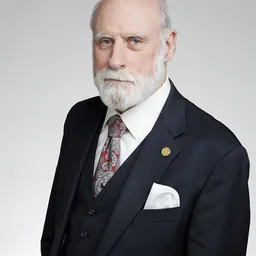



Related people
Same field, nearest in time



Contemporaries
People whose lives overlapped Roger Scantlebury's





Frequently asked questions
Who is Roger Scantlebury?
British computer scientist
When was Roger Scantlebury born?
Roger Scantlebury was born in 1936.
What is Roger Scantlebury's occupation?
Roger Scantlebury is a computer scientist.
Sources & further reading
· Wikipedia: Roger Scantlebury
Cite this page
APA: Biography.guide. (2026). Roger Scantlebury. https://biography.guide/roger-scantlebury/
MLA: "Roger Scantlebury." Biography.guide, https://biography.guide/roger-scantlebury/.
Chicago: "Roger Scantlebury." Biography.guide. https://biography.guide/roger-scantlebury/.
Data last updated: 2026-09-20 · Spot an error? Report a correction.
Page generated 2026-09-27 05:10 UTC