
About Roger Boisjoly
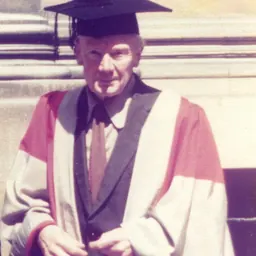
Lived 1938 – 2012 (aged 73). Roger Boisjoly was an American military flight engineer and engineer, known for Space Shuttle Challenger disaster.
Roger Mark Boisjoly ( ; April 25, 1938 – January 6, 2012) was an American mechanical engineer, fluid dynamicist, and an aerodynamicist. He is best known for having raised strenuous objections to the launch of the Space Shuttle Challenger months before the loss of the spacecraft and its crew in January 1986. Boisjoly correctly predicted, based on earlier flight data, that the O-rings on the rocket boosters would fail if the shuttle launched in cold weather. Morton Thiokol's managers decided to launch the shuttle despite his warnings, leading to the catastrophic failure. He was considered a high-profile whistleblower.
Early life and education Boisjoly was born on April 25, 1938, in the city of Lowell, Massachusetts to Joseph and Isabel Boisjoly. He was of French-Canadian descent. He grew up in the neighborhood of Belvidere as the son of a mill worker and one of three brothers. During high-school he played tennis.
Career Boisjoly started his career at a used-aircraft company in western Massachusetts, before moving to California for work. Following several further memos, a task force was convened to investigate the matter, but after a month Boisjoly realized that the task force had no power, no resources, and no management support. In late 1985, Boisjoly advised his managers that if the problem was not fixed, there was a distinct chance that a shuttle mission would end in disaster. No action was taken.
Challenger disaster
Following the announcement that the Challenger mission was confirmed for January 28, 1986, Boisjoly and his colleagues tried to stop the flight. Temperatures were due to fall to overnight. Boisjoly felt that this would severely compromise the safety of the O-ring and potentially the flight.
The matter was discussed with Morton Thiokol managers, who agreed that the issue was serious enough to recommend delaying the flight. NASA protocols required all shuttle sub-contractors to sign off on each flight. During the go/no-go telephone conference with NASA management the night before the launch, Morton Thiokol notified NASA of their recommendation to postpone. NASA officials strongly questioned the recommendations, and asked (some say pressured) Morton Thiokol to reverse its decision.
The Morton Thiokol managers asked for a few minutes off the phone to discuss their final position again. The management team held a meeting from which the engineering team, including Boisjoly and others, were deliberately excluded. The Morton Thiokol managers advised NASA that their data was inconclusive. NASA asked if there were objections. Hearing none, NASA decided to launch the STS-51-L Challenger mission.
Historians have noted that this was the first time NASA had ever launched a mission after having received an explicit no-go recommendation from a major contractor, and that questioning the recommendation and asking for a reconsideration was highly unusual. Many have also noted that the sharp questioning of the no-go recommendation stands out in contrast to the immediate and unquestioning acceptance when the recommendation was changed to a go.
The concerns of Boisjoly proved correct. Initially, Boisjoly was relieved when the flight lifted off, as he had predicted that the SRB would explode before lift-off.
Upon ignition, the O-ring was burned to ash, which formed a weak seal in the joint. At 58 seconds after launch, the shuttle was buffeted by high-altitude winds, the ash seal collapsed, and hot gases streamed out of the joint in a visible blowtorch-like plume that burned into the external hydrogen tank. At about 73 seconds, the rear dome of the external fuel tank became weakened enough by the flame that it broke open, dumping all of the liquid hydrogen fuel into the air at once; at about the same time, the adjacent SRB strut gave way, the right rocket booster crashed into the external fuel tank and the right wing of Challenger, and the vehicle quickly disintegrated.
Later career After President Ronald Reagan ordered a presidential commission to review the disaster, Boisjoly was one of the witnesses called. He gave accounts of how and why he felt the O-rings had failed, and argued that the caucus called by Morton Thiokol managers, which resulted in a recommendation to launch, was an "unethical decision-making forum resulting from intense customer intimidation."
After the disaster, Boisjoly suffered from insomnia, depression, and severe headaches. According to Boisjoly, Thiokol unassigned him from space work, and he was ostracized by his colleagues and managers. One colleague warned him, "If you wreck this company, I’m going to put my kids on your doorstep." He filed two lawsuits against Thiokol that were later dismissed.
After leaving Morton Thiokol, Boisjoly founded a forensic engineering firm and was frequently invited to speak on leadership ethics.
When Boisjoly left Morton Thiokol, he took 14 boxes containing every note and paper he received or sent in seven years. On May 13, 2010, he donated his personal memoranda—six boxes of personal papers, including memos and notes from his congressional testimony—to Chapman University in Orange, California. Rand Boyd, the special-collections and archival librarian at Chapman's Leatherby Libraries, said the materials would be catalogued and archived. They can be viewed by library visitors. Boisjoly was followed in 2016 by fellow Challenger whistleblower Allan McDonald, who also donated his documents to Chapman University.
Boisjoly married his wife Roberta in 1963. The couple had two daughters and at the time of his death eight grandchildren. He was 73.
Depiction in media In the 1990 made-for-television film Challenger, Boisjoly was portrayed by actor Peter Boyle.
Don’t just read it —
keep it.
Full-length biographies made to live with: read them, listen on the way to work, watch them tonight.
- E-book
- Audio
- Video
Instant download · yours to keep · every purchase keeps this site free
Important facts
People in Roger Boisjoly's life
Named in this biography and alive at the same time

Related people
Same field, nearest in time

Contemporaries
People whose lives overlapped Roger Boisjoly's




Frequently asked questions
Who was Roger Boisjoly?
American aerospace engineer (1938–2012)
When was Roger Boisjoly born?
Roger Boisjoly was born on 25 April 1938 in Lowell.
When did Roger Boisjoly die?
Roger Boisjoly died on 6 January 2012 in Nephi.
What was Roger Boisjoly's occupation?
Roger Boisjoly was a military flight engineer and engineer.
What was Roger Boisjoly known for?
Roger Boisjoly was known for Space Shuttle Challenger disaster.
What nationality was Roger Boisjoly?
Roger Boisjoly was American.
Sources & further reading
Cite this page
APA: Biography.guide. (2026). Roger Boisjoly. https://biography.guide/roger-boisjoly/
MLA: "Roger Boisjoly." Biography.guide, https://biography.guide/roger-boisjoly/.
Chicago: "Roger Boisjoly." Biography.guide. https://biography.guide/roger-boisjoly/.
Data last updated: 2026-09-20 · Spot an error? Report a correction.
Page generated 2026-09-27 05:10 UTC