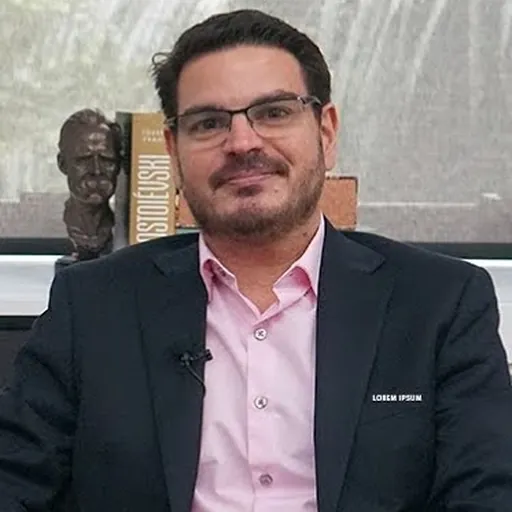
About Rodrigo Constantino
Born 1976. Rodrigo Constantino is a Brazilian economist.
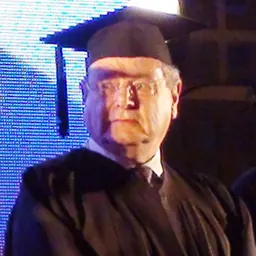
Rodrigo Constantino dos Santos (born 4 July 1976) is a Brazilian economist, writer, columnist, and political commentator.
He is the president of the Brazilian Liberal Institute and a founding member of the Instituto Millennium. He collaborated with important media such as Veja, Valor Econômico, O Globo, Isto é, currently is a political commentator for Jovem Pan and writes a daily column for Gazeta do Povo. Among the many books he has written include the best seller Esquerda Caviar; Contra a maré vermelha and Confissões de um ex-libertário. Since 2015 Constantino resides in the United States, in the city of Weston, Florida.
Rodrigo is known for his extreme conservative views, being one of the main references in Brazilian journalism in far-right.
Academic life
Constantino graduated in 1998 from the Pontifical Catholic University of Rio de Janeiro (PUC-RJ), and in 2000 obtained a Master of Business Administration (MBA) in Finance from Ibmec in Rio de Janeiro.
Career
President of the Instituto Liberal and one of the founders of Instituto Millenium, he was considered in 2012 by the magazine Época one of the "new trombones of the right" in Brazil. He was a director of Graphus Capital between 2005 and 2013.
He worked in the financial market from 1997 to 2013, having been an analyst at FonteCindam bank between 1997 and 1999.
He was a writer for the magazine Voto and wrote regularly for the newspapers Valor Econômico and O Globo. He has a blog where he writes daily, and since 2016 he has been a columnist for Istoé magazine.
In August 2013, he started to write for the magazine Veja. In 2015, he was fired by Editora Abril and subsequently had all the articles on his blog, produced for two years, removed from the magazine's website.
Controversial Statements About Rape Case and Dismiss In November 2020, Constantino was dismissed from Jovem Pan, Constantino statements were widely criticized by the media that accused him of being an apology for the rapist, in addition to victim blaming. The following day, he was also fired from Grupo Record, where he had a column on the R7 portal, in addition to being a commentator for Record News. Rádio Guaíba and the newspaper Correio do Povo also confirmed his dismissal. Two months after the incident, Jovem Pan revised its decision and rehired Constantino as political commentator for one of the network's daily programs, "Pingos nos Is" and later to return to its original program, "3 in 1". Constantino writes a daily column for the Gazeta do Povo newspaper and hosts the "Tudo Consta" lives on Mondays and Wednesdays on YouTube.
On January 10, 2023, Jovem Pan decided to remove Rodrigo Constantino and the commentator and partner of Donald Trump, Paulo Figueiredo. The decision came after the Federal Public Ministry of São Paulo opened an investigation against the channel for supporting the coup acts, which occurred in the Brazilian Congress attack on January 8, 2023, on the Three Powers Plaza, in Brasília, Brazil.
Political views
"Racist holiday"
In a 2007 article titled "Feriado racista" ("Racist holiday"), Constantino criticized the existence in Brazil of Black Awareness Day, although this is not a national holiday (but that has been implemented in some states, such as Rio de Janeiro). He illustrated his view remembering Martin Luther King Jr. and his "I Have a Dream" speech, which condemns racism, as for Constantino, this holiday can be considered racist. Constantino says that "Brazil is a country with a recordist number of holidays, as our country isn't rich enough to have that luxury." He believes that, in Brazil, politicians always focus on minority groups, seeking to guarantee privileges in exchange for votes. About the people of the country, he claims that "people do not care about the amount of holidays because it is one more lazy day for a people who idolizes sloth."
Constantino in particular cites King's quote of "it's my dream that my four children would one day live in a nation where they would not be judged by the color of their skin, but by the content of character", claiming that in Brazil the opposite has been going on, and "people would be taking advantage of his black condition to get privileges, wanting to be judged by the color of their skin and not by character." He gives as an example the implementation of racial quotas in Brazilian universities and the establishment of black holidays, saying: "This is what they are encouraging in the country: totally abandon of the concepts of individual merit, and adopt the skin color criterion, still subject to gross errors like white people who claim to be black, and still manage to enter into Brazil's universities by racial quotas. Whether the individual is black, yellow, brown or white, it says absolutely nothing about their values and character. There are admirable blacks and perfidious blacks, as well as admirable whites and perfidious whites. But nobody is brave just for being black, because there is no moral choice about it. This would be like admiring someone for being tall or short. It makes no sense."
Constantino also mentions an "oil curse": that countries that have oil production much above its consumption, and its economy based on exporting oil, usually have their wealth extremely poorly distributed (which he argues are "usually concentrated in the hands of a small elite, which becomes totalitarian"), and do not develop other economic potentials due to the ease that too much oil extraction provides, as is the case with almost all countries of OPEC. He cites "countries like Venezuela, Mexico, Iran, Saudi Arabia, Nigeria and Russia have state companies controlling oil exploration. No one would dare say that it did well for their respective peoples, victims of authoritarian regimes."
"Caviar left" In a text published in the newspaper O Globo in 2012, Constantino used the mayoral election of Rio de Janeiro, disputed mainly between Eduardo Paes (PMDB party, elected) and Marcelo Freixo (PSOL, a left party) as an example to write about what he sees as a "Brazilian caviar left", a pejorative term broadly similar to the English "champagne socialist" and the American "limousine liberal", stating: "Rio de Janeiro is a victim of a real plague: the 'caviar-left', formed by the financial and cultural elite of the country. Their members pose as altruistic, while praising bloody dictators like Fidel Castro. From the comfort of their apartments in Paris, because no one is made by iron." Constantino further claims that "our artists and leftist intellectuals have schizophrenia, because admire socialism but also love three things that only capitalism can give to you: Good caches in hard currency, no censorship, and bourgeois consumerism. Hypocrisy is useful: approaching the power, these intellectuals get privileges. Petrobras, for example, has allocated R$ 652 million for 'cultural sponsorships' between 2008 and 2011." Constantino went on to claim that one of the reasons for the formation of the "caviar left" is "a sentiment of guilt", saying that "culturally, in a country that condemns profit, and sees the economy as a zero-sum game, where Joseph, to get rich, need to take from John, the success ends up being a 'personal offense', as Tom Jobim said."
Personal life
Constantino is a Roman Catholic convert from atheism.
Awards
He won the Libertas Award in 2009, at the XXII Freedom Forum.
Don’t just read it —
keep it.
Full-length biographies made to live with: read them, listen on the way to work, watch them tonight.
- E-book
- Audio
- Video
Instant download · yours to keep · every purchase keeps this site free
Important facts
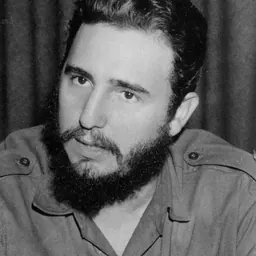
People in Rodrigo Constantino's life
Named in this biography and alive at the same time







Related people
Same field, nearest in time




Contemporaries
People whose lives overlapped Rodrigo Constantino's



Frequently asked questions
Who is Rodrigo Constantino?
Brazilian columnist
When was Rodrigo Constantino born?
Rodrigo Constantino was born on 4 July 1976 in Rio de Janeiro.
What is Rodrigo Constantino's occupation?
Rodrigo Constantino is an economist.
What nationality is Rodrigo Constantino?
Rodrigo Constantino is Brazilian.
Sources & further reading
· Wikipedia: Rodrigo Constantino
· DBpedia: Rodrigo Constantino
Cite this page
APA: Biography.guide. (2026). Rodrigo Constantino. https://biography.guide/rodrigo-constantino/
MLA: "Rodrigo Constantino." Biography.guide, https://biography.guide/rodrigo-constantino/.
Chicago: "Rodrigo Constantino." Biography.guide. https://biography.guide/rodrigo-constantino/.
Data last updated: 2026-09-22 · Spot an error? Report a correction.
Portrait: Wikimedia Commons · author & licence
Page generated 2026-09-27 05:02 UTC