
Roberto Kolter
Professor of Microbiology, Emeritus at Harvard Medical School
About Roberto Kolter
Born 1953. Roberto Kolter is a scientist and microbiologist, known for Biofilms and Stationary phase (biology).
Roberto Kolter is professor of microbiology, emeritus, at Harvard Medical School, an author, and past president of the American Society for Microbiology. Kolter has been a professor at Harvard Medical School since 1983 and was Co-director of Harvard's Microbial Sciences Initiative from 2003-2018. During the 35-year term of the Kolter laboratory from 1983 to 2018, more than 130 graduate students and postdoctoral trainees explored an eclectic mix of topics gravitating around the study of microbes. Kolter is a fellow of the American Association for the Advancement of Science and of the American Academy of Microbiology.
As professor emeritus, Kolter has continued his involvement in science by communicating microbiology to scientific and general audiences. Since 2016, Kolter has been co-blogger (with Moselio Schaechter) of the popular microbiology blog, Small Things Considered. From 2014 to 2018, Kolter and Scott Chimileski developed two exhibitions at the Harvard Museum of Natural History: World in a Drop, open in 2017, and Microbial Life, open through 2020. In parallel, Chimileski and Kolter wrote the book Life at the Edge of Sight: A Photographic Exploration of the Microbial World (Harvard University Press, 2017). During a 2018 interview at EAFIT University in Colombia, Kolter explained that he is "in a more contemplative phase of his career," adding that he is enjoying "being able to exercise a little more the 'Ph' (Philosophy) of my PhD". The eclectic nature of Kolter's research program was also a result of his policy of encouraging postdoctoral scientists to explore independent interests. Kolter's research group was influential in the study of bacterial transport systems known as ABC exporters, published some of the earliest examples of experimental evolution through investigations of the stationary phase of bacterial growth, The lab popularized the concept of bacterial biofilm formation as developmental or multicellular microbial processes, and pioneered genetic studies of cellular differentiation, signaling, and division of labor in bacteria. In addition, his group has worked on other aspects of bacterial physiology, the domestication of lab strains of bacteria, microbiome ecology, interactions between plants and bacteria, bacterial respiration processes, and bioactive compound discovery.
Some of Kolter's significant scientific contributions are categorized below in chronological order.
Major topics of investigation
Regulation of DNA replication
As a graduate student, Kolter's research provided early evidence for what was called the "replicon hypothesis," proposed by Jacob, Brenner and Cuzin in 1962. His work defined an origin of DNA replication that led to the development of many suicide cloning vectors still in use today.
Peptide antibiotic biosynthesis and ABC exporters
As a new faculty member at Harvard Medical school in the 1980s, Kolter's research group made use of Escherichia coli as a model organism for understanding the molecular genetics of antibiotic biosynthesis. During the course of this work the group was among the first to characterize ABC exporters, today known to be one of the most important membrane protein systems that move molecules across the cell membrane.
Physiology and evolution during stationary phase
In the late 1980s, Kolter's research group became interested in bacteria living in the stationary phase of the growth cycle, a state more like the natural conditions that bacteria experience in environments outside of the laboratory. The group discovered regulatory systems exclusive to cells in this non-growing state and found that mutants with greater fitness in stationary phase evolved and rapidly took over the cultures. The Zambrano et al. paper in 1993 which published this finding was one of the earliest examples of evolution occurring in the laboratory, or experimental evolution.
Bacterial biofilms
In the 1990s, Kolter's group began to focus on the regulation and genetic components of surface-associated communities of bacteria called biofilms. Before then, biofilms had been discovered and were studied in the context of biofouling and in engineering solutions to prevent biofouling, but the genetics of biofilm formation was unexplored and most microbiologists did not view biofilm formation as a physiological process of bacterial cells. The lab went on to discover major regulatory systems underpinning biofilm development and characterized key materials within the extracellular matrix of biofilms using model species like Pseudomonas aeruginosa, Escherichia coli, Vibrio cholerae, and Bacillus subtilis. Microbial biofilms have since become a major field of microbiology, recognized as a predominant lifestyle of microbes in nature, with relevance to medicine and infections caused by pathogenic bacteria.
Microbial intraspecies interactions, cell differentiation & division of labor
Another body of research stemmed from work on biofilms in the Kolter group in collaboration with the laboratory of Richard Losick: the discovery that subpopulations of different functional cell types develop within single-species biofilms of the bacterium Bacillus subtilis. Some cells were found to express genes for motility, others for sporulation, cannibalism, surfactant production or the secretion of extracellular matrix. His work in science communication then intensified in the years leading up to his retirement and now as an emeritus professor through invited lectures, writing and museum projects.
Books
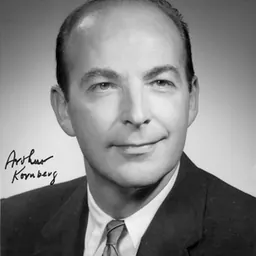
Germ Stories by Arthur Kornberg, 2007 (provided photography) March of the Microbes by John Ingraham (authored a foreword) Microbes and Evolution:The World Darwin Never Saw, 2012, co-edited with Stanley Maloy, American Society of Microbiology Press, Life at the Edge of Sight: A Photographic Exploration of the Microbial World, 2017, coauthored with Scott Chimileski, Harvard University Press,
Museum exhibitions From 2014 through 2018, Kolter and Scott Chimileski spearheaded two public exhibitions at the Harvard Museum of Natural History. Subsequently, Microbial Life: A Universe at the Edge of Sight opened in February 2018 as major special exhibition supported by the Alfred P. Sloan Foundation. Kolter and Chimileski are guest curators of Microbial Life and the exhibition remains open until March 2020.
Chimileski and Kolter were also advisors and contributed imagery for Invisible Worlds at the Eden Project, a permanent exhibition sponsored by the Welcome Trust. Their still and time-lapse imagery was featured in the Bacterial World Exhibition at the Oxford University Museum of Natural History in 2018, and in the World Unseen: Intersections of Art and Science at the David J. Sencer CDC Museum in Atlanta, Georgia in 2019.
Teaching and editing Kolter has a long record of teaching at Harvard University and at international summer courses. At Harvard he taught Biofilm Dynamics and he is currently developing a Massive Open Online Course with HarvardX on fermentation and microbial foods. He is a regular instructor at the Microbial Diversity Course at the Marine Biological Laboratory in Woods Hole, Massachusetts, the EMBO-FEBES summer microbiology course in Spetses, Greece and the John Innes/Rudjer Bošković Summer School in Applied Molecular Microbiology in Dubrovnik, Croatia.
Don’t just read it —
keep it.
Full-length biographies made to live with: read them, listen on the way to work, watch them tonight.
- E-book
- Audio
- Video
Instant download · yours to keep · every purchase keeps this site free
Important facts
People in Roberto Kolter's life
Named in this biography and alive at the same time




Related people
Same field, nearest in time



Contemporaries
People whose lives overlapped Roberto Kolter's
Frequently asked questions
Who is Roberto Kolter?
Professor of Microbiology, Emeritus at Harvard Medical School
When was Roberto Kolter born?
Roberto Kolter was born in 1953 in Guatemala.
What is Roberto Kolter's occupation?
Roberto Kolter is a scientist and microbiologist.
What is Roberto Kolter known for?
Roberto Kolter is known for Biofilms and Stationary phase (biology).
Sources & further reading
Cite this page
APA: Biography.guide. (2026). Roberto Kolter. https://biography.guide/roberto-kolter/
MLA: "Roberto Kolter." Biography.guide, https://biography.guide/roberto-kolter/.
Chicago: "Roberto Kolter." Biography.guide. https://biography.guide/roberto-kolter/.
Data last updated: 2026-09-20 · Spot an error? Report a correction.
Page generated 2026-09-27 05:07 UTC