
About Robert Wilton
Lived 1868 – 1925 (aged 56). Robert Wilton was a British journalist and war correspondent.
Robert Archibald Wilton (31 July 1868 – 18 January 1925) was a British journalist and a profound critic of Bolshevism and Jewish leadership in the Bolshevist-Communist takeover of Russia.
Biography Wilton, who was born in Cringleford, Norfolk, was the son of a British mining engineer employed in Russia. In 1889 he joined the European staff of the New York Herald, remained with that newspaper for 14 years and reported on both Russian and German affairs. He then took up an appointment as The Times correspondent in Saint Petersburg and became known as a keen observer of events in Russia during the last years of the Tsarist regime. After the Russian Revolution, he moved to Siberia. Following the collapse of the Kolchak government, Wilton managed to escape from Russia and eventually arrived in Paris, where, in 1920, he rejoined the New York Herald. In 1924 he joined the staff of a newly-founded newspaper, the Paris Times, which published in English. He died from cancer at the Hertford British Hospital in Paris early in 1925.
Wilton served with the Russian Army during the First World War and was awarded the Cross of St George.
He was the author of two books: Russia's Agony (published by Edward Arnold, London, 1918) and The Last Days of the Romanovs (1920).
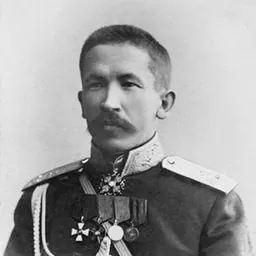
Аntisemitism Wilton was a right-wing antisemite and sympathetic to the toppled Tsarist system in Russia. He was a proponent of the theory of Jews involved in ritualistic murder, claiming in his 1920 book The Last Days of the Romanovs that the execution of the Romanovs was a ritual murder by the Jews. He was criticized by several liberal British journalists for supporting the attempted military coup by Lavr Kornilov. In 1919 he published "Russia's Agony", which claimed (p. ix) that "Bolshevism is not Russian – it is essentially non-national, its leaders being almost entirely in the league [Jews] that lost its country and its nationhood long ago". According to Semyon Reznik, Wilton was also assisting Russian antisemites in fabrication of photographic evidence of ritual crimes by Jews.
Don’t just read it —
keep it.
Full-length biographies made to live with: read them, listen on the way to work, watch them tonight.
- E-book
- Audio
- Video
Instant download · yours to keep · every purchase keeps this site free
Important facts
People in Robert Wilton's life
Named in this biography and alive at the same time
Related people
Same field, nearest in time


Contemporaries
People whose lives overlapped Robert Wilton's



Frequently asked questions
Who was Robert Wilton?
British journalist (1868–1925)
When was Robert Wilton born?
Robert Wilton was born on 31 July 1868 in Norfolk.
When did Robert Wilton die?
Robert Wilton died on 18 January 1925 in Paris.
What was Robert Wilton's occupation?
Robert Wilton was a journalist and war correspondent.
What nationality was Robert Wilton?
Robert Wilton was British.
Sources & further reading
Cite this page
APA: Biography.guide. (2026). Robert Wilton. https://biography.guide/robert-wilton-journalist/
MLA: "Robert Wilton." Biography.guide, https://biography.guide/robert-wilton-journalist/.
Chicago: "Robert Wilton." Biography.guide. https://biography.guide/robert-wilton-journalist/.
Data last updated: 2026-09-20 · Spot an error? Report a correction.
Page generated 2026-09-27 04:57 UTC