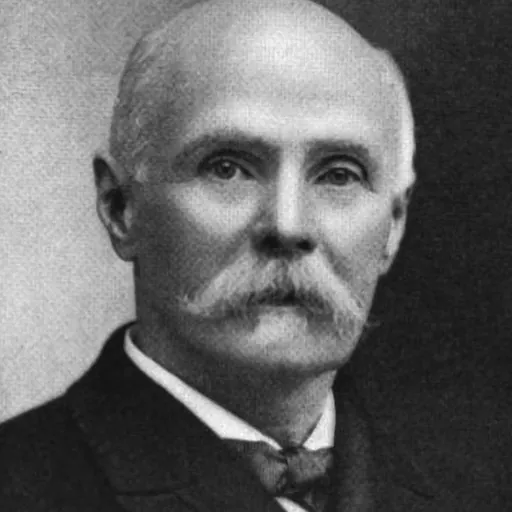
About Robert White
Lived 1833 – 1915 (aged 82). Robert White was an American lawyer and politician.
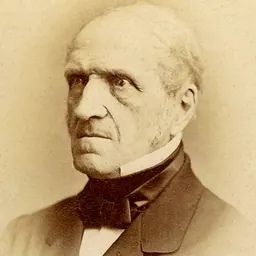
Robert White (February 7, 1833 – December 12, 1915) was an American military officer, lawyer, and politician in the U.S. state of West Virginia. White served as Attorney General of West Virginia (1877–1881) and served two terms in the West Virginia House of Delegates, representing Ohio County in 1885 and 1891.
Born in 1833 in Romney, Virginia (present-day West Virginia), White was the son of Hampshire County Court Clerk John Baker White and his second wife, Frances Ann Streit White. He was educated at the Romney Classical Institute, worked in his father's clerking office for six years, and studied jurisprudence under John White Brockenbrough at his Lexington Law School. White was admitted to the bar in 1854 and practiced law in Romney.
Prior to the outbreak of the American Civil War, White was commissioned a captain of the Frontier Riflemen, which later became Company I of the 13th Virginia Volunteer Infantry Regiment, commanded by Colonel A. P. Hill in 1861. In 1864, he was commissioned as a colonel in command of the 23rd Virginia Volunteer Cavalry Regiment and served in that capacity until the unit disbanded in April 1865. Following the war, White returned to Romney and practiced law with John Jeremiah Jacob. He devoted his efforts to bringing economic development to the South Branch Potomac River Valley, which had been desolated during the war. White was one of nine members to revive the Romney Literary Society following the war, and in 1870, the organization successfully secured the West Virginia Schools for the Deaf and Blind for Romney. He served three terms on the school's board of regents. White also established the South Branch Railway Company and was its president until 1877.
White was elected as West Virginia's attorney general in 1876 and served from 1877 until 1881. He was charged with several important lawsuits, among the most prominent being the state's pursuance of tax liabilities from railroad companies. White argued the case before the Supreme Court of Appeals of West Virginia, which ruled in White's favor and ultimately enriched the West Virginia state treasury. He successfully secured the extradition of Elihu Gregg from Pennsylvania after Gregg was accused of burning the Preston County courthouse and fled. In Freeland v. Williams, White argued in favor of the rights of former Confederate soldiers before the Supreme Court of the United States and secured a favorable verdict. Following his tenure as attorney general, White served two terms in the West Virginia House of Delegates. In 1885, he represented the state at the Washington Monument's dedication. White subsequently served two terms as the city solicitor of Wheeling, and was later counsel for the Baltimore and Ohio Railroad Company.
In his later life, White was involved in Confederate memorial activities. He was a member of the Confederate Memorial Association board of trustees, the chief officer of the West Virginia Division of the United Confederate Veterans, and served as commander with the rank of major-general in the national organization. White was chairman of the construction committee for the Confederate Memorial Institute's Battle Abbey in Richmond. He was a Freemason and served as Grand Master of the state of West Virginia in 1875. White attended the 100th anniversary of the burial of George Washington in 1899 and was chosen by the Grand Lodge of Virginia as the Grand Marshal of the Masonic ceremonies while attending the observance at Mount Vernon. He also became a noted lecturer and orator in his later years. Following a prolonged illness, White died in Wheeling in 1915.
Early life and education
Robert White was born on February 7, 1833, in Romney, Virginia, part of present-day West Virginia. White was the eldest son and child of Hampshire County court clerk John Baker White (1794–1862) and his second wife Frances Ann Streit White (c. 1809–1879) and a grandson of prominent Virginia judge Robert White (1759–1831). He was likely named for his grandfather, Judge Robert White.
White had three older half sisters from his father's first marriage to Alcinda Louisa Tapscott. Through his father's second marriage to his mother Frances Ann Streit, White had five brothers including Christian Streit White, and four sisters. Following the completion of his legal studies, White was admitted to the bar on March 30, 1854, and immediately began practicing law in Romney. Prior to the American Civil War, White was enrolled as a member of the Romney Literary Society.
Confederate Army service In 1860, following John Brown's raid on Harpers Ferry in October 1859, a Virginia uniformed volunteer military company known as the Frontier Riflemen was formed with White as commanding officer in the rank of captain. Following the outbreak of the Civil War, Governor John Letcher ordered the Frontier Riflemen to report to Lieutenant General Stonewall Jackson at Harpers Ferry. White and his unit marched to Harpers Ferry on May 18, 1861. Following their arrival, White's company was reassigned as Company I of the 13th Virginia Volunteer Infantry Regiment commanded by Colonel A. P. Hill. White's forces defeated the guards and captured two cannons, their first trophies of war. Colonel Hill marched to Winchester, and Company I then came under the command of General Joseph E. Johnston.
During the war, White's father John Baker White left Romney with his wife and youngest children and traveled to Richmond to work in the Confederate States Department of the Treasury within the government of the President of the Confederate States of America. However, White's father died soon after his arrival in Richmond on October 9, 1862.
Reconstruction efforts Following the war, White returned to Romney. Since his father had died, he became the family patriarch and resumed practicing law to support them. White then expanded his law practice and it became the largest of its kind in the Eastern Panhandle of West Virginia. Following this meeting, an inspired group of Hampshire County women assembled and adopted a constitution for the Confederate Memorial Association, of which White's wife served as a president. Through the association's efforts, the first decoration of Confederate graves at Indian Mound Cemetery took place on June 1, 1866.
On May 15, 1869, nine members of the Romney Literary Society, including White, commenced an effort to revive the society's activities and reconstitute its library, which had been destroyed during the war. When the state of West Virginia first founded an institution for deaf and blind students, White helped to pass the legislative act that established the West Virginia Schools for the Deaf and Blind.
White was subsequently appointed to serve three terms on the schools' Board of Regents. White was appointed to the board of regents' first (1870), second (1871–1873), and third (1874–1876) terms, and served as its secretary each time.
In addition to his appointments to the schools' Board of Regents, White was also appointed by the West Virginia Legislature to the state boards of trustees of Capon Springs and Berkeley Springs. He resigned his position on the board of trustees of Berkeley Springs, but he remained a member of Capon Springs's board until at least 1897.
Gregg's extradition was ordered by West Virginia Governor Henry Mason Mathews, and White argued successfully the case before Pennsylvania Governor John F. Hartranft for Gregg's extradition back to West Virginia. Gregg immediately obtained writ of habeas corpus and was brought before the Green County Court presided over by Judge Wilson of Fayette County, Pennsylvania. White declined to accept a reelection to the office of West Virginia Attorney General. It stated:
"SIR:– Among the members of the Legislature of West Virginia there is a general desire to express to you in some formal way their appreciation of the great zeal, ability and untiring industry that have marked your course in the Legislature this session. As chairman of the Finance Committee and one of the Judiciary Committee of the House, the duties incumbent upon you have been exceeding [sic] important and exacting, both in committee room and on the floor of the House. In the performance of these duties you have been so zealous, industrious, painstaking and conservative as to attract the attention and win the respect and confidence of the entire legislature and to deserve thanks and gratitude not only of your fellow members but of the people of the state at large. Permit us, therefore, to tender to you some expression of our appreciation of the benefit of the State derived from your earnest labors to say that we all feel that you have fully deserved not only our commendation but a right to the gratitude and respect of your fellow citizens throughout the State of West Virginia."
Later life and death
White was an adherent of the Presbyterian faith, and for many years he served as a ruling elder of the First Presbyterian Church of Wheeling. He also represented the presbytery at the centennial session of the General Assembly of the Presbyterian Church, which met in Philadelphia. White also served as the chief officer of the West Virginia Division of the United Confederate Veterans. In that organization, White held the position of commander and rank of major-general.
Following United Confederate Veterans' September 1909 meeting in Charleston, White was reelected to his post as commander. By 1896, White led a local endeavor to establish a West Virginia Home for Confederate Veterans. In 1911, he was on the chairman of the committee for the construction of the Confederate Memorial Institute's Battle Abbey in Richmond.
On May 20, 1912, a ceremony was held in Richmond for the laying of the cornerstone of the Confederate Memorial Institute's Battle Abbey. White gave the ceremony's principal address, in which he delivered an exhaustive history of the movement for the construction of the abbey and spoke on the importance of the abbey being built in the former Confederate capital. He also called for the cooperation of the Southern states in providing artifacts to the abbey.
From his early adulthood until his death, White was a Freemason and served as Grand Master of the state of West Virginia in 1875. White attended the 100th anniversary of the interment of George Washington on December 14, 1899, and was chosen by the Grand Lodge of Virginia as the chief Grand Marshal of the Masonic ceremonies while attending the observance. He and his staff had full charge of the procession and all matters of the celebration. One of his more popular lectures was entitled "The Old Foundation Stands," which was prepared and delivered by White in response to Robert G. Ingersoll's lecture "The Foundation of Faith," in which Ingersoll criticized the Old Testament of the Bible. White delivered the lecture in several states. During the summer of 1900, White traveled throughout Europe. He visited the village of Oberammergau in Germany, after which, he created a lecture illustrating the Oberammergau Passion Play. He was also slated to give the address at the commencement exercises of the Richmond Academy on June 4, 1915, but was unable to attend due to his declining health. White died of "old age" on December 12, 1915, in his residence on Bae Mar Place in Wheeling, after having been ill for six months prior. White was interred at Greenwood Cemetery in Wheeling on December 14, 1915.
Personal life and family In 1859, White married Ellen E. Vass (July 23, 1839 – December 17, 1921), the daughter of James C. Vass. James C. Vass was an influential banker at the old Bank of Virginia in Richmond. Eleanor "Nellie" R. White (February 28, 1868 – September 18, 1881), who died in a railroad collision near Grafton; and Katherine "Kate" White Ferrell Hancher (February 13, 1870 – July 29, 1950), who married first to Chiles M. Ferrell of Richmond, and later married a Mr. Hancher.
Upon relocating to Wheeling in 1877, White and his wife resided at 7 13th Street, The couple made their final residence together at Bae Mar Place in Wheeling.
Legacy In a biography of White published in Men of West Virginia, Volume 2 in 1903, White was described as "one of the most brilliant lawyers produced by the State of West Virginia." In his 1915 obituary published in both the Charleston Daily Mail and The Wheeling Intelligencer, White was described as "always kind, courteous, but at the same time strictly exact." In May 1915 Virginia Lieutenant Governor Ellyson said that Richmond owed more to White than any other man for his efforts in securing the location of the Confederate Memorial Institute.
Don’t just read it —
keep it.
Full-length biographies made to live with: read them, listen on the way to work, watch them tonight.
- E-book
- Audio
- Video
Instant download · yours to keep · every purchase keeps this site free
Important facts
Family & relationships
People in Robert White's life
Named in this biography and alive at the same time



Related people
Same field, nearest in time


Contemporaries
People whose lives overlapped Robert White's


Frequently asked questions
Who was Robert White?
American lawyer, born 1833
When was Robert White born?
Robert White was born on 7 February 1833 in Romney.
When did Robert White die?
Robert White died on 12 December 1915 in Wheeling.
What was Robert White's occupation?
Robert White was a lawyer and politician.
What nationality was Robert White?
Robert White was American.
Sources & further reading
· DBpedia: Robert White (attorney general)
Cite this page
APA: Biography.guide. (2026). Robert White. https://biography.guide/robert-white-lawyer-1833/
MLA: "Robert White." Biography.guide, https://biography.guide/robert-white-lawyer-1833/.
Chicago: "Robert White." Biography.guide. https://biography.guide/robert-white-lawyer-1833/.
Data last updated: 2026-09-20 · Spot an error? Report a correction.
Portrait: Wikimedia Commons · author & licence
Page generated 2026-09-27 04:58 UTC