
Robert W. Kenny
20th-century American lawyer, judge, and political activist
About Robert W. Kenny
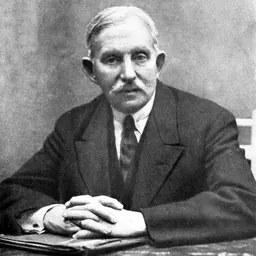
Lived 1901 – 1976 (aged 74). Robert W. Kenny was an American lawyer, politician and judge.
Robert Walker Kenny (August 21, 1901 – July 20, 1976), 21st Attorney General of California (1943-1947), was "a colorful figure in state politics for many years", In 1947, he led the legal defense of the Hollywood Ten.
Background
Robert Walker Kenny was born on August 21, 1901, in Los Angeles, California. His mother was Minnie Summerfield. His father, Robert Wolfenden Kenny (1863-1914) was a successful banker and civic leader in Los Angeles and Berkeley, California. Kenny's grandfather, George L. Kenny, arrived in San Francisco in the early 1850s with his friends, the brothers A.L. Bancroft and Hubert Howe Bancroft. The three men formed a partnership and established the first bookstore in San Francisco.
Private practice In 1939, Kenny resigned his post as municipal judge, and also dissolved his law partnership with Paul Vallee and Lawrence Beilensen. He set up a new partnership with Morris E. Cohen, which lasted until 1948. Robert O. Curran joined the firm but left to fight in World War II; Robert S. Morris replaced him. Under Kenny in this period, Robert B. Powers worked as "coordinator of law enforcement agencies".
While in this capacity, Kenny was responsible for the office's complicity in the racist incarceration of Japanese Americans. His actions have been disavowed as a failure of leadership and unjust by his successors.
NLG, Hollywood Ten, and HUAC
In 1937, Kenny supported Franklin Delano Roosevelt's battle to "pack" the United States Supreme Court with extra justices via the Judicial Procedures Reform Bill of 1937. ) He was elected president of the NLG in 1940 and held the post till 1948.
In May 1945, while serving as Attorney General, Kenny accompanied Bartley Crum and Martin Popper to the founding session of the United Nations in San Francisco, where the three men were NLG's official consultants to the American delegation at the behest of the U.S. Department of State. In 1946, after losing California's Democratic gubernatorial primary, Kenny returned to private practice. asked Kenny to become lead counsel, with Crum as his second, for the "Unfriendly Nineteen" film industry professionals subpoenaed to testify before the House Un-American Activities Committee (HUAC). Later, NLG members Martin Popper of Washington and constitutional lawyer Sam Rosenwein of New York also joined the legal team. Only ten of the nineteen wound up testifying before the HUAC. They all refused to answer questions about their Communist Party affiliation, and were cited for contempt of Congress. They became known as the Hollywood Ten.
Later life In 1948, Kenny and Robert S. Morris formed a new law partnership. In the 1940s and 1950s, they represented "many people under indictment for questionable activities." over incumbent Harry S. Truman, who Kenny believed had "betrayed the principles of the Democratic Party." He served as chairman of the Progressive Citizens of America and "Democrats for Wallace."
In 1950, Kenny ran for California state senator against Glenn Anderson and Jack Tenney for the Democratic nomination; Tenney won. The same year, he ran for Los Angeles mayor in a recall election; Fletcher Bowron won. In 1962, Kenny served as counsel of Albert J. Lewis and Steve Roberts of the Fair Play for Cuba Committee before HUAC.
In 1963, the Congressional Record re-recorded information from October 26, 1955, that "public records, files, and publications of this committee" (HUAC) showed Kenny "not necessarily a Communist, a Communist sympathizer, or a fellow traveller" but noted nevertheless that he was affiliated with the American Youth for Democracy, Civil Rights Congress, Joint Anti-Fascist Refugee Committee, and California Labor School. In 1966, California Governor Edmund G. Brown appointed Kenny again a state judge. In 1975, he retired from the bench.
Works
The Law of Freedom in a Platform by Gerrard Winstanley, edited by Robert W. Kenny (1973)
Don’t just read it —
keep it.
Full-length biographies made to live with: read them, listen on the way to work, watch them tonight.
- E-book
- Audio
- Video
Instant download · yours to keep · every purchase keeps this site free
Important facts
People in Robert W. Kenny's life
Named in this biography and alive at the same time




Related people
Same field, nearest in time


Contemporaries
People whose lives overlapped Robert W. Kenny's

Frequently asked questions
Who was Robert W. Kenny?
20th-century American lawyer, judge, and political activist
When was Robert W. Kenny born?
Robert W. Kenny was born on 21 August 1901 in Los Angeles.
When did Robert W. Kenny die?
Robert W. Kenny died on 20 July 1976 in La Jolla.
What was Robert W. Kenny's occupation?
Robert W. Kenny was a lawyer, politician and judge.
What nationality was Robert W. Kenny?
Robert W. Kenny was American.
Sources & further reading
Cite this page
APA: Biography.guide. (2026). Robert W. Kenny. https://biography.guide/robert-w-kenny/
MLA: "Robert W. Kenny." Biography.guide, https://biography.guide/robert-w-kenny/.
Chicago: "Robert W. Kenny." Biography.guide. https://biography.guide/robert-w-kenny/.
Data last updated: 2026-09-20 · Spot an error? Report a correction.
Page generated 2026-09-27 05:32 UTC