
Robert W. Heath Jr.
American electrical engineer and university professor
About Robert W. Heath Jr.
Born 1973. Robert W. Heath Jr. is an American electrical engineer and university teacher.
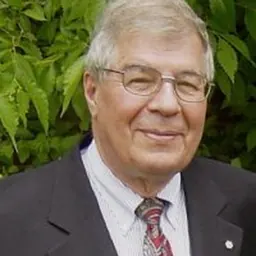
Robert W. Heath Jr. is an American electrical engineer, researcher, educator, wireless technology expert, and a professor in the Department of Electrical and Computer Engineering at the University of California, San Diego. He is also the president and CEO of MIMO Wireless Inc. He was the founding director of the Situation Aware Vehicular Engineering Systems initiative.
Early life and education Heath received his Ph.D. in electrical engineering from Stanford University in 2002 under the supervision of MIMO pioneer Arogyaswami Paulraj. He completed his M.S. degree in the same field from the University of Virginia in 1997 under the supervision of Georgios B. Giannakis, and his B.S. in electrical engineering from the University of Virginia in 1996.
From 1998 to 2001, Heath was a Senior Member of the Technical Staff and, later, Senior Consultant at Iospan Wireless Inc, San Jose, CA. At Iospan he was part of a team that designed and implemented the physical and link layers of the first commercial MIMO-OFDM communication system. From January 2002 to August 2020, he was with the Department of Electrical and Computer Engineering at The University of Texas at Austin where he was a Cockrell Family Regents Chair in Engineering. He is also President and CEO of MIMO Wireless Inc. and Chief Innovation Officer at Kuma Signals LLC. He was the Director of the Wireless Networking and Communications Group from 2012-2014, where he oversaw an expansion of the center in terms of faculty and students, and an increase in research expenditures to more than $5M per year. At UT he also founded an initiative that brings together transportation and communications called the Situation-Aware Vehicular Engineering Systems (SAVES). He is also a co-inventor of 64 U.S. patents. He authored a laboratory manual that teaches the principles of wireless communication to undergraduate students and co-authored a book on millimeter wave wireless communication. He authored a book on wireless digital communications and co-authored a comprehensive textbook on MIMO communications He is particularly known for his work on different aspects of MIMO communication systems and millimeter-wave communications.
Professional career Heath's early work at Stanford advanced the then nascent field of MIMO communication. During his Ph.D. he took a leave of absence to be one of the first employees at Iospan Wireless (earlier known as Gigabit Wireless Inc), where he was part of a small team that created the first practical MIMO-OFDM radio (a predecessor of what we now know as IEEE 802.11n). His work at Iospan resulted in several early patents on critical MIMO technologies.
Heath's work at Iospan led to his discovery that, depending on the wireless propagation conditions, different MIMO configurations, e.g., spatial multiplexing or space-time coding, are preferred. Heath's discovery opened new research avenues to enhance the fundamental understanding of performance limitations in MIMO wireless communication. From his diversity and multiplexing discovery, he also recognized the critical importance of feedback and adaptation in MIMO wireless systems, i.e., to make MIMO wireless communication commercially viable the receiver must inform the transmitter about the best MIMO configuration before communication
At UT Austin, based on his insights into the importance of feedback in MIMO communication, he pioneered MIMO feedback strategies (limited feedback precoding). Heath was able to construct a strategy for which the overhead penalty for feedback was very small (only a few bits of feedback required to configure an entire MIMO transmitter). This allowed practical MIMO wireless communication to achieve data rates and link reliability very close to theoretical expectations by varying the number of spatial multiplexing streams.
Awards and honors 2003 – Frontiers in Education Faculty Fellow 2011 – Fellow of the IEEE 2011 – EURASIP Journal on Wireless Communications and Networking Best Paper Award 2012 – IEEE Signal Processing Magazine Best Paper Award 2013 – IEEE Signal Processing Society Best Paper Award 2014 – EURASIP Journal on Advances in Signal Processing Best Paper Award 2014 – Journal of Communications and Networks Best Paper Award 2015 – IEEE GLOBECOM Best Paper Award in Communication Theory 2016 – IEEE Communications Society Fred W. Ellersick Prize 2016 – IEEE Communications Society and Information Theory Society Joint Paper Award 2017 – IEEE Marconi Prize Paper Award in Wireless Communications 2017 – European Association for Signal Processing (EURASIP) Technical Achievement Award 2017 – Fellow of the National Academy of Inventors 2018 – Journal of Communications and Networks Best Paper Award 2018 – IEEE Wireless Communications Technical Committee Recognition Award 2018 – 2019 Joe J. King Professional Engineering Achievement Award 2019 – IEEE Kiyo Tomiyasu Award 2019 – IEEE Communications Society Stephen O. Rice Prize 2020 – North Carolina State University Innovator of the Year Award 2020 – IEEE Signal Processing Society Donald G. Fink Overview Paper Award 2021 – IEEE Vehicular Technology Society James Evans Avant Garde Award 2021 – IEEE Vehicular Technology Society Neal Shepherd Memorial Best Propagation Paper Award 2025 – IEEE/RSE James Clerk Maxwell Medal 2025 - National Academy of Engineering
Views on 5G Heath is an advocate of moving to millimeter-wave spectrum for the 5G cellular standardization. He recognizes, however, that 5G cellular deployments will likely require significant changes to cellular planning. He has predicted that, due to blockage, millimeter wave cellular will need to be much more densely deployed. Heath also recognizes that 5G cellular will require significant advancements in beamforming protocols, in particular with respect to the speed in which beamforming is trained, to make 5G cellular at millimeter waves viable. He has been a strong advocate of the automotive application for 5G.
Books R. Heath, Digital Wireless Communication: Physical Layer Exploration Lab Using the NI USRP, National Technology and Science Press, 2012 T. S. Rappaport, R. Heath, R. Daniels, J. Murdock, Millimeter Wave Wireless Communications, Prentice Hall, 2015 Vutha Va, Takayuki Shimizu, Gaurav Bansal, and R. W. Heath Jr., Millimeter Wave Vehicular Communications: A Survey Foundations and Trends in Networking: Vol. 10: No. 1, pp 1–113, 2016. R. Heath, Introduction to Wireless Digital Communication: A Signal Processing Perspective, Pearson, 2017 R. Heath and A. Lozano, Foundations of MIMO Communication, Cambridge University Press, 2018.
Don’t just read it —
keep it.
Full-length biographies made to live with: read them, listen on the way to work, watch them tonight.
- E-book
- Audio
- Video
Instant download · yours to keep · every purchase keeps this site free
Important facts
People in Robert W. Heath Jr.'s life
Named in this biography and alive at the same time




Related people
Same field, nearest in time


Contemporaries
People whose lives overlapped Robert W. Heath Jr.'s


Frequently asked questions
Who is Robert W. Heath Jr.?
American electrical engineer and university professor
When was Robert W. Heath Jr. born?
Robert W. Heath Jr. was born on 4 December 1973 in Macon.
What is Robert W. Heath Jr.'s occupation?
Robert W. Heath Jr. is an electrical engineer and university teacher.
What nationality is Robert W. Heath Jr.?
Robert W. Heath Jr. is American.
Sources & further reading
· Wikipedia: Robert W. Heath Jr.
· DBpedia: Robert W. Heath Jr.
Cite this page
APA: Biography.guide. (2026). Robert W. Heath Jr.. https://biography.guide/robert-w-heath-jr/
MLA: "Robert W. Heath Jr.." Biography.guide, https://biography.guide/robert-w-heath-jr/.
Chicago: "Robert W. Heath Jr.." Biography.guide. https://biography.guide/robert-w-heath-jr/.
Data last updated: 2026-09-20 · Spot an error? Report a correction.
Page generated 2026-09-27 05:19 UTC