
Robert Smythe Hichens
English journalist, novelist and short story writer
About Robert Smythe Hichens
Lived 1864 – 1950 (aged 85). Robert Smythe Hichens was a British journalist, autobiographer, novelist, science fiction writer, writer and music critic.
Robert Smythe Hichens (14 November 1864 – 20 July 1950) was an English journalist, novelist, music lyricist, short story writer, music critic and collaborated on successful plays. He is best remembered as a satirist of the "Naughty Nineties".
Biography Hichens was born in Speldhurst in Kent, the eldest son of the Rev. Frederick Harrison Hichens, and his wife Abigail Elizabeth Smythe. He was educated at Clifton College, the Royal College of Music and early on had a desire to be a musician. he never married.
Hichens's first big success was An Imaginative Man (1895); set in the city of Cairo, Egypt, a place which fascinated Hichens, it is a study of insanity, in which the hero becomes dangerously obsessed with the Great Sphinx. and Edmund Wilson dismissing the story as "trash". Brian Stableford described the story as an "authentic masterpiece of horror fiction",
Selected bibliography Novels
The Coast Guard's Secret (1886)
An Imaginative Man (1895) The Collaborators (1896) Flames (1897) The Londoners (1898) The Slave (1899) The Prophet of Berkeley Square (1901) Felix (1902) The Garden of Allah (1904), elaborately presented as a play in New York City and filmed thrice, in 1916, 1927 (with Alice Terry) and 1936 (one of the earliest three-strip Technicolor features, with Marlene Dietrich and Charles Boyer) The Woman with the Fan (1904) The Call of the Blood (1906) Barbary Sheep (1907) A Spirit in Prison (1908) Bella Donna (1909), in which Alla Nazimova starred on Broadway in 1912, filmed in 1915, in 1923 with Pola Negri and in 1934 with Mary Ellis and Conrad Veidt. The Fruitful Vine (1911) The Dweller on the Threshold (1911) The Way of Ambition (1913) In the Wilderness (1917) Snake-Bite (1919) Mrs. Marden (1919) Spirit of the Time (1921) December Love (1922) The Last Time (1924) After the Verdict (1924) The Bracelet (1930) The First Lady Brendon (1931) Mortimer Brice (1932) The Paradine Case (1933) – film version directed by Alfred Hitchcock in 1947 The Power To Kill (1934) The Pyramid (1936) The Sixth of October (1936) Daniel Airlie (1937) Secret Information (1938) The Journey Up (1938) That Which Is Hidden (1939) The Million (1940) A New Way of Life (1942) Veils (1943) Harps in the Wind (1945) Beneath the Magic (1950)
Collections The Folly of Eustace: And Other Stories (1896) Bye-Ways (1897) Tongues of Conscience (1898, 1900) The Black Spaniel: And Other Stories (1905) Snake-Bite: And Other Stories (1919) The Afterglow and Other Stories (1935) The Return of the Soul and Other Stories (2001; ed. S. T. Joshi)
Nonfiction The Spell of Egypt (1910) Yesterday (1947)
Anthologies containing stories by Hichens Great Short Stories of Detection, Mystery and Horror 1st Series (1928) Alfred Hitchcock Presents (1957) The 2nd Fontana Book of Great Ghost Stories (1966) Medley Macabre (1966) Black Water (1984) I Shudder at Your Touch (1992) 4 Classic Ghostly Tales (1993)
Short stories "How Love Came to Professor Guildea" (1900) "Demetriadi's Dream"
Plays
The Law of the Sands (1916) Black Magic (1917) The Voice from the Minaret (1919)
Filmography Bella Donna, directed by Edwin S. Porter and Hugh Ford (1915, based on the novel Bella Donna) The Garden of Allah, directed by Colin Campbell (1916, based on the novel The Garden of Allah) Barbary Sheep, directed by Maurice Tourneur (1917, based on the novel Barbary Sheep) Flames, directed by Maurice Elvey (UK, 1917, based on the novel Flames) The Slave, directed by Arrigo Bocchi (UK, 1918, based on the novel The Slave) Hidden Lives, directed by Maurits Binger and B. E. Doxat-Pratt (Netherlands, 1920, based on a play by Robert Hichens and John Knittel) The Call of the Blood, directed by Louis Mercanton (France, 1920, based on the novel The Call of the Blood) The Woman with the Fan, directed by René Plaissetty (UK, 1921, based on the novel The Woman with the Fan) The Fruitful Vine, directed by Maurice Elvey (UK, 1921, based on the novel The Fruitful Vine) The Voice from the Minaret, directed by Frank Lloyd (1923, based on the play The Voice from the Minaret) Bella Donna, directed by George Fitzmaurice (1923, based on the novel Bella Donna) The Lady Who Lied, directed by Edwin Carewe (1925, based on the story The Lady Who Lied) The Garden of Allah, directed by Rex Ingram (1927, based on the novel The Garden of Allah) After the Verdict, directed by Henrik Galeen (UK, 1929, based on the novel After the Verdict) Bella Donna, directed by Robert Milton (UK, 1934, based on the novel Bella Donna) The Garden of Allah, directed by Richard Boleslawski (1936, based on the novel The Garden of Allah) Temptation, directed by Irving Pichel (1946, based on the novel Bella Donna) The Paradine Case, directed by Alfred Hitchcock (1947, based on the novel The Paradine Case) Call of the Blood, directed by John Clements and Ladislao Vajda (UK, 1948, based on the novel Call of the Blood)
Don’t just read it —
keep it.
Full-length biographies made to live with: read them, listen on the way to work, watch them tonight.
- E-book
- Audio
- Video
Instant download · yours to keep · every purchase keeps this site free
Important facts
People in Robert Smythe Hichens's life
Named in this biography and alive at the same time





Related people
Same field, nearest in time
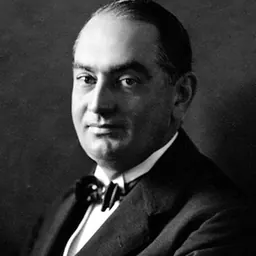

Contemporaries
People whose lives overlapped Robert Smythe Hichens's

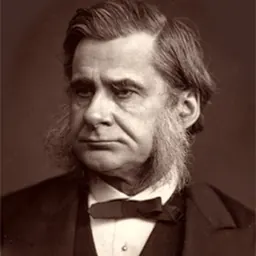

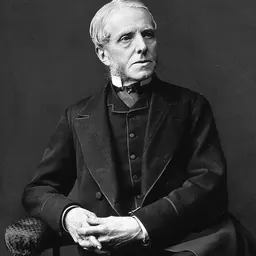

Frequently asked questions
Who was Robert Smythe Hichens?
English journalist, novelist and short story writer (1864–1950)
When was Robert Smythe Hichens born?
Robert Smythe Hichens was born on 14 November 1864 in Speldhurst.
When did Robert Smythe Hichens die?
Robert Smythe Hichens died on 20 July 1950 in Zurich.
What was Robert Smythe Hichens's occupation?
Robert Smythe Hichens was a journalist, autobiographer, novelist, science fiction writer, writer and music critic.
What nationality was Robert Smythe Hichens?
Robert Smythe Hichens was British.
Sources & further reading
· Wikipedia: Robert Smythe Hichens
· DBpedia: Robert Hichens (writer)
Cite this page
APA: Biography.guide. (2026). Robert Smythe Hichens. https://biography.guide/robert-smythe-hichens/
MLA: "Robert Smythe Hichens." Biography.guide, https://biography.guide/robert-smythe-hichens/.
Chicago: "Robert Smythe Hichens." Biography.guide. https://biography.guide/robert-smythe-hichens/.
Data last updated: 2026-09-25 · Spot an error? Report a correction.
Page generated 2026-09-27 05:11 UTC