
Robert Lee Burns
American criminal
About Robert Lee Burns
Lived 1930 – 2002 (aged 71–72).
Robert Lee Burns (1930/31 – January 22, 2002) was an American ex-convict and retired house painter from Eugene, Oregon, who in 2001 became the subject of an interstate dispute with respect to whether or not he should be extradited from Oregon to California to serve a prison sentence originally ordered in the 1960s.
The dispute stemmed from the 1963 murder of a California Highway Patrol (CHP) officer following a bank robbery committed by Burns and two other men. Burns was on parole out of Oregon for attempted robbery at the time. When the CHP officer pulled over the group's getaway car, one of the other men shot and killed him. Although he did not harm the officer personally, under the felony murder rule, Burns was charged with murder. He pled guilty and was sentenced to life in prison in California.
After five years in prison in California, Burns was transferred to Oregon to finish his sentence for the attempted robbery charge, with the expectation that he would be returned to California when that sentence was finished. While imprisoned in Oregon, he rehabilitated himself to such a degree that at the end of his sentence, then-governor Robert W. Straub refused to return him to California. Burn settled in Eugene under his own name and lived without further incident until California officials began to make efforts to extradite him to California in 2001. He contested the extradition and died at home at the age of 71 before the matter was settled.
Early life Burns was born in Oklahoma during the Great Depression. He described his father as an abusive alcoholic who abandoned Burns, his eleven siblings, and his wife, leaving them in dire poverty. He was kicked out of his home with a fourth-grade education at eleven years old and joined the United States Army at sixteen. Despite being involved in several minor incidents of violence while serving, he was honorably discharged. Burns acted as the driver of the getaway car. At the time, he was on parole for an attempted robbery in Oregon from 1955. While speeding away from the area in a white Cadillac convertible bearing stolen plates, the men were pulled over in Truckee, California, by California Highway Patrol officer Glenn W. Carlson. Officer Carlson initially wrote the men a speeding ticket and let them go, but realized shortly after that their plates were stolen and that the men matched the description that had been broadcast of the robbery suspects. He also wounded Burns by mistake. At his sentencing, the judge told Burns, "I can see a constructive individual in you." Burns later described the judge's compassion as the moment he went "from bad to good."
Prison and parole in Oregon
Burns spent four and a half years in California's Folsom State Prison before being transferred to Oregon State Penitentiary to serve out the remainder of his Oregon conviction; at the time, transferring prisoners between states in this way was a routine practice. Officials from California had placed a detainer on him and were under the impression that Burns would be returned to them at the conclusion of that sentence, as was standard practice at the time.
Mealman and Toycen were also paroled in California in the 1970s.
Although Governor Straub had refused to return Burns to California at his release, the 1987 Supreme Court decision Puerto Rico v. Branstad ruled that the federal courts have the power to enforce interstate extraditions, even against the wishes of the governors of involved states. By that time, Burns was 70 years old and suffering a number of serious ailments, including heart disease and prostate cancer.
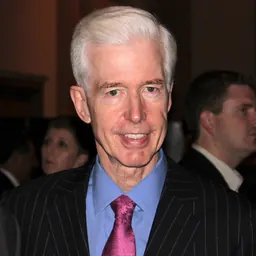
In March 2001, Oregon governor John Kitzhaber wrote a letter to California governor Gray Davis, asking Davis to drop the matter, although Kitzhaber did acknowledge that the law favored California's position. Davis responded by saying that Burns was still considered a fugitive, and that it would be inappropriate for his office to intervene while he remained "at large" in Oregon. He was 71 years old and had prostate cancer and heart disease.
Don’t just read it —
keep it.
Full-length biographies made to live with: read them, listen on the way to work, watch them tonight.
- E-book
- Audio
- Video
Instant download · yours to keep · every purchase keeps this site free
Important facts
People in Robert Lee Burns's life
Named in this biography and alive at the same time



Contemporaries
People whose lives overlapped Robert Lee Burns's
Frequently asked questions
Who was Robert Lee Burns?
American criminal
When was Robert Lee Burns born?
Robert Lee Burns was born in 1930.
When did Robert Lee Burns die?
Robert Lee Burns died in 2002.
Sources & further reading
Cite this page
APA: Biography.guide. (2026). Robert Lee Burns. https://biography.guide/robert-lee-burns/
MLA: "Robert Lee Burns." Biography.guide, https://biography.guide/robert-lee-burns/.
Chicago: "Robert Lee Burns." Biography.guide. https://biography.guide/robert-lee-burns/.
Data last updated: 2026-09-20 · Spot an error? Report a correction.
Page generated 2026-09-27 05:28 UTC