
Robert Keyes
English criminal
About Robert Keyes
Lived 1565 – 1606 (aged 40–41).
Robert Keyes (1565–1606) was a member of the group of provincial English Catholics who planned the failed Gunpowder Plot of 1605, a conspiracy to assassinate King James I by blowing up the House of Lords during the State Opening of Parliament on 5 November 1605. He was the sixth man to join the plot.
Unlike several other conspirators Keyes was not a particularly wealthy man. He was trusted by Robert Catesby, the plot's author, with guarding the explosives stored at the latter's lodgings in London. When the plot was uncovered he fled the city, and was captured several days later in Warwickshire. He was tried with his co-conspirators, found guilty, and in January 1606 hanged, drawn and quartered.
Life before 1604 Born in about 1565, Robert Keyes was the son of the Church of England Rector of Staveley in North Derbyshire. His mother was a daughter of Sir Robert Tyrwhitt of Kettleby, Lincolnshire, and related to the Catholic Babthorpes of Osgodby. Keyes' first cousin Elizabeth Tyrrwhitt was married to another member of the plot, Ambrose Rookwood. By 1604, Robert had converted to Catholicism. His wife Christina, a widow when he married her, was the governess for the children of Henry Mordaunt, 4th Baron Mordaunt, at Drayton, Northamptonshire and for this Keyes gained the use of horses and other amenities.
Gunpowder Plot English Catholics had hoped that the persecution of their faith would end when the apparently more tolerant King James I succeeded Queen Elizabeth I, but Robert Catesby, a Catholic zealot from Ashby St Ledgers, remained unimpressed by the new royal dynasty. He therefore planned to kill James by blowing up the House of Lords with gunpowder, following which he would help incite a popular revolt to install James's daughter, Princess Elizabeth, as titular Queen. His role being to guard the gunpowder and other items stored at Catesby's house in Lambeth,
The Jesuit priest John Gerard described Keyes as "a grave and sober man, and of great wit and sufficiency". Father Oswald Tesimond claimed that Keyes had "tasted persecution himself, having lost his goods because of it" while historian and author Cyril Northcote Parkinson's image of him was of a "desperate man, ruined and indebted". Tall, with a red beard, and despite his relative poverty, Catesby declared him "a trusty honest man", and may have paid him for his services. Thomas Percy was concerned for his patron and kinsman, the Earl of Northumberland, and the Lords Vaux, Montagu, Monteagle and Stourton were also mentioned. Keyes's suggestion to warn Lord Mordaunt was treated by Catesby with derision, when he answered that "he would not for the chamber full of diamonds acquaint him with the secret, for that he knew he could not keep it."
Keyes and his cousin-in-law Ambrose Rookwood spent the night before the planned explosion at the house of an Elizabeth More, near Temple Bar. They were visited late that evening by Fawkes (in charge of the explosives beneath the House of Lords) who collected a watch left by Percy, for timing the fuse. Several hours later Fawkes was discovered guarding the explosives, and was arrested.
Failure and death When Keyes heard that Fawkes had been captured he took to his horse and fled for the Midlands. He was overtaken at Highgate by Rookwood, who was rushing to inform Catesby and the others of what had transpired. After he and Rookwood had caught up with Catesby, Percy, Thomas Bates, and John and Christopher Wright, Keyes left the group, and headed instead for Lord Mordaunt's house at Drayton, where he went to ground. He was identified as a suspect on 6 November, and captured several days later.
The conspirators were tried on 27 January 1606 at Westminster Hall. Despite entering pleas of not guilty (only Digby professed his guilt), all eight were found guilty. They were each allowed to speak "wherefore judgement of death should not be pronounced against them". Keyes made no attempt to excuse his actions, claiming that "death was as good now as at any other time", preferable to living "in the midst of so much tyranny". The Jesuit Oswald Tesimond wrote in his Narrative of Keyes's defence:
Quote|He claimed that his motive had been to promote the common good. That is, he hoped that his native land would be turned back to the Catholic faith. The violence of the present persecution had driven him also to take part in the conspiracy.
Don’t just read it —
keep it.
Full-length biographies made to live with: read them, listen on the way to work, watch them tonight.
- E-book
- Audio
- Video
Instant download · yours to keep · every purchase keeps this site free
Important facts
People in Robert Keyes's life
Named in this biography and alive at the same time
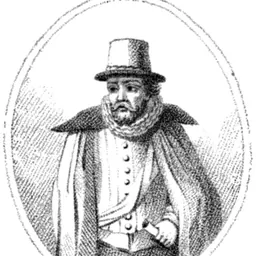


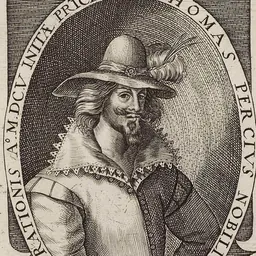

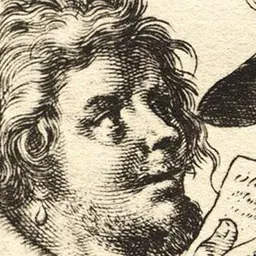
Contemporaries
People whose lives overlapped Robert Keyes's


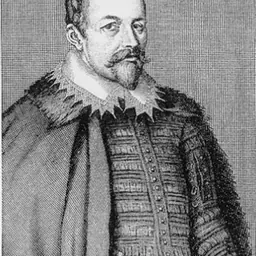


Frequently asked questions
Who was Robert Keyes?
English criminal
When was Robert Keyes born?
Robert Keyes was born in 1565 in England.
When did Robert Keyes die?
Robert Keyes died on 31 January 1606 in Westminster.
Sources & further reading
Cite this page
APA: Biography.guide. (2026). Robert Keyes. https://biography.guide/robert-keyes-1565/
MLA: "Robert Keyes." Biography.guide, https://biography.guide/robert-keyes-1565/.
Chicago: "Robert Keyes." Biography.guide. https://biography.guide/robert-keyes-1565/.
Data last updated: 2026-09-20 · Spot an error? Report a correction.
Page generated 2026-09-27 05:27 UTC