
About Robert Kemp Philp
Lived 1819 – 1882 (aged 62–63). Robert Kemp Philp was a journalist and writer.
Robert Kemp Philp (1819–1882) was an English journalist, author, and Chartist.
Early life Born at Falmouth on 14 June 1819, he was son of Henry Philp (1793–1836) of Falmouth. His grandfather Robert Kemp Philp (1769–1850), a Wesleyan and then Unitarian minister of Falmouth, was one of the earliest supporters of ragged schools and city missions.
Chartist On leaving school Philp was placed, in 1835, with a printer at Bristol, and then was a newsvendor in Bath, Somerset. For selling a Sunday newspaper, he was fined, and, on refusing to pay, was condemned to the stocks for two hours. He joined the Chartist movement, and edited a paper called The Regenerator, and, with Henry Vincent, The National Vindicator, a Bath weekly newspaper, which appeared from 1838 to 1842. In 1839 Philp began lecturing as a Chartist, of moderate opinions. After the Newport Rising (November 1840) he collected evidence for the defence of John Frost (d. 1877) [q. v.], and was arrested at Newport, Monmouthshire, on suspicion of complicity, but was released on bail. He joined on the executive committee of the Chartists in 1841. . He left an only son. A supplement, The Interview, appeared in 1856; republished as A Journey of Discovery all round our House, London, 1867. Similar compilations were: Notices to Correspondents: Information on all Subjects, collected from Answers given in Journals, 1856, and The Reason Why: a careful Collection of some hundreds of Reasons for Things which, though generally believed, are imperfectly understood (1856, tenth thousand 1857). The last heralded a Reason Why series of volumes dealing with general science (1857, forty-fifth thousand 1867); domestic science (1857, 1869); natural history (1860); history (1859); the Bible (1859); Christian denominations (1860); the garden and farm (1860); and physical geography and geology (1863).
Philp's dictionaries of daily wants (1861), of useful knowledge, 1858–62 (issued in monthly parts), of medical and surgical knowledge, The Best of Everything, and The Lady's Every-day Book, 1873, were all popular. He also published a History of Progress in Great Britain, in sixpenny monthly parts, June 1859 to July 1860, which was reissued in two volumes (1859–60). The portions dealing with The Progress of Agriculture and the Progress of Carriages, Roads ..., were printed separately (London, 1858).
Philp was responsible for many further similar works. He also compiled guides to the Lake district and Wales, and to the Great Northern, the Midland (1873), London and North-Western (1874), London and South-Western (1874), Great Eastern (1875), London, Brighton, and South Coast (1875), and South-Eastern railways (1875). At least five songs by him were set to music, and he wrote a comedy, in two acts, The Successful Candidate (1853). His portrait was in vol. i. of the Family Treasury.
Don’t just read it —
keep it.
Full-length biographies made to live with: read them, listen on the way to work, watch them tonight.
- E-book
- Audio
- Video
Instant download · yours to keep · every purchase keeps this site free
Important facts
People in Robert Kemp Philp's life
Named in this biography and alive at the same time



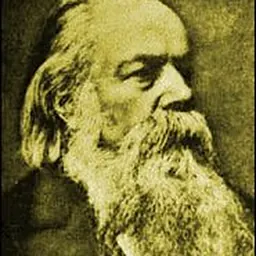
Related people
Same field, nearest in time

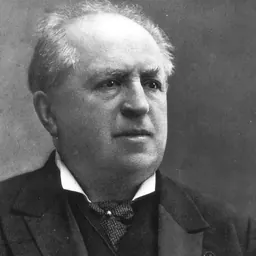
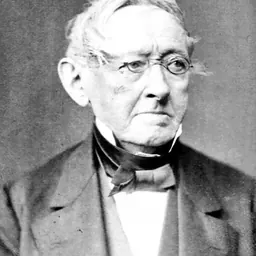

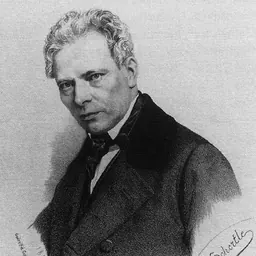
Contemporaries
People whose lives overlapped Robert Kemp Philp's




Frequently asked questions
Who was Robert Kemp Philp?
British journalist
When was Robert Kemp Philp born?
Robert Kemp Philp was born in 1819.
When did Robert Kemp Philp die?
Robert Kemp Philp died in 1882.
What was Robert Kemp Philp's occupation?
Robert Kemp Philp was a journalist and writer.
Sources & further reading
· Wikipedia: Robert Kemp Philp
Cite this page
APA: Biography.guide. (2026). Robert Kemp Philp. https://biography.guide/robert-kemp-philp/
MLA: "Robert Kemp Philp." Biography.guide, https://biography.guide/robert-kemp-philp/.
Chicago: "Robert Kemp Philp." Biography.guide. https://biography.guide/robert-kemp-philp/.
Data last updated: 2026-09-20 · Spot an error? Report a correction.
Page generated 2026-09-27 05:09 UTC