
Robert J. Marks II
American electrical engineering researcher and intelligent design advocate
About Robert J. Marks II
Born 1950. Robert J. Marks II is an American engineer, electrical engineer, university teacher and computer scientist, known for Computational intelligence, Evolutionary computation and Intelligent design.
Robert Jackson Marks II (born August 25, 1950) is an American electrical engineer, computer scientist and distinguished professor at Baylor University. His contributions include the Zhao-Atlas-Marks (ZAM) time-frequency distribution in the field of signal processing, the Cheung–Marks theorem in Shannon sampling theory and the Papoulis-Marks-Cheung (PMC) approach in multidimensional sampling. He was instrumental in the defining of the field of computational intelligence and co-edited the first book using computational intelligence in the title. A Christian and an old earth creationist, he is a subject of the 2008 pro-intelligent design motion picture, Expelled: No Intelligence Allowed.
Professional career Marks received his bachelor's and master's degrees from Rose–Hulman Institute of Technology in 1972 and 1973, respectively. He obtained his Ph.D. degree in 1977. From 1977 to 2003, he was on the faculty of the University of Washington in Seattle. He was the first president of the Institute of Electrical and Electronics Engineers (IEEE) Neural Networks Council (now the IEEE Computational Intelligence Society). He is a Fellow of the IEEE and the Optical Society of America.
Technical contributions Marks is a researcher in the area of electrical engineering.
Treatment of prostate cancer. Marks and his colleagues developed algorithms for real time identification of placement of radioactive seeds in cancerous prostates. For this work, he was a co-recipient of the Judith Stitt Best Abstract Award from the American Brachytherapy Society. The algorithm is used clinically. Optimal detection. In the field of detection theory, Marks and his colleagues developed the first closed form solution for the Neyman–Pearson optimal detection of signals in non-Gaussian noise
Power load forecasting using neural networks. With his colleagues at the University of Washington, Marks was the first to apply an artificial neural network to forecast power demands for utilities in 1991. Six years later neural networks were being used by 32 major North American utilities A technique "similar to one already used to successfully forecast electrical load needs" has been used to forecast Dow Jones closing values using data from millions of Twitter messages. The Smith Tube. Marks was a member of the Baylor research team that introduced the Smith Tube, a visualization tool useful in advanced microwave systems design. A generalization of the Smith Chart, the Smith Tube is currently in Keysight's Advanced Design System (ADS) software package.
Convolutional neural networks. With Homma and Atlas, Marks developed a temporal convolutional neural network used widely in Deep learning. Signal display in time and frequency. The Zhao-Atlas-Marks time-frequency distribution, The ZAMD is a special case of Cohen's class of time-frequency distributions. The ZAMD is currently in the MATLAB Time-Frequency Toolbox and National Instruments' LabVIEW Tools for Time-Frequency, Time-Series, and Wavelet Analysis The ZAMD has been applied in numerous areas: Remote sensing. Marks and his colleagues were the first to use neural network inversion in remote sensing. They measured snow parameters from microwave measurements made by satellites. Their general approach is widely used today. Wireless arrays. Marks is a co-recipient of a NASA Tech Brief for pioneering power efficient communication in wireless arrays. Power generation. Working with Southern California Edison, Marks and his colleagues pioneered computational intelligence based methods for early detection of intermittent shorted windings in multi ton electric generators while the rotors were still turning. Marks has made contributions to the sampling theorem including authoring the first book exclusively dedicated to the subject. Restoration of lost samples. Using "sophisticated estimation of the missing samples using previous and future samples", Marks first showed that, when a signal is sampled above its Nyquist rate, lost samples "are redundant, in the sense that any finite number of them can be obtained from the remaining ones by solving a system of linear equations". Ill-posed sampling (The Cheung-Marks Theorem). The sampling theorem's Cheung–Marks theorem shows that samples taken from a signal at or above the Nyquist rate may prove incapable of restoring the signal in the presence of small amounts of noise. Optimal image sampling. An image is said to be optimally sampled when the samples per unit area are minimized subject to no degradation of the interpolated image. Marks's contributions to optimal image sampling include: The Papoulis-Marks-Cheung Approach. extended the generalized sampling expansion of Athanasios Papoulis to higher dimensions. quotation| "Marks and Cheung focused on images with a given spectral support region and an initial base sampling lattice such that the induced spectral replicas of this support region do not overlap. They then showed that cosets of some sublattice could be removed from the base lattice until the sampling density was minimal (in the Landau sense) or approached minimal ... [This] allows the sampling rate to be reduced until it equals or approaches the Landau minimum." showed that images could be sampled below their Nyquist rate and still be recovered without aliasing. Optical computers. Marks invented and implemented an all optical computer that – using lenses, mirrors, and light from a laser – performs iterative calculations literally at the speed of light.
Evolutionary Informatics Lab website In 2006 Marks hired William Dembski as a part-time postdoctoral researcher; Dembski is an intelligent design proponent and former Baylor staff member at the heart of a previous intelligent design controversy at Baylor over the Michael Polanyi Center's promotion of intelligent design, which had been resolved when Baylor disbanded that center in 2000. Dembski's position in Marks' lab was funded by a $30,000 gift from the Lifeworks Foundation; the gift went through the university's development department and not its academic grant administration. Dembski's role was stated in the gift documents. Marks said that he kept Dembksi's presence quiet. By December 2006 Dembski's university position had been brought to the university administration's attention, and the university returned the unspent funds and terminated Dembski's position.
Marks created a website to describe the work that he and Dembski were doing, which the website described as happening at the "Evolutionary Informatics Lab" at Baylor. In the summer of 2007 that website was called to the attention of the Baylor administration after Marks discussed that work on a podcast hosted by Casey Luskin of the Discovery Institute, and the university administration shut the website down. The site was reposted to a server outside of Baylor.
Christianity Marks served as the faculty adviser to the University of Washington's chapter of Campus Crusade for Christ for seventeen years. He has presented his talk "What Does Calculus Have to Do with Christianity?" in Poland, Japan, Canada, Russia, and the United States. Venues include Poland, Japan, Moscow, Canada, and Siberia. Marks has served as a consultant with Microsoft, DARPA, the Pacific Gas and Electric Company, The Boeing Company, the John Fluke Manufacturing Company, and Southern California Edison. for the student newspaper while at Rose–Hulman Institute of Technology., Marks hosted a political radio talk show in the early 1970s. Marks's Erdős number is three and his Bacon number is two. Therefore, his Erdős–Bacon number is five.
Books by Robert J. Marks II R.J. Marks II, Non-Computable You: What You Do That Artificial Intelligence Never Will, Discovery Press, (2022). R.J. Marks II and William A. Dembski with J. P. Moreland, For a Greater Purpose: The Life and Legacy of Walter Bradley, Erasmus Press, (2020). R.J. Marks II, The Case for Killer Robots: Why America's Military Needs to Continue Development of Lethal AI, Discovery Institute Press, (2020). R.J. Marks II, William A. Dembski and Winston Ewert, Introduction to Evolutionary Informatics, World Scientific, Singapore, (2017). R.J. Marks II, Michael Behe, William A. Dembski, Bruce L. Gordon, John C. Sanford, Editors, Biological Information - New Perspectives, World Scientific, Singapore, (2013). R.J. Marks II, Handbook of Fourier Analysis and Its Applications, Oxford University Press, (2009). R. D. Reed and R.J. Marks II, Neural Smithing: Supervised Learning in Feedforward Artificial Neural Networks, MIT Press, Cambridge, MA, (1999). M. Palaniswami, Y. Attikiouzel, R.J. Marks II, David B. Fogel and Toshio Fukuda; Editors, Computational Intelligence: A Dynamic System Perspective, IEEE Press, (1995). R.J. Marks II, Editor, Fuzzy Logic Technology and Applications, IEEE Technical Activities Board, Piscataway, (1994). Jacek M. Zurada, R.J. Marks II and C.J. Robinson; Editors, Computational Intelligence: Imitating Life, (IEEE Press, 1994). R.J. Marks II, Editor, Advanced Topics in Shannon Sampling and Interpolation Theory, (Springer-Verlag, 1993). R.J. Marks II, Introduction to Shannon Sampling and Interpolation Theory, Springer-Verlag, (1991). M.A. El-Sharkawi and R. J. Marks II, Editors, Applications of Neural Networks to Power Systems'', IEEE Press, Piscataway, (1991).
Don’t just read it —
keep it.
Full-length biographies made to live with: read them, listen on the way to work, watch them tonight.
- E-book
- Audio
- Video
Instant download · yours to keep · every purchase keeps this site free
Important facts
People in Robert J. Marks II's life
Named in this biography and alive at the same time


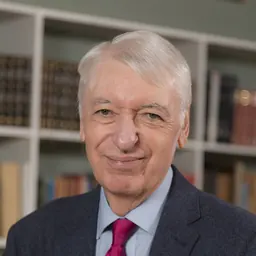

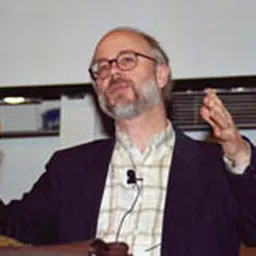



Related people
Same field, nearest in time
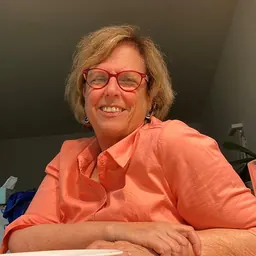
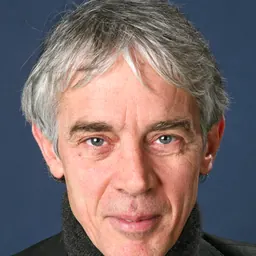
Contemporaries
People whose lives overlapped Robert J. Marks II's


Frequently asked questions
Who is Robert J. Marks II?
American electrical engineering researcher and intelligent design advocate
When was Robert J. Marks II born?
Robert J. Marks II was born on 25 August 1950 in West Virginia.
What is Robert J. Marks II's occupation?
Robert J. Marks II is an engineer, electrical engineer, university teacher and computer scientist.
What is Robert J. Marks II known for?
Robert J. Marks II is known for Computational intelligence, Evolutionary computation, Intelligent design and Signal processing.
What nationality is Robert J. Marks II?
Robert J. Marks II is American.
Sources & further reading
· Wikipedia: Robert J. Marks II
Cite this page
APA: Biography.guide. (2026). Robert J. Marks II. https://biography.guide/robert-j-marks-ii/
MLA: "Robert J. Marks II." Biography.guide, https://biography.guide/robert-j-marks-ii/.
Chicago: "Robert J. Marks II." Biography.guide. https://biography.guide/robert-j-marks-ii/.
Data last updated: 2026-09-20 · Spot an error? Report a correction.
Page generated 2026-09-27 05:20 UTC