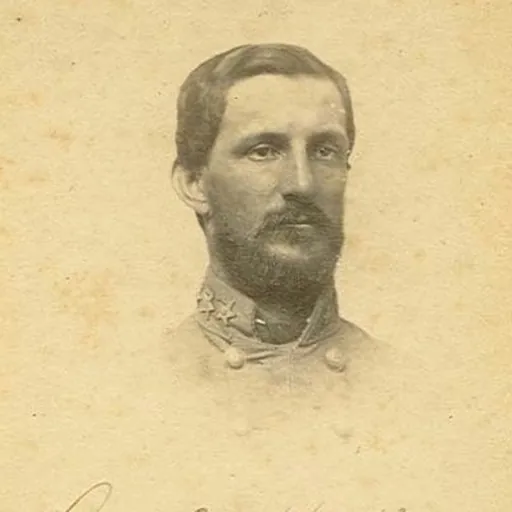
About Robert Hoke
Lived 1837 – 1912 (aged 75). Robert Hoke was an American soldier and military personnel.
Robert Frederick Hoke (May 27, 1837 – July 3, 1912) was a Confederate major general during the American Civil War. He was present at one of the earliest battles, the Battle of Big Bethel, where he was commended for coolness and judgment. Wounded at Chancellorsville, he recovered in time for the defense of Petersburg and Richmond. His brigade distinguished itself at the Battle of Cold Harbor. Hoke was later a businessman and railroad executive.
Early life and career Robert Frederick Hoke was born in Lincolnton, North Carolina, the son of Michael and Frances Burton Hoke. He had a younger sister Mary. Their father was a lawyer, orator, and unsuccessful Democratic nominee for Governor of North Carolina in 1844. Michael Hoke died shortly after losing that election. His death "had lasting effects" on Robert Hoke's political viewpoint.
The son disliked politics and avoided involvement, later rejecting the offer of the governor's position. Robert Hoke was educated at the Pleasant Retreat Academy. He next studied at the Kentucky Military Institute, graduating in 1854. Hoke returned to Lincolnton, where he managed various family business interests for his widowed mother, including a cotton mill and iron works.
Civil War service
1861–63
With North Carolina's secession from the Union, Hoke at age 24 enlisted in Company K of the 1st North Carolina Infantry Regiment (6 months) and was commissioned as a second lieutenant. Within months, he was promoted to captain and was commended for "coolness, judgment and efficiency" in D. H. Hill's report of the Battle of Big Bethel. He was subsequently promoted to major in September.
Upon Colonel Avery's return from captivity, Hoke was assigned as commander of the 21st North Carolina Infantry Regiment in Isaac Trimble's brigade in Jubal Early's division. Hoke commanded the brigade at the Battle of Fredericksburg and helped repulse an attack by Union forces under Maj. Gen. George G. Meade.
Hoke was promoted to brigadier general on January 17, 1863, These men had been captured in the Battle of New Bern, and were found to have previously served in North Carolina Partisan Ranger units. General George Pickett ordered that they should be court martialed for desertion from the Confederate Army, and the subsequent hangings were carried out by the 54th Regiment, North Carolina Troops of Hoke's brigade. In the Battle of Plymouth on April 17, Hoke captured a garrison of 2,834 Union soldiers. Hoke was promoted to major general on April 23, 1864 (ranking from April 20),
Postbellum activities
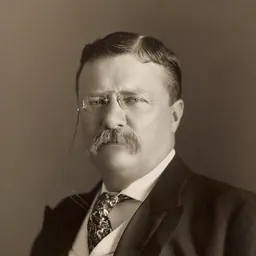
Marriage and family Hoke developed Northern ties when on January 7, 1869, he married Lydia Van Wyck, who was of a prominent political family from New York City. One of his brothers-in-law, Robert Van Wyck, was Mayor of New York City and another, Augustus Van Wyck, was an unsuccessful candidate for Governor of New York, losing to Theodore Roosevelt.
The Hokes had six children. Their son Michael Hoke became a famous orthopedist in Atlanta, Georgia and a founder of the Shriner's Children Hospital.
Later career After the war, Hoke returned to civilian life and engaged in various businesses, including insurance and gold mining. He became principal owner of an iron mine near Chapel Hill, North Carolina, and another one in Mitchell County. He also served as the director of the North Carolina Railroad for many years. Railroad construction was creating new networks across the South, and new opportunities for business.
With his success in the war and business, politicians tried to recruit Hoke to office, even offering him the position of governor of the state. He declined, having permanently turned away from politics as a child after his father's death. His nephew Hoke Smith served as secretary of the interior, and then as governor and a senator from Georgia.
Hoke died in Raleigh, North Carolina, and was buried with full military honors in Raleigh's Oakwood Cemetery.
Legacy and honors Hoke County, North Carolina was named in his honor in 1911. The Robert F. Hoke Chapter #78 of the United Daughters of the Confederacy was named for the former general, as was Camp #1616 of the Sons of Confederate Veterans.
Don’t just read it —
keep it.
Full-length biographies made to live with: read them, listen on the way to work, watch them tonight.
- E-book
- Audio
- Video
Instant download · yours to keep · every purchase keeps this site free
Important facts
People in Robert Hoke's life
Named in this biography and alive at the same time


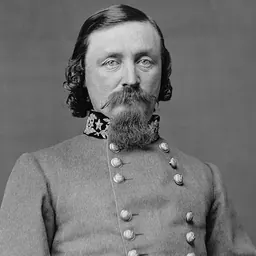
Related people
Same field, nearest in time


Contemporaries
People whose lives overlapped Robert Hoke's


Frequently asked questions
Who was Robert Hoke?
Confederate Army general (1837–1912)
When was Robert Hoke born?
Robert Hoke was born on 27 May 1837 in Lincolnton.
When did Robert Hoke die?
Robert Hoke died on 3 July 1912 in Raleigh.
What was Robert Hoke's occupation?
Robert Hoke was a soldier and military personnel.
What nationality was Robert Hoke?
Robert Hoke was American.
Sources & further reading
Cite this page
APA: Biography.guide. (2026). Robert Hoke. https://biography.guide/robert-hoke/
MLA: "Robert Hoke." Biography.guide, https://biography.guide/robert-hoke/.
Chicago: "Robert Hoke." Biography.guide. https://biography.guide/robert-hoke/.
Data last updated: 2026-09-23 · Spot an error? Report a correction.
Portrait: Wikimedia Commons · author & licence
Page generated 2026-09-27 05:08 UTC