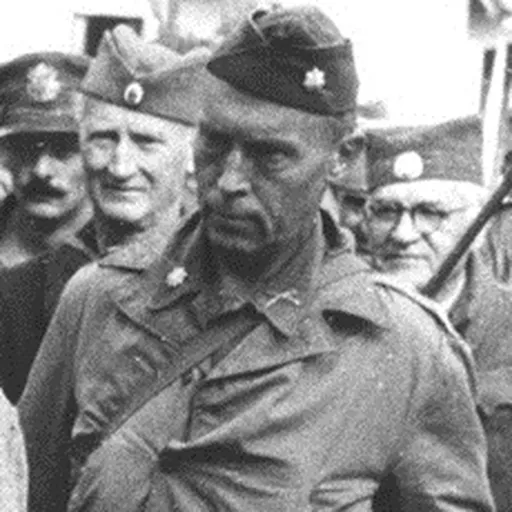
About Robert Harbold McDowell
Lived 1894 – 1980 (aged 86). Robert Harbold McDowell was an American historian, known for Chetniks.
Robert Harbold McDowell (May 23, 1894 – June 2, 1980) was an American historian and intelligence officer who worked for the Office of Strategic Services (OSS) during World War II. McDowell, an expert on the Near East, was a professor of Balkan history at the University of Michigan. During World War II he was an OSS desk officer in Cairo and between August and November 1944 a member of an American mission Ranger, to the Chetniks, where he participated in negotiations with Germans to surrender their troops to Chetniks and Americans, and in Operation Halyard, to organize transport of the Allied pilots rescued by Chetniks. In some works he has been described as a man of "violently pro-Chetnik prejudices".
Early life McDowell was a professor of Balkan history at the University of Michigan. McDowell was also an expert on the Near East.
During the World War II Arrival to Mihailović's Chetniks The American president Franklin Roosevelt personally directed all important steps of the operations of the Office of Strategic Services related to Mihailović's Chetniks because they were an instrument of US policy to avoid Partisan dominated Yugoslavia. McDowell, who had been an OSS desk officer in Cairo, arrived in the German-occupied territory of Serbia with three Serbian Americans Lt. Michael Rajacich, Capt. John R. Milodragovich, Sgt. Michael Devyak (radioman) and Lt. Ellswworth Kramer (transferred from Operation Halyard) to the "Ranger" team mission to General Mihailovich's Chetniks in late August 1944 to organize transport of the Allied pilots rescued by Chetniks during Operation Halyard. On 22 August 1944, Mihailovich was informed by members of his headquarters that George Musulin informed them about McDowell's direct access to Roosevelt.
At that time the Chetniks had already ordered a general mobilization aimed against Axis forces, so McDowell personally witnessed positioning of mobilized Chetnik troops to follow this aim and their resistance to German and Bulgarian forces to the final limits of people and equipment, capturing substantial number of prisoners and quantity of ammunition. Mihailovich informed McDowell that he had mobilized about 100,000 men with arms and 500,000 men without arms by 1 September 1944.
Negotiations for the surrender of German forces in Yugoslavia Based on the instructions of the United States High Command, McDowell organized surrender conferences with representatives of German forces. In his later statements, approved by the War and State Departments, McDowell emphasized that Mihailovic did not attend the conferences about the surrender of German forces in Yugoslavia in August 1944. McDowell reported this to Allied headquarters which immediately ordered him to break off his contacts with the Germans.
When the Partisans were informed that McDowell was negotiating the surrender of German troops in Yugoslavia they became infuriated. In September, the Partisans began a major offensive against the Chetniks preventing McDowell's team from using an already prepared landing site for the evacuation of American airmen. Tito's associates condemned McDowell, demanding his withdrawal because they believed that he was giving political prestige to the Chetniks who did not deserve it. Churchill again personally intervened through Roosevelt, and McDowell was ordered to leave Mihailovic in September 1944.
Leaving Mihailović's headquarters Despite his order to leave Chetnik headquarters, McDowell remained in Mihailovic's headquarters because American planes could not land on Chetnik controlled territory due to the weather conditions and increased armed conflict in the area. In October 1944, Tito personally engaged himself in connection with McDowell's negotiated surrender of German troops and warned Brigadier Fitzroy MacLean, the chief of the British mission to the Partisans, that the presence of McDowell and his team would certainly damage relations between the Partisans, Britain and the United States, claiming that McDowell had promised American support to Mihailović.
Some consider it possible that the Partisans forged a "captured" leaflet and showed it to Huntington at Tito's headquarters to provoke the recall of McDowell.
The British mission with Mihailović was recalled in December 1943. After McDowell left the Chetnik headquarters by plane on 23 November 1944 they remained without direct contact with the Allies during their retreat before the Partisan forces. Two members of the American mission (Nick Lalich and Arthur Jibilian) actually remained with the Chetnik headquarters after McDowell left it, and after unremitting efforts to sever even this last tie between Chetniks and Allies, they were ordered to retreat through Partisan-controlled territory. The last member of McDowell's team left the Chetniks on 11 December 1944.
After World War II In some works McDowell was described as a man of "violently pro-Chetnik prejudices".
In answer to congressional questions raised during a debate, about how much damage the Chetniks inflicted on the German war effort, McDowell claimed that all available evidence shows that German troops concentrated more on Chetniks rather than on Partisan-held territories because they held greater animosity and fear toward Mihailović than Tito. He also claimed that Chetniks had performed the most important sabotages against transport infrastructure of the Axis. Based on the official reports of other officers regarding the civil war in Yugoslavia and based on his own observations, McDowell concluded that "the principal concern of the Partisan leadership has been, not to destroy Germans, but Nationalists and Nationalism in Yugoslavia and the Balkans."
Don’t just read it —
keep it.
Full-length biographies made to live with: read them, listen on the way to work, watch them tonight.
- E-book
- Audio
- Video
Instant download · yours to keep · every purchase keeps this site free
Important facts
People in Robert Harbold McDowell's life
Named in this biography and alive at the same time

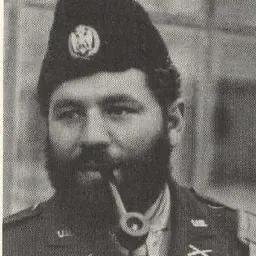



Related people
Same field, nearest in time
Contemporaries
People whose lives overlapped Robert Harbold McDowell's


Frequently asked questions
Who was Robert Harbold McDowell?
American historian and intelligence officer (1894-1980)
When was Robert Harbold McDowell born?
Robert Harbold McDowell was born on 23 May 1894 in Ottoman Empire.
When did Robert Harbold McDowell die?
Robert Harbold McDowell died on 2 June 1980 in Pinellas County.
What was Robert Harbold McDowell's occupation?
Robert Harbold McDowell was a historian.
What was Robert Harbold McDowell known for?
Robert Harbold McDowell was known for Chetniks.
What nationality was Robert Harbold McDowell?
Robert Harbold McDowell was American.
Sources & further reading
· Wikipedia: Robert Harbold McDowell
Cite this page
APA: Biography.guide. (2026). Robert Harbold McDowell. https://biography.guide/robert-harbold-mcdowell/
MLA: "Robert Harbold McDowell." Biography.guide, https://biography.guide/robert-harbold-mcdowell/.
Chicago: "Robert Harbold McDowell." Biography.guide. https://biography.guide/robert-harbold-mcdowell/.
Data last updated: 2026-09-22 · Spot an error? Report a correction.
Portrait: Wikimedia Commons · author & licence
Page generated 2026-09-27 05:00 UTC