
About Robert Halpin
Lived 1836 – 1894 (aged 57). Robert Halpin was an Irish sailor.
Great Eastern Launched at the Isle of Dogs, Kent, on 31 January 1858, she was 693 feet in length (over 200 metres), 22,500 tons dead weight, and had accommodations for over 3,000 passengers. Five times larger than any other ship then built, she had six masts, five funnels, 6,500 yards of sail, two 58 ft paddle wheels, a 24 ft screw (which remains the biggest ever built) and a coal-carrying capacity of 15,000 tons.
Great Eastern had a career dogged by misfortune. She was designed for the longer Britain to Australia run and proved uneconomical when used on the shorter Atlantic routes. Her maiden voyage was to the United States, leaving Southampton on 16 June 1860 with 418 crew, but only 35 paying passengers, and arriving on 28 June. Never filled to capacity and losing money, the vessel was sold from company to company and in 1867 was chartered by a French syndicate to bring American visitors to the Paris World Exhibition. She attracted only 191 passengers including Jules Verne who later wrote a book about her called A Floating City (Une ville flottante, 1871).
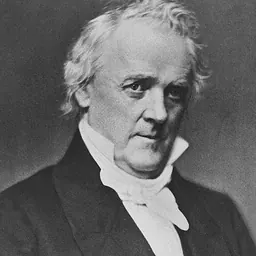
Telegraphy Before the 1860s there was great interest in Telegraphy and the linking of Europe to North America by telegraphic cable. The first successful cable was laid in August 1858. Queen Victoria of the United Kingdom exchanged congratulations briefly with the American President James Buchanan. This first success proved the telegraph could be done underwater, but it didn't last a week after a workman applied too much voltage and overheated the cable.
Pioneered by Cyrus Field, mainland Europe had been connected by telegraphy, as had Europe to Britain and Britain to Ireland. A company was formed that converted Great Eastern into a cable layer and Halpin was given the post of First Officer. Their task was to lay a submarine transatlantic telegraph cable from Valentia Island, County Kerry to Heart's Content, Newfoundland. The cable, 2,600 miles long was stored in the ship's tanks and weighed 6,000 tons.
1,862 miles from Valentia, the cable broke and Great Eastern returned to Europe. In 1866, with Halpin at the helm, the ship returned to the exact spot, recovered and repaired the broken cable. In July that year, Great Eastern arrived at Heart's Content, Newfoundland and completed the connection between the continents which has never been interrupted since.
Later, as captain, Halpin laid an estimated of cable (more than enough to circle the globe). The cable routes included the French Transatlantic Cable from Brest to St. Pierre and Miquelon in 1866 (under the patronage of Paul Julius Reuter), the 1869 Bombay-Aden-Suez cable, and the Australia-New Zealand-East Indies, Madras-Singapore-Penang, and Madeira-Brazil.
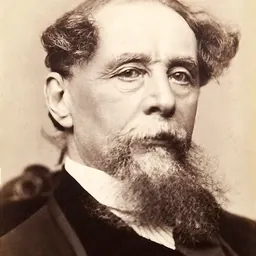
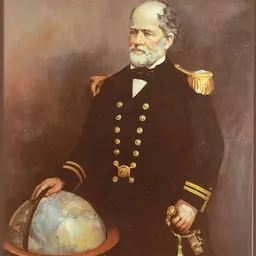
For Halpin's services, Brazilian Emperor Pedro II made him Knight of the Order of the Rose. He was also awarded the French Légion d'honneur and elected a Fellow of the Royal Geographical Society. In 1889 he was appointed an honorary Commander in the Royal Naval Reserve. His circle included Lord Kelvin, who had been aboard Great Eastern overseeing the cable laying, Admiral Sherard Osborn, who proposed him for Fellowship of the Royal Geographical Society, the American oceanographer Matthew Fontaine Maury, Alfred Lord Tennyson, Ferdinand de Lesseps, and Edmund Dickens, nephew of Charles Dickens amongst other notables of the day.
Later career On returning to Wicklow c.1875 after a brief residence near London, Halpin became chairman of the Wicklow Gas Company, Wicklow Harbour Master and Secretary of Wicklow Harbour Commissioners. He was Secretary of the Wicklow Harbour Commissioners in 1880 when the East Breakwater was built – arguably the most important built structure in the small maritime port's history. He ran for Member of Parliament for East Wicklow as a Unionist in July 1892, losing to John Sweetman, the Anti-Parnell Home Rule candidate.
He was married to Jessica Munn of Heart's Content, Newfoundland. They had three daughters, Ethel, Belle and Edith. The last daughter, Belle, died in 1952.
Tinakilly House
Halpin was rewarded by the British Government for his contribution to improving world communications and thereby world trade. In 1876 Halpin purchased a site on elevated ground two miles north of Wicklow Town, overlooking the Irish Sea. Here he built a house, named Tinakilly, the name derived from the townland of Tinakilly on which the house is built.
He recruited the fashionable Irish architect James Franklin Fuller to design the house. It had many opulent features and cost £40,000 to build, , its 400 acres including an extensive rose garden. The house is now a hotel and retains many of its original features.
At Tinakilly on 20 January 1894 Robert Halpin, aged 57, died of gangrene resulting from a minor cut while trimming his toenails. He is buried, as are others in his family, at the Wicklow Parish Church with a Celtic Cross headstone marking the grave.
Memorials Many artefacts from his life were donated by his daughters to the Maritime Institute of Ireland. There is a display in the National Maritime Museum of Ireland, Dún Laoghaire.
Obelisk
A granite obelisk, erected in 1897, in the centre of Wicklow town commemorates his life and career. The land for the obelisk was donated by William Wentworth-Fitzwilliam, 6th Earl Fitzwilliam and has since been called Fitzwilliam Square.
Halpin Memorial Medal
After the fund closed for the Wicklow obelisk, a further £397 and 13 shillings came from London. Not being required for the obelisk, this sum funded the Halpin Memorial Medal, an annual prize for the best boy and girl swimmer at the Merchant Seamen's Orphan Asylum (Royal Merchant Seamen's Orphanage from 1922, and later the Royal Merchant Navy School and then Bearwood College). The annual award continued for about seventy years until the 1960s.
The award was a silver medal, in diameter, bearing on the obverse the image of Halpin in Royal Naval Reserve uniform with the inscription 'IN MEMORIAM. ROBERT C HALPIN, DL, JP, RNR.' The reverse design varied over time but included the current name of the institution.
Don’t just read it —
keep it.
Full-length biographies made to live with: read them, listen on the way to work, watch them tonight.
- E-book
- Audio
- Video
Instant download · yours to keep · every purchase keeps this site free
Important facts
People in Robert Halpin's life
Named in this biography and alive at the same time




Related people
Same field, nearest in time



Contemporaries
People whose lives overlapped Robert Halpin's




Frequently asked questions
Who was Robert Halpin?
Irish sailor (1836-1894)
When was Robert Halpin born?
Robert Halpin was born on 16 February 1836 in Wicklow.
When did Robert Halpin die?
Robert Halpin died on 20 January 1894 in Wicklow.
What was Robert Halpin's occupation?
Robert Halpin was a sailor.
What nationality was Robert Halpin?
Robert Halpin was Irish.
Sources & further reading
Cite this page
APA: Biography.guide. (2026). Robert Halpin. https://biography.guide/robert-halpin/
MLA: "Robert Halpin." Biography.guide, https://biography.guide/robert-halpin/.
Chicago: "Robert Halpin." Biography.guide. https://biography.guide/robert-halpin/.
Data last updated: 2026-09-20 · Spot an error? Report a correction.
Page generated 2026-09-27 05:27 UTC