
About Robert Habersham Coleman
Lived 1856 – 1930 (aged 73). Robert Habersham Coleman was an American businessperson.
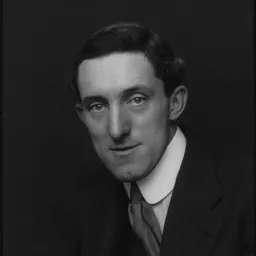
Robert Habersham Coleman (March 27, 1856 – March 15, 1930) was an iron industrialist, railroad president, and owner of extensive farmland in Pennsylvania. He was nationally known as the "Iron King of Pennsylvania." By 1889, he had turned that into $30 million (equivalent to $ in today's money).
Early life Coleman was born in Savanah, Georgia, the son of Susan Ellen Habersham (1835–1892) and William Coleman (1826–1864). His paternal great-grandfather, Robert Coleman, established an ironmaking dynasty in Cornwall, Pennsylvania in last quarter of the 1700s. The Cornwall Ore Mines was"the world's richest iron mine." Samuel Small, Coleman's guardian, protected the estate through economic crises by investing in farmland and herds of prize livestock. He also played first base and was manager of Trinity's baseball team. He also gained full ownership and control of the mines, iron furnaces, and land—his total inheritance was worth an estimate $7 million (equivalent to $ in today's money). Coleman took care of the widows and children. The CRR was an industrial line that served the Coleman mines and furnaces. Freeman had also turned down the Pennsylvania Railroad's offer the year before, but Coleman must have taken Freeman's refusal hard as this was "the inciting incident in what has long been reported as a personal and business rivalry between the two cousins." Coleman's seventeen-mile long railroad started in Lebanon and went to Cornwall and Elizabethtown.
Mount Gretna Railroad Initially, Mount Gretna offered visitors a picnic grove with wildflowers and natural springs.
The Governor Dick train only operated in the warmer months because its cars were open-air. He also took out a mortgage for $62,500 (or $ in today's money) on June 30, 1892, to cover the interest that was due and past-due. In On May 14, 1894, the Lackawanna Iron Company of Scranton, Pennsylvania purchased Coleman's mines and furnaces for a reported $3 million (equivalent to $ in today's money), with a third of that being in cash.
When he graduated from Trinity in June 1877, Coleman paid for a "magnificent ball" on the college's new campus. Around 1883, Coleman was one of two major donors for the construction of Alumni Hall, a new gymnasium for Trinity. The gym was dedicated in 1887 and used until it burned in 1967. This Ruskinian gothic style church was built of grey stone and included a tall tower, seating for 500 people, floor tiles from Valencia, and a hydraulic engine in its basement to supply air for the organ. Later, Coleman provided funds to build a church in Mt. Pleasant, the village attached to the Colebrook Furnace. Called Trinity Chapel, its cornerstone was laid on May 27, 1888. He ordered the finest instruments available from Paris and Germany, including a bassoon, euphonium, concert flute, two French horns, an oboe, an alto saxophone, a bass saxophone, a soprano saxophone, and a tenor saxophone. She was the foster daughter of Mr. and Mrs. Lucius Barbour of Hartford, and the daughter of the late Sylvester Clarke who had been a clergyman in New Haven Connecticut.
On November 8, 1879, the couple sailed on a six-month trip to Europe where they planned on purchasing furnishings for Cornwall Hall. Her body was returned to Pennsylvania and entombed in the crypt underneath the altar at St. Luke’s in Lebanon, that was dedicated in her honor. Edith was an orphan from Savannah, Georgia that Coleman's family adopted during the Civil War. Other additions to the estate included greenhouses, dog kennels, a swimming pool, bowling alleys, and Coleman's workshop where he tinkered and ran model trains. This organ was said to be the finest work of its maker, the Rosewalt Pipe Organ Company of New York. The auction catalog of 177 items gives insight to the art that once decorated the Coleman mansion; most items were chosen for him by art collector James Jackson Jarves. Coleman built his home on top of the hill, to the rear of the regular set-back of the neighborhood. This seems to be confirmed by The New York Times which mentions the New York Security and Trust Company assigning a mortgage to Robert H. Coleman, trustee, for $10,000 ($ in today's money). However he still had debts; that same year, Coleman's beloved pipe organ was sold to the Longswamp Reformed Church of Mertztown, Pennsylvania at the bargain price of $1,200 ($ in today's money) by Coleman's assignees.
Don’t just read it —
keep it.
Full-length biographies made to live with: read them, listen on the way to work, watch them tonight.
- E-book
- Audio
- Video
Instant download · yours to keep · every purchase keeps this site free
Important facts
People in Robert Habersham Coleman's life
Named in this biography and alive at the same time


Related people
Same field, nearest in time


Contemporaries
People whose lives overlapped Robert Habersham Coleman's




Frequently asked questions
Who was Robert Habersham Coleman?
American businessman (1856–1930)
When was Robert Habersham Coleman born?
Robert Habersham Coleman was born on 27 March 1856 in Savannah.
When did Robert Habersham Coleman die?
Robert Habersham Coleman died on 15 March 1930 in Hyde Park, New York, United States.
What was Robert Habersham Coleman's occupation?
Robert Habersham Coleman was a businessperson.
What nationality was Robert Habersham Coleman?
Robert Habersham Coleman was American.
Sources & further reading
· Wikipedia: Robert Habersham Coleman
· DBpedia: Robert Habersham Coleman
Cite this page
APA: Biography.guide. (2026). Robert Habersham Coleman. https://biography.guide/robert-habersham-coleman/
MLA: "Robert Habersham Coleman." Biography.guide, https://biography.guide/robert-habersham-coleman/.
Chicago: "Robert Habersham Coleman." Biography.guide. https://biography.guide/robert-habersham-coleman/.
Data last updated: 2026-09-22 · Spot an error? Report a correction.
Page generated 2026-09-27 04:58 UTC