
About Robert Haas
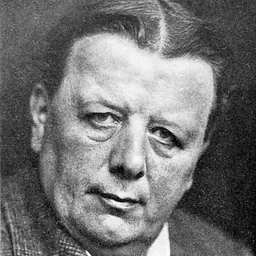
Lived 1886 – 1960 (aged 74). Robert Haas was an Austrian musicologist, music historian, composer, theatrologist, conductor and editor.
Robert Maria Haas (15 August 1886, Prague – 4 October 1960, Vienna) was an Austrian musicologist.
At the beginning of his career with the Austrian national library, Haas was mostly interested in Baroque and Classical music. Later on, he was engaged by the newly formed International Bruckner Society to work on a complete edition of Anton Bruckner's symphonies and Masses based on the original manuscripts bequeathed by the composer to the Vienna library.
Bruckner Editions Between 1935 and 1944 Haas published editions of Bruckner's, Sixth (1935), Fifth (1935), First (1935), Fourth (1936 and 1944), Second, Eighth (1939) and Seventh (1944) symphonies.
Haas's editions of Bruckner are controversial. Writing for the Cambridge University Press, Benjamin Korstvedt charges that in the Second, Seventh and Eighth symphonies Haas made changes to Bruckner's musical texts that "went beyond the limits of scholarly responsibility".
For example, the Eighth Symphony existed in three versions: Bruckner's original manuscript of 1887, a revised manuscript of 1890 which incorporated suggestions from Franz Schalk, Arthur Nikisch and others, and the first published edition of 1892 which went even further in the direction of the changes, including significant cuts, suggested by Bruckner's friends. Haas decided to make a composite edition based on the 1890 manuscript but adding in some passages from the 1887 version he (justifiably, in the view of many Brucknerians, including conductors Rudolf Kempe and Georg Tintner) thought it a shame to lose: he also rewrote a brief passage himself.
Another source of controversy is Haas's affiliation with the Nazi party, of which he was a member and didn't hesitate or scruple to use the language of Nazism to garner approval for his work. He portrayed Bruckner as being a pure and simple country soul who had been corrupted by "cosmopolitan" and Jewish influences. This proved Haas's undoing: after World War II, he was removed from the Bruckner project and replaced by the more scholarly, if less inventive, Leopold Nowak who went on to produce new editions of all Bruckner's symphonies, including use of the severely cut last (1892) version of the Eighth the composer was persuaded to promulgate for publication.
Conductor Wilhelm Furtwängler criticized what he called Haas's "violation myth" in his private notebooks:
On the other hand, conductor Georg Tintner, even as a Jewish victim of Nazi persecution, subsequently described Haas as "brilliant" and called Haas's edition of Bruckner's Eighth Symphony "the best" of all available versions although he himself chose to record the original 1887 version. Many conductors including Herbert von Karajan, Bernard Haitink, Daniel Barenboim, Takashi Asahina and Günter Wand continued to prefer Haas's editions, even after the Nowak editions became available.
Other work Haas also edited some of the music of Hugo Wolf, Claudio Monteverdi's Il Ritorno d'Ulisse in Patria, Christoph Willibald von Gluck's Don Juan ballet score, and other Baroque music. He also wrote about the Wiener Singspiel, Wolfgang Amadeus Mozart and Johann Sebastian Bach.
Don’t just read it —
keep it.
Full-length biographies made to live with: read them, listen on the way to work, watch them tonight.
- E-book
- Audio
- Video
Instant download · yours to keep · every purchase keeps this site free
Important facts
People in Robert Haas's life
Named in this biography and alive at the same time







Related people
Same field, nearest in time



Contemporaries
People whose lives overlapped Robert Haas's




Frequently asked questions
Who was Robert Haas?
Austrian musicologist and director (1886–1960)
When was Robert Haas born?
Robert Haas was born on 15 August 1886 in Prague.
When did Robert Haas die?
Robert Haas died on 4 October 1960 in Vienna.
What was Robert Haas's occupation?
Robert Haas was a musicologist, music historian, composer, theatrologist, conductor and editor.
What nationality was Robert Haas?
Robert Haas was Austrian.
Sources & further reading
· DBpedia: Robert Haas (musicologist)
Cite this page
APA: Biography.guide. (2026). Robert Haas. https://biography.guide/robert-haas/
MLA: "Robert Haas." Biography.guide, https://biography.guide/robert-haas/.
Chicago: "Robert Haas." Biography.guide. https://biography.guide/robert-haas/.
Data last updated: 2026-09-20 · Spot an error? Report a correction.
Page generated 2026-09-27 05:17 UTC