
About Robert George Irwin
Lived 1908 – 1975 (aged 66–67). Robert George Irwin was an American sculptor.
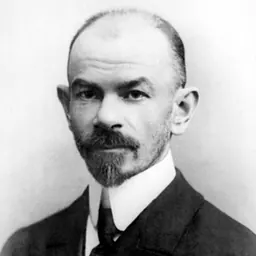
Robert George Irwin (August 5, 1907 – 1975) was an American artist, sculptor, and recurring mental hospital patient who pleaded guilty to killing three people on Easter weekend in 1937 in the Beekman Hill area of New York City's Turtle Bay neighborhood.
One of his victims, Veronica "Ronnie" Gedeon, was a model who often appeared in seductive pulp magazine pictures. The crime, its investigation, Irwin's arrest, and the resulting court proceedings were heavily media publicized, often with eye-catching photos of Gedeon and headlines describing Irwin as the "mad sculptor." Veronica Gedeon left behind a portfolio of sexy photos that in retrospect, had no relevance to the crime, its cause, or Irwin's responsibility for it. However, that coincidence kept the story on front pages of newspapers around the country for months, and that publicity ultimately helped to bring Irwin into custody.
Irwin's prosecution, which ended through a plea bargain that kept him incarcerated for life, renewed debate about the use and scope of New York State's version of the insanity defense. Once sentenced, Irwin was deemed "definitely insane" by state psychiatrists. He spent the rest of his life in secure mental institutions.
Personal background The son of evangelist parents, Irwin was reportedly born in a tent on an old-fashioned camp meeting ground in Portland, Oregon. However, he was actually born in the Arroyo Seco Park near Pasadena, California on August 5, 1907. He was named for the nearby river (as was the park) and one of his father's favorite theologians, François Fénelon. Hence, he entered life as Fenelon Arroyo Seco Irwin. He later changed his name, much to the horror of his devout mother, to honor his philosophical idol the agnostic Robert G. Ingersoll. His father was Rev. Benjamin Hardin Irwin, a nationally known figure in the Holiness movement who had founded a racially-integrated radical Holiness denomination in 1898 at a national convention in legally-segregated Anderson, South Carolina. He denounced as sinful everything from Coca-Cola to wearing ties. (The body that Irwin founded is now known as the International Pentecostal Holiness Church.) In 1900, a sexual scandal ended his career with the Fire-Baptized Holiness Church and the senior Irwin went solo. In Canada, sometime during 1902, he married Robert's mother, Mary Lee Jordan of Texas, without divorcing his first wife. His father deserted the family before Robert was three years old, which left them impoverished. When a family court judge noted that Robert could learn a trade at a state reformatory, he volunteered and spent 15 months there, where he first learned to sculpt. he carved commercial busts of President Franklin D. Roosevelt and other public figures. He tried to emasculate himself, using a razor. He then consented to be committed to a state mental hospital, where he initially stayed for a year. By then, Ethel Gedeon had married Joseph Kudner. )-a-week room in a house on 52nd Street in New York City, several blocks from Mary Gedeon's rooming house at 316 E. 50th Street. Mrs. Gedeon and Veronica had been strangled, and Mrs. Gedeon had been stabbed as well. Detectives concluded the assailant had entered the apartment before Veronica arrived and then had waited for her. They also concluded Byrnes had likely been killed while he slept. in part because a sculpture carefully carved in ordinary bath soap was discovered at the crime scene. Ethel Gedeon and Irwin's psychiatrist expressed doubt that Irwin was capable of committing the murders,
Hunt for Irwin and surrender In late June 1937, a pantry maid in Cleveland's Statler Hotel saw a picture of Irwin in a pulp magazine and noticed a resemblance to a bar boy, who been working at the hotel for less than two months, under the name of Bob Murray. He cleaned out his locker and disappeared soon after she asked him about his last name and whether he knew about Robert Irwin. Once again, the search for Irwin became the lead story on the front pages of daily newspapers nationwide.
The next day, the Chicago Tribune received a call from someone claiming to be Irwin and offering to surrender for a price, but the Tribune dismissed the call as a prank. and the reporters G. Duncan Bauman and Austin O'Malley kept Irwin in a room in the Morrison Hotel in Chicago, worked on the terms of a confession to the Beekman Hill murders the newspaper would publish as an exclusive, and briefly shielded him from police.
In his published confession, Irwin he stated he originally intended to kill Ethel Gedeon Kudner because "she was the dearest object in the world" to him, but he "accidentally" killed the others instead. He explained he went to the Gedeons' flat, expecting to find Ethel. He first struck then strangled Mary Gedeon, after she had asked him to leave.
Prosecution, plea, and sentencing Hours after New York police took Irwin into custody, he was indicted for three counts of first-degree murder. Contrary to Inspector Lyon's initial view Irwin was insane, New York now found him normal at the time of the murders and claimed that he knew the nature and quality of his acts. The office of District Attorney William C. Dodge also announced it would seek the death penalty. However, the commissioners concluded Irwin was sane. As Irwin's trial date approached in the fall of 1938, William A. Adams, the warden of The Tombs detention center), said, "Irwin certainly isn't crazy now. He's as normal as any man in prison." Liebowitz, however, replied Irwin "was, is and will be hopelessly insane. He's crazy as a bedbug."
Judge James Wallace sentenced him to 139-years-to-life in prison (99 years-to-life for the slaying of Byrnes, 20 years-to-life for the slaying of Mary Gedeon, and 20 years-to-life for the slaying of Veronica Gedeon). He was then sent to Sing Sing Prison for a psychological evaluation, where prison doctors ruled him "very definitely insane."
Death and legacy Irwin died of cancer in 1975 in Matteawan State Hospital for the Criminally Insane in Fishkill, New York.
Irwin's enduring legacy involves the way that newspapers exploited his crime by sensationalist headlines and racy photos, culminating with a paid confession that nearly put him in the electric chair. In the immediate aftermath of the crime, the New York Daily News publisher, Joseph Medill Patterson, responded to criticism of the sensationalism by editorializing that "murder sells papers, books, plays because we are all fascinated by murder." One day later, the court began to put women on jury lists in such cases.
Don’t just read it —
keep it.
Full-length biographies made to live with: read them, listen on the way to work, watch them tonight.
- E-book
- Audio
- Video
Instant download · yours to keep · every purchase keeps this site free
Important facts
People in Robert George Irwin's life
Named in this biography and alive at the same time





Related people
Same field, nearest in time



Contemporaries
People whose lives overlapped Robert George Irwin's

Frequently asked questions
Who was Robert George Irwin?
American murderer
When was Robert George Irwin born?
Robert George Irwin was born in 1908 in Pasadena, California.
When did Robert George Irwin die?
Robert George Irwin died in 1975 in Fishkill Correctional Facility.
What was Robert George Irwin's occupation?
Robert George Irwin was a sculptor.
What nationality was Robert George Irwin?
Robert George Irwin was American.
Sources & further reading
· Wikipedia: Robert George Irwin
· DBpedia: Robert George Irwin
Cite this page
APA: Biography.guide. (2026). Robert George Irwin. https://biography.guide/robert-george-irwin/
MLA: "Robert George Irwin." Biography.guide, https://biography.guide/robert-george-irwin/.
Chicago: "Robert George Irwin." Biography.guide. https://biography.guide/robert-george-irwin/.
Data last updated: 2026-09-20 · Spot an error? Report a correction.
Page generated 2026-09-27 05:17 UTC