
About Robert G. Roeder
Born 1942. Robert G. Roeder is an American biologist, biochemist and university teacher, known for Eukaryotic transcription and Regulation of gene expression.
Robert G. Roeder (born June 3, 1942, in Boonville, Indiana, United States) is an American biochemist. He is known as a pioneer scientist in eukaryotic transcription. He discovered three distinct nuclear RNA polymerases in 1969 He is the recipient of the Gairdner Foundation International Award in 2000, the Albert Lasker Award for Basic Medical Research in 2003, and the Kyoto Prize in 2021. He currently serves as Arnold and Mabel Beckman Professor and Head of the Laboratory of Biochemical and Molecular Biology at Rockefeller University.
Biography
Roeder was born in Boonville, Indiana, US in 1942. He received his B.A. summa cum laude in chemistry from Wabash College in 1964 and his M.S. in chemistry from the University of Illinois in 1965. He received his Ph.D. in biochemistry in 1969 from the University of Washington, Seattle, where he worked with William J. Rutter. He did postdoctoral work with Donald D. Brown at the Carnegie Institution of Washington, in Baltimore, from 1969 to 1971. He was a member of the faculty at Washington University School of Medicine in St. Louis from 1971 to 1982, when he joined Rockefeller University. In 1985, he was named Arnold and Mabel Beckman Professor. He was elected as a member of the National Academy of Sciences in 1988 and the American Academy of Arts and Sciences in 1995, and a foreign associate member of the European Molecular Biology Organization in 2003.
Major scientific discoveries
1969: As a graduate student at the University of Washington, Roeder discovers that three enzymes, called RNA polymerases, directly copy DNA to RNA in eukaryotic organisms ranging from yeast to mammals. 1971–1977: As a professor at Washington University in St. Louis, he goes on to show that these enzymes, referred to as Pol I, II and III, have complex subunit structures with both distinct and common polypeptides, recognize and copy distinct classes of genes, respectively, of large ribosomal RNAs, mRNA precursors, and transfer and 5S RNAs. 1977–1979: Roeder develops cell-free systems to better study transcription. Composed of the purified RNA polymerases and components extracted from cell nuclei, the systems allow researchers to recreate transcription in a test tube in a way that faithfully mimics the real process in cells. 1979–1980: The development of cell-free systems leads to the identification of complex sets of proteins called accessory factors that are essential for each individual RNA polymerase (e.g., TFIIA, TFIIB, TFIIE, TFIIF and TFIIH for Pol II, and TFIIIB and TFIIIC for Pol III) to "read" specific target genes. 1980: Roeder identifies the first mammalian gene-specific activator, called TFIIIA. TFIIIA and similar proteins bind to specific DNA sequences and enhance the reading of corresponding target genes. Repressors perform the opposite task by inhibiting a gene's activity. 1990s: A decade of research culminates with the discovery of coactivators, large protein complexes that provide a bridge between the activators and repressors and the RNA polymerases and other components of the general transcription machinery. 1992: Roeder laboratory demonstrates that coactivators can be ubiquitous, monitoring many genes in a variety of cells, or specific to one particular cell type. Roeder and colleagues introduce the concept of cell specificity after they demonstrate that the coactivator OCA-B, the first cell-specific coactivator, discovered by Roeder in 1992, is unique to immune system B cells. 1996: Roeder's laboratory discovers the major conduit for communication between gene-specific activators and the general transcription machinery in animal cells: a giant coactivator (TRAP/SMCC) that consists of about 25 different protein chains and is referred to as the human mediator after its counterpart in yeast. 2002: Roeder and colleagues show that a single component of the mediator is essential for the formation of fat cells — a finding that may one day contribute to new treatments for diabetes, heart disease, cancer and other conditions in which the fat-making process breaks down.
Highly cited papers Times Cited: 12,743 Times Cited: 3,236 Times Cited: 1,511 Times Cited: 1,377 Times Cited: 1,177
Honors and awards
1977: American Chemical Society, Eli Lilly Award in Biological Chemistry 1986: NAS Award in Molecular Biology 1988: Member, National Academy of Sciences 1988: Harvey Society Lecturer 1990: Honorary Doctor of Science from Wabash College 1992: Fellow, American Association for the Advancement of Science 1995: Lewis S. Rosenstiel Award for Distinguished Work in Basic Medical Science (shared with Robert Tjian) 1995: Passano Award (shared with Robert Tjian) 1995: Fellow, American Academy of Arts and Sciences 1999: Louisa Gross Horwitz Prize from Columbia University (shared with Pierre Chambon and Robert Tjian) 1999: General Motors Cancer Research Foundation's Alfred P. Sloan Prize (shared with Robert Tjian) 2000: Gairdner Foundation International Award (shared with Roger D. Kornberg) 2001: Dickson Prize in Medicine from University of Pittsburgh 2002: Merck Award – American Society for Biochemistry and Molecular Biology (shared with Roger D. Kornberg) 2003: Albert Lasker Award for Basic Medical Research 2003: Foreign Associate Member, European Molecular Biology Organization 2005: Honorary Doctor of Science from Washington University in St. Louis 2010: Salk Institute Medal for Research Excellence 2012: Albany Medical Center Prize in Medicine and Biomedical Research 2016: Herbert Tabor Research Award, American Society for Biochemistry and Molecular Biology 2018: Howard Taylor Ricketts Award of the University of Chicago 2019: Shitsan Pai International Award, the Biophysical Society of China 2021: Kyoto Prize
Prominent alumni of the Roeder Laboratory The Roeder Laboratory has trained hundreds of students and postdoctoral fellows, many of whom hold independent positions in prominent biomedical research institutions, including Richard A. Bernstein (Northwestern University), Robert B. Darnell (Rockefeller University and HHMI), Beverly M. Emerson (Salk Institute for Biological Studies), Michael R. Green (University of Massachusetts Medical School and HHMI), Wei Gu (Columbia University), Nathaniel Heintz (Rockefeller University and HHMI), Andrew B. Lassar (Harvard Medical School), Carl S. Parker (California Institute of Technology), Ron Prywes (Columbia University), Danny Reinberg (New York University School of Medicine and HHMI), Hazel L. Sive (Massachusetts Institute of Technology and Whitehead Institute) and Jerry Workman (Stowers Institute for Medical Research).
Don’t just read it —
keep it.
Full-length biographies made to live with: read them, listen on the way to work, watch them tonight.
- E-book
- Audio
- Video
Instant download · yours to keep · every purchase keeps this site free
Important facts
People in Robert G. Roeder's life
Named in this biography and alive at the same time







Related people
Same field, nearest in time
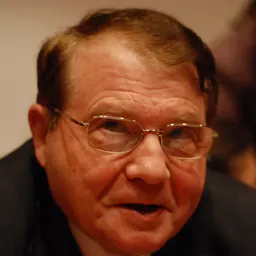
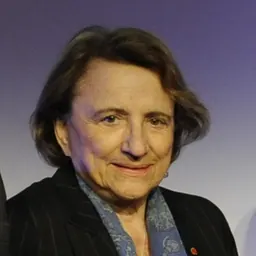
Contemporaries
People whose lives overlapped Robert G. Roeder's

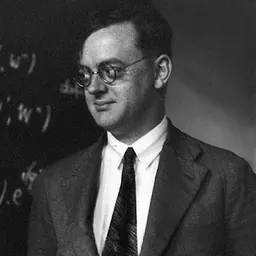
Frequently asked questions
Who is Robert G. Roeder?
American biologist
When was Robert G. Roeder born?
Robert G. Roeder was born on 3 June 1942 in Boonville.
What is Robert G. Roeder's occupation?
Robert G. Roeder is a biologist, biochemist and university teacher.
What is Robert G. Roeder known for?
Robert G. Roeder is known for Eukaryotic transcription and Regulation of gene expression.
What nationality is Robert G. Roeder?
Robert G. Roeder is American.
Sources & further reading
Cite this page
APA: Biography.guide. (2026). Robert G. Roeder. https://biography.guide/robert-g-roeder/
MLA: "Robert G. Roeder." Biography.guide, https://biography.guide/robert-g-roeder/.
Chicago: "Robert G. Roeder." Biography.guide. https://biography.guide/robert-g-roeder/.
Data last updated: 2026-09-26 · Spot an error? Report a correction.
Page generated 2026-09-27 05:15 UTC