
About Robert Drew
Lived 1924 – 2014 (aged 90). Robert Drew was an American film director, film producer and screenwriter.
Robert Lincoln Drew (February 15, 1924 – July 30, 2014) was an American documentary filmmaker known as a pioneer—and sometimes called the father —of cinéma vérité, or direct cinema, in the United States. Two of his films, Primary and Crisis: Behind a Presidential Commitment (1963), were named to the National Film Registry of the Library of Congress. In 1993 he was a recipient of the Career Achievement Award from the International Documentary Association.
Biography Robert Drew was born in Toledo, Ohio. His father, Robert Woodsen Drew, was a film salesman and a pilot who ran a seaplane business. Drew grew up mostly in Fort Thomas, Kentucky. In 1942 he left high school to join the U.S. Army Air Corps as a cadet Drew was shot down behind enemy lines, where he survived for more than three months. After returning to the U.S., he was a pilot in the 1st Fighter Group, the first to fly jet airplanes. He wrote an article for Life magazine about the experience flying a P-80 and was subsequently offered a job with the magazine. While working as a writer and editor at Life, he won Harvard University's Nieman Fellowship for journalism. During his Nieman year in 1955, he focused on two questions: Why are documentaries so dull? What would it take for them to become gripping and exciting? His answers were "that documentaries, with their stitched-together footage and stilted narration, had been little more than lectures, and that television had the ability to draw audiences into dramatic stories with an immediacy it had yet to exploit."
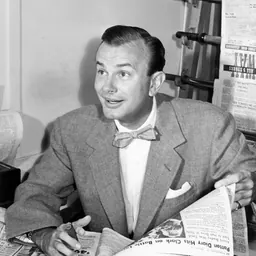
He formed a unit within Time Inc. with the aim of creating documentary films that would use picture logic rather than word logic. As he articulated it, he envisioned a type of documentary that would "find a dramatic logic in which things really happened". It would be "a theater without actors; it would be plays without playwrights; it would be reporting without summary and opinion; it would be the ability to look in on people's lives at crucial times from which you could deduce certain things and see a kind of truth that can only be gotten from personal experience." To realize his vision, he needed lightweight camera equipment that operated silently, along with recorded synchronized sound. He was able to persuade Time Inc. to finance development of the new equipment. and The Jack Paar Tonight Show. In 1960, he founded Drew Associates and recruited like-minded filmmakers including Richard Leacock, D. A. Pennebaker, Terence Macartney-Filgate, and Albert Maysles, They experimented with new technology, for example, syncing camera and sound with the parts of a watch.
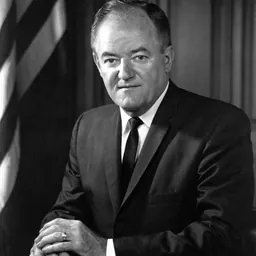
Among the best-known works of Drew Associates is Primary (1960), a documentary about the April 1960 Wisconsin primary election between Democratic Party candidates Hubert Humphrey and John F. Kennedy. It is considered one of the first direct cinema documentaries. For the film, Drew had Mitch Bogdanovich make smaller 16mm cameras, which allowed for hand-held use and a much closer look at political candidates and campaigning than was previously possible. According to critic Matt Zoller Seitz, Primary "had as immense and measurable an impact on nonfiction filmmaking as Birth of a Nation had on fiction filmmaking."
After Kennedy responded positively to Primary, Drew "proposed to make a next film on him as a President having to deal with a crisis. 'Yes,' he said, 'What if I could look back and see what went on in the White House in the 24 hours before Roosevelt declared war on Japan?'" They got their chance in spring of 1963 when Governor George Wallace of Alabama pledged, as a show of support for segregation, to personally stand in the doorway to block enrollment of the first two African-American students at the University of Alabama. Drew secured permission for his camera crews to film in the White House and in the office of Attorney General Robert Kennedy, as well as in Alabama at the home of Governor Wallace and at the university. The film footage covers the days leading up to June 11, 1963, when Wallace made his infamous stand. The resulting film, Crisis: Behind a Presidential Commitment, aired on TV in October 1963 and fueled discussions about the Civil Rights Movement. It also raised questions about cinéma vérité, and whether the people being filmed alter their behavior out of self-consciousness or a desire to manipulate the process.
Over the course of his career, Drew made scores of documentaries and won numerous awards, including an Emmy for Man Who Dances (1968) about the ballet dancer Edward Villella.
Drew's second wife, Anne Gilbert, was a documentarian at Drew Associates and often worked with her husband on film projects. His extended family member Sybil Drew also became a journalist and documentarian. Director Sir Ridley Scott credited his early experience working as an assistant at Drew Associates with turning his career from design to film.
Death Robert Drew died on July 30, 2014, at his home in Sharon, Connecticut. He was 90.
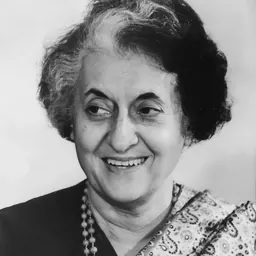
Legacy In a statement after Drew's death, documentarian Michael Moore said, "Modern art has Picasso, rock 'n' roll has Bill Haley, and the documentary film has Robert Drew. All of us who make nonfiction movies can trace our lineage to what he created." The Archive has preserved a number of his films, including Primary, Crisis: Behind a Presidential Commitment, Faces of November, Herself: Indira Gandhi, and Bravo! / Kathy's Dance.
Select filmography
Year Title Notes 1954 Key Picture (Magazine X) 1961 1962 First Prize, Cannes Film Festival 1962 Nehru Cine Golden EagleEmmy Award, National Academy of Television Arts and Sciences 1968 On the Road with Duke EllingtonCine Golden Eagle 1976 Parade of the Tall ShipsCine Golden Eagle 1982 Herself, Indira GandhiCine Golden Eagle 1984 Marshall High Fights BackCine Golden EagleNomination, Emmy AwardFirst Prize, Education Writers Association 1985 Shootout on Imperial Highway 1986 For Auction: An American HeroBest Documentary, Alfred I. duPont–Columbia University AwardCine Golden EagleNominee, Emmy Award 1988 River of Hawks 1988 Your Flight is Cancelled 1988 Messages from the Birds 1990 London to Peking: The Great Motoring Challenge 1991 Life and Death of a DynastyCine Golden Eagle 1996 L.A. Champions 1996 On the Trail of the Vanishing Birds 2005 From Two Men and a War
Don’t just read it —
keep it.
Full-length biographies made to live with: read them, listen on the way to work, watch them tonight.
- E-book
- Audio
- Video
Instant download · yours to keep · every purchase keeps this site free
Important facts
People in Robert Drew's life
Named in this biography and alive at the same time




Related people
Same field, nearest in time



Contemporaries
People whose lives overlapped Robert Drew's

Frequently asked questions
Who was Robert Drew?
American filmmaker (1924–2014)
When was Robert Drew born?
Robert Drew was born on 15 February 1924 in Toledo.
When did Robert Drew die?
Robert Drew died on 30 July 2014 in Sharon.
What was Robert Drew's occupation?
Robert Drew was a film director, film producer and screenwriter.
What nationality was Robert Drew?
Robert Drew was American.
Sources & further reading
Cite this page
APA: Biography.guide. (2026). Robert Drew. https://biography.guide/robert-drew/
MLA: "Robert Drew." Biography.guide, https://biography.guide/robert-drew/.
Chicago: "Robert Drew." Biography.guide. https://biography.guide/robert-drew/.
Data last updated: 2026-09-22 · Spot an error? Report a correction.
Page generated 2026-09-27 05:16 UTC