
About Robert Desnos
Lived 1900 – 1945 (aged 44). Robert Desnos was a French poet, writer, screenwriter, journalist, french resistance fighter and painter.
Robert Desnos (; 4 July 1900 – 8 June 1945) was a French poet who played a key role in the Surrealist movement.
Early life Robert Desnos was born in Paris on 4 July 1900, the son of a licensed dealer in game and poultry at the Halles market. Desnos attended commercial college, and started work as a clerk. He also worked as an amanuensis for journalist Jean de Bonnefon. After that he worked as a literary columnist for the newspaper Paris-soir.
Career The first poems by Desnos to appear in print were published in 1917 in La Tribune des Jeunes (Platform for Youth) and in 1919 in the avant-garde review Le Trait d'union (Hyphen), and also the same year in the Dadaist magazine Littérature. In 1922 he published his first book, a collection of surrealistic aphorisms, with the title Rrose Sélavy (the name adopted as an "alternative persona" by the avant-garde French artist Marcel Duchamp; a pun on "Eros, c'est la vie").
In 1919 he met the poet Benjamin Péret, who introduced him to the Paris Dada group and André Breton, with whom he soon became friends. In 1920, he did his military service which led him to Chaumont and then Morocco.
While working as a literary columnist for Paris-Soir, Desnos was an active member of the Surrealist group and developed a particular talent for automatic writing. He, together with writers such as Louis Aragon and Paul Éluard, would form the literary vanguard of surrealism. André Breton included two photographs of Desnos sleeping in his surrealist novel Nadja. Although he was praised by Breton in his 1924 Manifeste du Surréalisme for being the movement's "prophet", Desnos disagreed with Surrealism's involvement in communist politics, which caused a rift between him and Breton. Desnos continued work as a columnist.
In 1926 he composed The Night of Loveless Nights, a lyric poem dealing with solitude curiously written in classic quatrains, which makes it more like Baudelaire than Breton. It was illustrated by his close friend and fellow surrealist Georges Malkine. Desnos fell in love with Yvonne George, a singer whose obsessed fans made his love impossible. He wrote several poems for her, as well as the erotic surrealist novel La liberté ou l'amour! (1927). Critic Ray Keenoy describes La liberté ou l'amour! as "literary and lyrical in its outpourings of sexual delirium".
By 1929 Breton definitively condemned Desnos, who in turn joined Georges Bataille and Documents, as one of the authors to sign Un Cadavre (A Corpse) attacking "le bœuf Breton" (Breton the ox or Breton the oaf). He wrote articles on "Modern Imagery", "Avant-garde Cinema" (1929, issue 7), "Pygmalion and the Sphinx" (1930, issue 1), and Sergei Eisenstein, the Soviet filmmaker, on his film titled The General Line (1930, issue 4).
His career in radio began in 1932 with a show dedicated to Fantômas. During that time, he became friends with Picasso, Hemingway, Artaud and John Dos Passos; published many critical reviews on jazz and cinema; and became increasingly involved in politics. He wrote for many periodicals, including Littérature, La Révolution surréaliste and Variétés. Besides his numerous collections of poems, he published three novels, Deuil pour deuil (1924), La Liberté ou l'amour! (1927) and Le vin est tiré (1943); a play, La Place de l'étoile (1928; revised 1944); and a film script, L'Étoile de mer (1928), which was directed by Man Ray that same year.
Resistance and deportation During World War II, Desnos was an active member of the French Résistance network Réseau AGIR, under the direction of Michel Hollard, often publishing under pseudonyms. For Réseau Agir, Desnos provided information collected during his job at the journal Aujourd'hui and made false identity papers, Death Desnos died in Malá pevnost, which was an inner part of Terezín used only for political prisoners, from typhoid, a month after the camp's liberation. There is a moving anecdote about Desnos's last days after the liberation while being tended to by a young Czech medical student, Josef Stuna, who recognised him thanks to reading Breton's Nadja.
He is buried at the Montparnasse cemetery in Paris.
Susan Griffin relates a story, previously recounted slightly differently in an article by her that appears in González Yuen, that exemplifies Desnos' surrealist mindset; his capacity to envisage solutions that defy conventional logic:
Legend of "The Last Poem"
A so-called "Last Poem" (Dernier poème) has been published numerous times; it was even set to music by Francis Poulenc in 1956. However, this poem never existed. The belief in its existence started after a misunderstanding. A Czech newspaper Svobodné noviny (Free Newspaper) published his obituary which ended with the sentence "In a strange, tragic way his verses have fulfilled" followed by a quote from Desnos' poem I Dreamt About You So Much translated by a Czech poet Jindřich Hořejší and printed in six lines. When re-published in France in Les Lettres Françaises, the sentence was translated in a completely wrong way: "A strange and tragic fate gave a concrete meaning to a poem, the only one found with him and dedicated probably to his spouse" followed by an erroneous translation of the aforementioned verses (furthermore, the translation excluded the last line of the Czech translation). Due to this the legend of "The Last Poem" survived well into the 1970s. It was thanks to a Czech translator Adolf Kroupa and his two well-founded articles in Les Lettres Françaises (June 1960, August 1970) that this false belief in the poem started to cease to exist.
The 2023 novel Traitor Comet, by Personne, is the first in a series on Desnos's life and his friendship with the poet Antonin Artaud. The sequel, L'Etoile de Mer (The Starfish), was published in November 2024, and continues the story of Desnos as he defies André Breton and becomes obsessed with the wife of Tsuguharu Foujita, (later to become Desnos's wife), Youki.
Publications (1924) ; English translation: Mourning for Mourning (2012) (1926) ; English translation: That Line "I See Myself" is Seven-League Boots (2017) (1927) ; English translation: Liberty or Love! (1997) (1930) The Night of Loveless Nights (1930) (Body and Goods) (1934) (The Cut Necks) (1942) (1943) (State of Alert) (1943) (The Wine is Drawn) (1944) (Against the Grain) (1944) (Bathing with Andromeda) (1944) ; English translation: Storysongs (2014) (1945) (1945)
Published posthumously (1946) (includes previously unpublished works selected and prefaced by Paul Eluard) (1947) (1947) (1947) (1947) (includes works by Desnos, selected by Robert Ganzo) (1949) Roberts Desnos (includes previously unpublished works selected by Pierre Berger) (1952, 1955, 1970) (reprints the thirty Chantefables (1944); includes thirty previously unpublished Chantefleurs (1952), plus twenty additional Chantefleurs (1955)) (1953) (previously unpublished text of 1923, written by Desnos for Jacques Doucet) (1953) (includes many previously unpublished works selected by René Bertelé) (1957) (1962) (1966) (1974) (1975) (includes many previously unpublished works selected by Marie-Claire Dumas) (1978) (edited by Marie-Claire Dumas) (1984) (works about painters, written by Desnos and edited by Marie-Claire Dumas) (1987) (Audiobook CD; collection of songs and reviews, written by Desnos and edited by L. Cantaloube-Ferrieu) (2017) , translated and introduced by Timothy Adès (dual language text, French and English), Arc Publications
Filmography L'Étoile de mer (1928) – in collaboration with Man Ray
Discography
Lutoslawski: Vocal Works (Chandos Records, 2011) – Includes selections from Les Espaces du sommeil and Chantefleurs et Chantefables
Don’t just read it —
keep it.
Full-length biographies made to live with: read them, listen on the way to work, watch them tonight.
- E-book
- Audio
- Video
Instant download · yours to keep · every purchase keeps this site free
Important facts
People in Robert Desnos's life
Named in this biography and alive at the same time

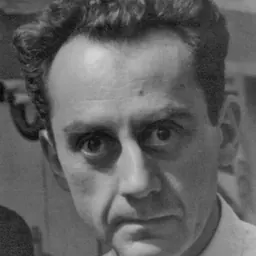

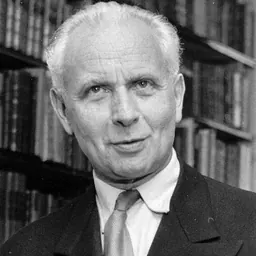


Related people
Same field, nearest in time
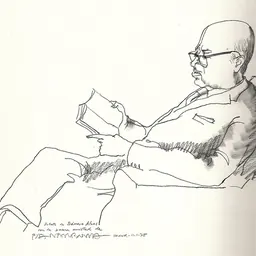
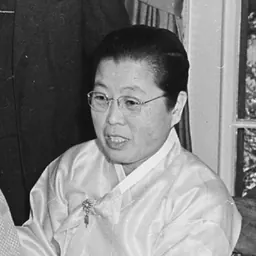
Contemporaries
People whose lives overlapped Robert Desnos's





Frequently asked questions
Who was Robert Desnos?
French writer
When was Robert Desnos born?
Robert Desnos was born on 4 July 1900 in 11th arrondissement of Paris.
When did Robert Desnos die?
Robert Desnos died on 8 June 1945 in Theresienstadt concentration camp, Terezín.
What was Robert Desnos's occupation?
Robert Desnos was a poet, writer, screenwriter, journalist, french resistance fighter and painter.
What nationality was Robert Desnos?
Robert Desnos was French.
Sources & further reading
Cite this page
APA: Biography.guide. (2026). Robert Desnos. https://biography.guide/robert-desnos/
MLA: "Robert Desnos." Biography.guide, https://biography.guide/robert-desnos/.
Chicago: "Robert Desnos." Biography.guide. https://biography.guide/robert-desnos/.
Data last updated: 2026-09-20 · Spot an error? Report a correction.
Page generated 2026-09-27 05:19 UTC