
About Robert Cockburn
Lived 1401 – 1526. Robert Cockburn was a catholic priest, diplomat, catholic bishop, humanist, ambassador and bishop.
Robert Cockburn (died 1526) was a 16th-century Scottish diplomat and cleric.
Robert Cockburn was the third son of William Cockburn of Skirling and Cessford, and Marion, daughter of Lord Crichton of Sanquhar.
Cockburn was a university graduate, and appears for the first time in 1501 when he was presented to James IV of Scotland for the position of parson of Dunbar, being styled "Master Robert Cockburn, dean of Rouen". Cockburn was later praised for his skill in the Latin language.
He became Bishop of Ross in 1507, by which time he was holding the position of Chancellor of the diocese of Dunkeld. He had received crown nomination to the bishopric on either March or May, and was provided to the see on 9 July. Cockburn was a chaplain to Louis XII of France and acted as a diplomat for James IV of Scotland. On 10 July 1507, Louis asked Cockburn to request 4,000 Scottish troops to assist in the defence of the French possession, the Duchy of Milan. In October, James replied he would send military support if warned, and Cockburn was instructed to discuss another project. This was probably the Scottish king's plans for a crusade. Cockburn carried similar messages in 1512, in the crisis that culminated for Scotland in the Battle of Flodden
Robert spent most of 1515 in France as an ambassador for the government of King James V of Scotland (still a minor). In 1524, he was in England as one of three ambassadors sent by the Scottish government to agree a truce.
Robert became friends with Cardinal Wolsey, and wrote to him in February 1525 describing the political situation in Scotland. Regent Albany, having left Scotland for France, was still influential and his Dunbar Castle strongly fortified, while Cockburn's ride to England had brought him enemies. In May he addressed a short note to the English ambassador Dr Thomas Magnus, as "my hertly gud frend and broder."
He was Bishop of Dunkeld for only two years, dying on 12 April 1526. He was buried in the choir of Dunkeld Cathedral. Symphorien also printed a catalogue of his humanist friends across Europe including John Liddel a Scottish philosopher, Patrick the Scottish physician of Anne of France, and the printer Jodocus Badius who would publish Hector Boece's History of the Scottish People.
Don’t just read it —
keep it.
Full-length biographies made to live with: read them, listen on the way to work, watch them tonight.
- E-book
- Audio
- Video
Instant download · yours to keep · every purchase keeps this site free
Important facts
People in Robert Cockburn's life
Named in this biography and alive at the same time



Related people
Same field, nearest in time
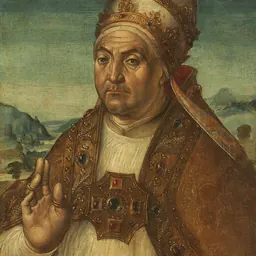
Contemporaries
People whose lives overlapped Robert Cockburn's



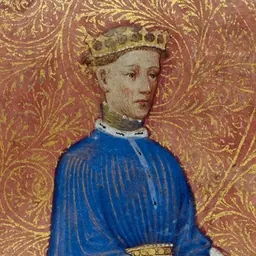

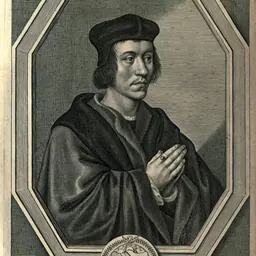
Frequently asked questions
Who was Robert Cockburn?
Roman Catholic bishop
When was Robert Cockburn born?
Robert Cockburn was born in 1401.
When did Robert Cockburn die?
Robert Cockburn died in 1526 in Dunkeld and Birnam.
What was Robert Cockburn's occupation?
Robert Cockburn was a catholic priest, diplomat, catholic bishop, humanist, ambassador and bishop.
Sources & further reading
· DBpedia: Robert Cockburn (diplomat)
Cite this page
APA: Biography.guide. (2026). Robert Cockburn. https://biography.guide/robert-cockburn-catholic-priest/
MLA: "Robert Cockburn." Biography.guide, https://biography.guide/robert-cockburn-catholic-priest/.
Chicago: "Robert Cockburn." Biography.guide. https://biography.guide/robert-cockburn-catholic-priest/.
Data last updated: 2026-09-20 · Spot an error? Report a correction.
Page generated 2026-09-27 05:28 UTC