
About Robert Clark
Lived 1924 – 2013 (aged 88). Robert Clark was a British businessperson and banker.
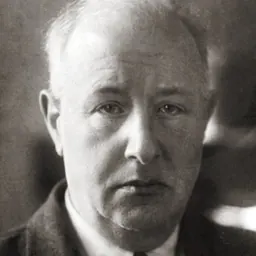
Sir Robert Anthony Clark DSC (6 January 1924 – 3 January 2013) was a British naval officer and businessman. Clark attended King's College, Cambridge, before leaving at the age of 18 to join the Royal Naval Volunteer Reserve during the Second World War. Discovered to be colour blind he was relegated to non-seagoing posts, a prospect he found unappealing. He volunteered for service with the Special Operations Executive and saw active service in Italy, first on amphibious missions and later as a liaison officer with partisans in the Piedmont Mountains. Clark was captured by the Germans, and was later awarded the Distinguished Service Cross for his gallantry.
A chance meeting after the war led to a position at the law firm of Slaughter & May, where he was soon made a partner. He switched career to become a merchant banker with Hill Samuel, where he developed an expertise in company mergers and acquisitions. Clark acted as chairman or director for numerous firms and sat on many governments bodies and committees. Clark met Robert Maxwell in 1969 when Maxwell attempted to outbid Rupert Murdoch for the News of the World, starting a lifelong acquaintance. He led Hill Samuel through their takeover by TSB before Maxwell brought him on as a non-executive director at his Mirror Group of media companies.
Clark became embroiled in the scandal at the Mirror Group that unfolded after Maxwell's death in 1991. Clark claimed to be ignorant of Maxwell's £492 million defrauding of the company and its pension scheme, and faced a non-confidence vote by the shareholders. He survived to be made chairman of the group and to rebuild it after the scandal.
Early life Bob Clark was born on 6 January 1924 Clark attended Highgate School in London and was evacuated with the school to Westward Ho! in Devon on the outbreak of the Second World War. Clark was a keen football player and was captain of the Highgate team as well as being head boy of the school. He went up to King's College, Cambridge, to study modern languages. Whilst there he gained a blue in football, the first from the college in 20 years, and played against their rivals at Oxford University. Clark served aboard on convoy escort operations in the Atlantic and Mediterranean before attending at Hove.
Clark volunteered for parachute training with SOE and was subsequently allocated to Operation Clarion, the designation for British assistance provided to anti-German partisans in northern Italy.
Post-war Clark intended to move to Sudan after the war but a chance meeting with his old commanding officer, Hilary Scott, in St James's led to him being offered a position as a clerk at the law firm of Slaughter & May. At Hill Samuel he headed the issues and mergers department and advised on some of the largest company mergers in British history. He was subsequently reappointed director for the four-year terms beginning 1 March 1977 and 1 March 1981.
Clark was appointed chief executive officer of the Hill Samuel holding group in 1976 and was chairman from 1980 to 1988. Clark refused a takeover by Merrill Lynch, but after deregulation in 1986 he was convinced that Hill Samuel was not large enough to compete and, facing hostile takeovers from Kerry Packer and FAI Insurance, arranged takeover talks first with UBS and then with TSB. TSB acquired Hill Samuel in 1988, and Clark became a director in 1987 and then deputy chairman in 1989 for two years. He was on the boards of many other companies, holding directorships at Eagle Star (1976 to 1987) Royal Dutch Shell (1982 to 1994), Vodafone (1988 to 1998), IMI (1981 to 1989) and Marley (1985 to 1989) – he later became the first non-family chairman of the latter. He served on the Review Body on Doctors' and Dentists' Remuneration from 1979 to 1986 and was a trustee of the Charing Cross and Westminster Medical School from 1981 to 1995. In 1982 he received an honorary Doctorate of Science from the Cranfield Institute of Technology. Clark was appointed vice-chairman of pharmaceutical firm SmithKline Beecham in 1987, a post he held for eight years. He was also chairman of the United Drapery Stores, where he was responsible for refusing a takeover bid from Heron Foods before accepting one made by Hanson plc.
Mirror Group Maxwell bought the Mirror Group in 1986 and floated it in May 1991, appointing Clark to the board of directors. Maxwell claimed that the offer he made Clark would appeal to even a "one-eyed Bulgarian peasant". Clark claimed that he tried to make Maxwell follow conventional business practices and remained convinced that "until quite close to the end, he never did anything I asked him not to do". It was only after Maxwell's unusual death on 5 November 1991 that financial mismanagement of the Mirror Group came to light. There was evidence of 29 unusual payments of £230 million from Mirror to other Maxwell companies within one year in a fraud that eventually cost the company, and its pension fund, £492 million. Clark claimed that there had been no evidence for the directors to act on against Maxwell, telling the shareholders at an extraordinary general meeting (EGM) that "No system of internal control, however elaborate, can stop fraudulent collusion by a group of individuals holding authority and trust. None of us [directors] would have taken on the job had we thought Maxwell was a crook. How many can stand up and say: 'We said he was a crook a year ago'?" Clark's position was disputed by the Department of Trade and Industry, which determined that the two non-executive directors, Clark and Alan Clements, should have questioned the payments. At the EGM Clark almost lost his usual polite nature when he was accused of being a Maxwell "crony" by Rupert Allason and had to rule a no-confidence vote as out of order.
The liquidators of the Mirror asked him to stay on to clean up the company, and he was made chairman and Clements became deputy chairman. Clark brought in David Montgomery as chief executive officer and Lord Hollick as a director to rebuild the company. Hollick remained for just five months before he fell out with Clark, who said: "He mistook politeness for weakness. It is always a big mistake."
Clark eventually stabilised the company and left as chairman in 1998. He co-founded the RP&C International (Rauscher Pierce & Clark) investment bank in 1993 and remained a director until his death. He raised enough for a 25% stake and partnered with a Texas bank to provide the rest. Clark was also deputy chairman of Fenchurch from 1992 to 1995 and remained on its board until 1998. He chaired insurance broker Lownes Lambertin, formerly part of Hill Samuel, in 1995.
Personal life
Clark and his family lived for almost 50 years at a house in Surrey, the former home of horticulturist Gertrude Jekyll, that had been designed by Edwin Lutyens and which Clark described as "the best investment I ever made". Clark was a keen antiquarian, collecting old books and keeping a record of each one that he read. He maintained an interest in sport as well as the opera, having acted as director of the English National Opera from 1983 to 1987. He collected teddy bears, having more than 300 in total (including Falla), and was also interested in the life of Captain Cook, retracing one of his voyages himself. Clark was vice-chairman of the Salisbury Cathedral spire appeal. He was contacted in 1991 by Curetti, the Italian partisan who first helped him out of a tree in the war, and the pair visited each other regularly thereafter. Clark died on 3 January 2013. His son told listeners to BBC Radio4's Saturday Live that his father was cremated with Falla, his Teddy.
Don’t just read it —
keep it.
Full-length biographies made to live with: read them, listen on the way to work, watch them tonight.
- E-book
- Audio
- Video
Instant download · yours to keep · every purchase keeps this site free
Important facts
People in Robert Clark's life
Named in this biography and alive at the same time





Related people
Same field, nearest in time

Contemporaries
People whose lives overlapped Robert Clark's



Frequently asked questions
Who was Robert Clark?
British naval officer and businessman
When was Robert Clark born?
Robert Clark was born on 6 January 1924 in Finchley.
When did Robert Clark die?
Robert Clark died on 3 January 2013.
What was Robert Clark's occupation?
Robert Clark was a businessperson and banker.
What nationality was Robert Clark?
Robert Clark was British.
Sources & further reading
· DBpedia: Robert Clark (businessman)
Cite this page
APA: Biography.guide. (2026). Robert Clark. https://biography.guide/robert-clark-businessperson/
MLA: "Robert Clark." Biography.guide, https://biography.guide/robert-clark-businessperson/.
Chicago: "Robert Clark." Biography.guide. https://biography.guide/robert-clark-businessperson/.
Data last updated: 2026-09-20 · Spot an error? Report a correction.
Page generated 2026-09-27 05:11 UTC