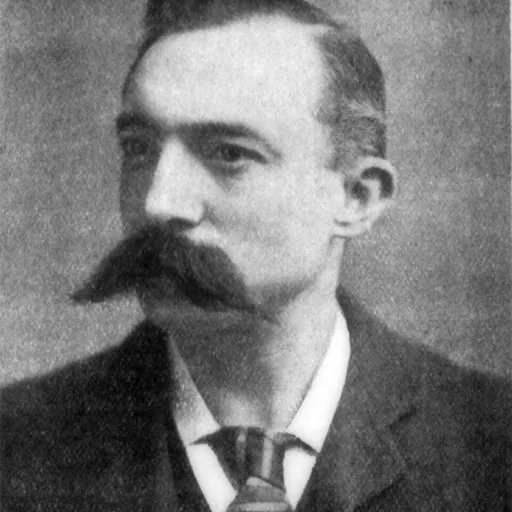
About Robert Blatchford
Lived 1851 – 1943 (aged 92). Robert Blatchford was a journalist, politician and writer.
Merrie England
A series of articles on socialism in The Clarion were published in book form in 1893 as Merrie England. The first edition sold 30,000 copies. The year after, a pocket-sized edition was published, which sold 25,000 copies. A penny edition was published in 1894, with 250,000 copies being ordered before publication and within a year 750,000 copies had been despatched across the English speaking world. In Britain and America, the book sold over two million copies. In the opinion of Robert Ensor, the book "helped to make socialism really well known in England for the first time...It was Blatchford's highest flight as a propagandist; he never surpassed it, and through it mainly he left his mark upon history". The book was translated into Welsh, Hebrew, Dutch, Italian, Spanish and German.
William Thomas Stead picked the book as the Review of Reviews book of the month and called Blatchford "the poor man's Plato". Dr Horton the Congregationalist minister compared Blatchford to Isaiah, Amos and Micah and said that "if Jesus Christ were a man on earth today, He would read the book not only with interest but with approval, and He would say to any officious disciples who took exception to parts of it, “Forbid him not; he that is not against Me is for Me"."
Blatchford was a vegetarian and in Merrie England he mentioned the economic, health and humanitarian benefits of a vegetarian diet.
War scare of 1909 At the end of the second week of December 1909, Blatchford wrote ten daily articles for the Daily Mail warning of the German menace:
I write these articles because I believe that Germany is deliberately preparing to destroy the British Empire; and because I know that we are not ready or able to defend ourselves against a sudden and formidable attack...At the present moment the whole country is in a ferment about the Budget and the Peers and the Election. It seems sheer criminal lunacy to waste time and strength in chasing such political bubble when the existence of the Empire is threatened.
The articles received considerable attention in Britain and Germany, and when published as a pamphlet sold over one and a half million copies. and the Kaiser read Blatchford's articles with care and denounced them as "very mischievous and singularly ill-timed". Sir Charles Ottley, the Secretary to the Committee of Imperial Defence, wrote to Lord Esher that Blatchford's appeal was not based on a partisan, political basis as he had said that the country did not want a Liberal or Unionist government but a MAN: "His strength is that he knows what he wants and is not afraid to ask for it in plain language...The burthen of the song is—compulsory service, a strong navy and a general raising of the standard of education and living of the masses of the British people". Lord Cromer publicly declared that he shared Blatchford's patriotism. The articles ensured that defence was a major issue in the ensuing general election of January 1910. After the election the Liberal MP Reginald McKenna boasted that Blatchford had not cost the Liberals a single vote. Keir Hardie said that "the whole Socialist movement was rocking with suppressed laughter".
The Daily Mail′s Berlin correspondent told Lord Northcliffe: "In a long experience...I do not recall a foreign journalistic event which so focused the attention of the German press and public".
In 1909 he began advocating conscription but in 1912 troops were used for strike breaking and Blatchford turned against it: "Universal military service under the (present) ruling classes would result in slavery. I regard invasion as the lesser evil". However, he supported conscription again in 1915 and proclaimed it should be implemented along with the "conscription of wealth". Before the war, Blatchford toured Germany and after he returned to England he wrote:
I am convinced that...they will be plunged into war without their will. I like Germany; I like German cities; and I like the German people. But I believe that the rulers of the German people are deliberately and cynically preparing to hurl them into a wicked and a desperate war of conquest...The Germans cannot prevent that war, because they do not believe it is coming. The British could prevent that war if, before it is too late, they could be really convinced that it is coming. That is why I want to convince them that war is coming, because I want to prevent that horrible war.
Blatchford was impressed by the cleanliness and efficiency in Germany: "You don't see anything like that in Germany. I thought to myself, is this how we are preparing to fight for the existence of our Empire? What use will these ragged, famished spectres be when we have our backs to the wall?"
Later life On 4 August 1914, Blatchford wrote to his friend Alexander Thompson: "I shall write today a cautious article counselling peace and suggesting that Sir E. Grey should ask Russia and Germany to suspend hostilities pending a friendly mediation by America, England and Italy, or any one of those powers. But I do not think really that European peace is possible until Germany has been defeated and humiliated. And I realise the great possibility that we shall be at war with Germany before the Clarion comes out. And I hope we are". The Clarion Movement was split when Blatchford swung his paper in support of the British participation in the First World War. The circulation for The Clarion fell by 10,000 in a week but when in September 1914 Blatchford wrote a page of The Weekly Dispatch every Sunday its circulation rose by 50,000. In his first article for that paper, Blatchford correctly predicted that the German Army would not reach Paris and of General Joffre's flank along the Marne. When a soldier wrote to him, claiming his opinions would not be accepted by the Army but those of Philip Snowden and Ramsay MacDonald would, Blatchford replied: "I am sorry. I cannot help it. You want peace. But you cannot have peace without victory...The struggle with Germany will not end with the present war, and we may some day have to fight Germany single-handed".
In 1915, Blatchford formed the National Democratic and Labour Party (NDP) as a splinter from the right wing of the British Socialist Party and for the 1918 General Election, the NDP stood in eighteen constituencies and returned nine Members of Parliament with 156,834 votes. It thereby became the first party formed by a right-wing split from the Labour Party in Britain to win seats in Parliament at a general election.
Blatchford's wife died in 1921, and later he took an interest in Spiritualism. In 1923 he wrote in response to claims in the press that he had been converted away from socialism by reading Henry Ford's autobiography:
I have never been converted from Socialism. But careful observation of the facts of for the last twelve years or so has convinced me that Socialism will not work, and a study of Mr. Ford's methods has provided what seems to me as good a substitute as we may hope in this imperfect world. Socialism as I knew it in past years was an excellent, almost a perfect, theory...The golden rule will not work in international politics, because the nations are not good enough to live up to it. Real Socialism strongly resembles real Christianity. It is a counsel of perfection and cannot be adopted and adhered to by our imperfect humanity. There is nothing the matter with Socialism, but the people are neither wise enough nor good enough to make it a success. Socialism implies the self-abnegation of the individual for the good of the community.
When the first Labour government, led by Ramsay MacDonald, took office in 1924, Blatchford responded to Thompson's enthusiasm: "I don't like their policy and I don't trust them. They are in no sense Socialists. At present they are Liberals and we shall have a blend of Liberal Shibboleths and communist insanity". When Sir Edward Hulton sold most of his newspapers to Lord Rothermere, Blatchford wrote a letter to The Morning Post:
As a protest against the attempt of the syndicated newspapers to muzzle the press and dictate to the Government, I have resigned my position on The Sunday Chronicle and The Sunday Herald...the public should be helped to realise that the political judgments of the syndicated newspapers are not sincere and considered opinions of trained, independent thinkers, but the broadcast railings of one rich man in a panic over the Capital Levy. It is important that this should be said, and that the country should understand that the voice of Lord Rothermere is not the voice of public opinion. His standardised newspapers are journalistic tied houses, where proprietorial dope is sold as honest beer.
Blatchford voted Conservative in 1924.
After Adolf Hitler became German Chancellor in 1933, Blatchford "began to smell brimstone", in the words of his biographer Laurence Thompson. Blatchford said: "The people ought to know; but who will let me say what ought to be said?" Blatchford feared that people would say: "Oh, Blatchford. He has Germany on the brain." When Winston Churchill began warning of the dangers of Nazi Germany, Blatchford remarked: "Ha! He's learning! Now watch him get it in the neck". Later on, Blatchford believed Churchill's conduct redeemed what he considered his past political errors.
The General Secretary of the Trade Union Congress from 1925 to 1946, Sir Walter Citrine, was influenced by Blatchford's writings. He said of Britain for the British: "I found it a cogent and reasoned argument for Socialism. It was written with a clearness and bite which were unusual". Clement Attlee also spoke of Blatchford's influence on his beliefs. A. J. P. Taylor said that Blatchford was "the greatest popular journalist since Cobbett".
Writings The Nunquam Papers (from the Sunday Chronicle) Edward Hulton and Co., 1891. Fantasias John Heywood, Manchester, 1892. Merrie England Clarion Office, Walter Scott, 1893. The Nunquam Papers (from The Clarion) Clarion Newspaper, 1895). A Bohemian Girl (McGinnis, P., pseudonym), London, 1898, Clarion Newspapers Co., Walter Scott, Ltd. Dismal England, London, Clarion Press, May 1899. My Favourite Books The Clarion Office, (also Chesworth, 1900) My Favourite Books, London, Clarion Press, 1901. Tales for the Marines, London, Clarion Newspaper Co., Ltd., 1901. Britain for the British, London, Clarion Press, 1902. A Book About Books, London, Clarion Press, 1903. God and My Neighbour Clarion Press, 1903. Not Guilty: A Defense of the Bottom Dog Clarion Press, 1906. The Sorcery Shop: An Impossible Romance, London, Clarion Press, 1907. The Dolly Ballads (Illustrated by Frank Chesworth) Clarion Press, 1907. The War That Was Foretold: Germany and England, Reprinted from “The Daily Mail” of 1909. My Life in the Army, London, Clarion Press, 1910. More Things in Heaven and Earth: Adventures in the Quest for a Soul, London, Methuen & Co., 1925. As I Lay A-Thinking: Some Memories and Reflections of an Ancient and Quiet Watchman Hodder & Stoughton, London, 1926. Essays of To-Day and Yesterday, London, George G. Harrap & Co., Ltd., 1927. Saki’s Bowl, London, Hodder & Stoughton Publishers, 1928. Where Are the Dead, London, Cassell and Company, Ltd., 1928 [Contains a chapter by Blatchford, “Secrets of Life and Love.”] My Eighty Years, Great Britain, Cassell & Company Limited. 1931. What's All This?, London, George Routledge & Sons, Ltd., 1940. General Von Sneak, London, Hodder & Stoughton, Publishers, n.d. Julie A Study of a Girl by a Man, London, Clarion Press, 1904 Stunts, London, Clarion Press, n.d.
Don’t just read it —
keep it.
Full-length biographies made to live with: read them, listen on the way to work, watch them tonight.
- E-book
- Audio
- Video
Instant download · yours to keep · every purchase keeps this site free
Important facts
People in Robert Blatchford's life
Named in this biography and alive at the same time





Related people
Same field, nearest in time
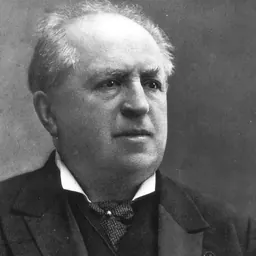
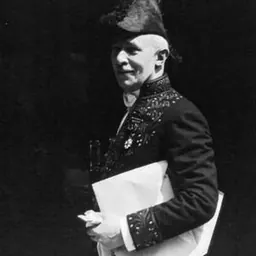
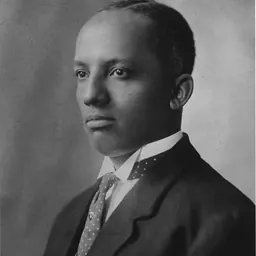

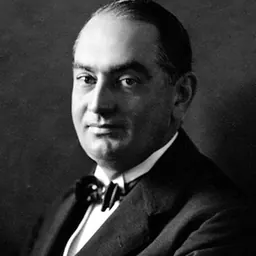
Contemporaries
People whose lives overlapped Robert Blatchford's



Frequently asked questions
Who was Robert Blatchford?
British writer and activist (1851–1943)
When was Robert Blatchford born?
Robert Blatchford was born on 17 March 1851 in Maidstone.
When did Robert Blatchford die?
Robert Blatchford died on 17 December 1943 in Horsham.
What was Robert Blatchford's occupation?
Robert Blatchford was a journalist, politician and writer.
Sources & further reading
· Wikipedia: Robert Blatchford
Cite this page
APA: Biography.guide. (2026). Robert Blatchford. https://biography.guide/robert-blatchford/
MLA: "Robert Blatchford." Biography.guide, https://biography.guide/robert-blatchford/.
Chicago: "Robert Blatchford." Biography.guide. https://biography.guide/robert-blatchford/.
Data last updated: 2026-09-22 · Spot an error? Report a correction.
Portrait: Wikimedia Commons · author & licence
Page generated 2026-09-27 05:01 UTC