
Robert Ballagh
Irish contemporary artist, painter and designer (born 1943)
About Robert Ballagh
Born 1943. Robert Ballagh is an Irish painter and postage stamp designer.
Early life and education Born 22 September 1943, and then the fee-paying St Michael's College and Blackrock College.
Career Before turning to art as a profession, Ballagh was a professional musician for about three years, initially with the showband Concord, then, on a full-time basis, as bass guitarist with The Chessmen, managed by Noel Pearson. and did not play music again. He also, drawing on scenes from The Life and Opinions of Tristram Shandy, Gentleman by locally-born Lawrence Sterne, painted a series of panels for a local restaurant. Other work included a series of six paintings and a silkscreen print linked to Flann O'Brien's The Third Policeman. He had earlier painted Joyce in a scene on O'Connell Street, Dublin's main street, with himself alongside. Other commissions included Dublin City University purchasing a portrait of former Minister for Education Mary O'Rourke. Later still he painted Inside No. 3 After Modernization (with multiple types of painting included in the background), Upstairs No. 4, and others. In a very different setting, he also painted his family on an extended 1978 holiday near Malaga, in Winter in Ronda (1979).
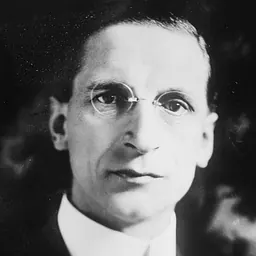
Studio For many years, Ballagh rented an attic-level studio on Parliament Street in Dublin, overlooking City Hall; this studio had previously been leased by other artists, such as Patrick Collins. After he lost the lease on that in the mid-1980s (it was repurposed as part of the development of Temple Bar and eventually hosted the Walt Disney Company's Irish office), he worked from home. Finding home working difficult with two growing children, in the early 1990s he used an inheritance to buy a house and former piggery on Arbour Hill, less than 10 minutes walk from his home. He renovated the building, and it now hosts his studio and a small flat. The artist has mentioned that he sometimes works slowly and in great detail; in 1982, for example, he produced just two paintings, spending about 6 months on each. His work has sold well at auction. Ballagh's first postage stamp design was released on 4 September 1973. It commemorated the centenary of the World Meteorological Organization and depicted a weather map of northwestern Europe. His portrayal of Ireland did not show the border with Northern Ireland, provoking the unionist politician Ian Paisley to demand in the British House of Commons that the British government should make a formal objection, even though no other international borders were shown either. Later design contracts included the centenaries of the Universal Postal Union and the first telephone transmission, the golden jubilee of Ireland's national electricity utility, the Electricity Supply Board, the centenaries of the births of Patrick Pearse and Éamon de Valera and commemorations of various other Irish statesmen, issues related to Scouting, Guiding and the Boys' Brigade, Irish festivals, the Irish lighthouse authority and one of Ireland's annual "love stamps". One stamp design was rejected by the government, after stamps had already been printed, possibly due to interference by Taoiseach Charlie Haughey; the stamps and plates were destroyed. and later in Dublin too, Beckett's Endgame (1991), Oscar Wilde's The Importance of Being Earnest (1987) and Salomé (1998), Chekhov's Three Sisters, Hamlet, and Michael Harding's Misogynist.
Exhibitions Solo exhibitions Ballagh has had solo shows in Dublin on several occasions, as well as in Brussels, Paris, Lund in Sweden, Warsaw, Moscow and Sofia. and in years including 1970, There was a show of some of his 1970s material at the Orchard Gallery in Derry, organised by Patrick T Murphy and Declan McGonagle. only the second Irish person and third Westerner to be so invited, after Francis Bacon and Robert Rauschenberg.
Ballagh had his first major retrospective show in Ireland, Robert Ballagh – The Complete Works, in the top-floor exhibition space at Arnotts department store on Henry Street, in February 1992, The exhibition included 100 examples of his work, consisting of paintings, including portraits, designs for stamps, book illustrations and theatrical sets, limited edition books, and photography. The show was centred on a selection of 33 paintings from his 25-year career to date, 26 commissioned illustrations and limited edition prints, books for Gallery Press and Black Cat Press, 12 photographs, 12 stamps, models and photographs from theatrical work, and three stationery designs. The exhibition catalogue included three essays on his painting, and one each on his limited edition prints, stamp design work, photo-essay book and stage design.
Further retrospectives followed, the next, and most significant, being at the Gallagher Gallery of the Royal Hibernian Academy, with a gallery-within-a-gallery format,
An exhibition of seven portraits of political and cultural people of note, and seven self-portraits, Seven, was held at Cork's Crawford Art Gallery in 2013, and a selection of works related to the 1916 Easter Rising were exhibited at the Kevin Kavanagh Gallery in 2016.
Major group exhibitions Having had works displayed at the Irish Exhibition of Living Art (IELA) in 1967, Ballagh was invited to show at the 1968 edition. He was also invited to the 1969 IELA, which had to move from the College of Art on Merrion Square to venues in Cork and Belfast. Having submitted a painting for consideration in 1969, after discussion with other artists' wives, his wife was also invited. After an outbreak of violence in Northern Ireland, 9 artists, including the Ballaghs, refused to allow their works to be sent there; they were instead displayed in an alternative exhibition, Art and Conscience, at 43 Kildare Street (and in the end, the exhibition never did go to Belfast). Sometime after, he exhibited three works commenting on the Northern Irish situation at Celtic Triangle, a joint exhibition of the Arts Councils of Ireland, Northern Ireland, Scotland and Wales.
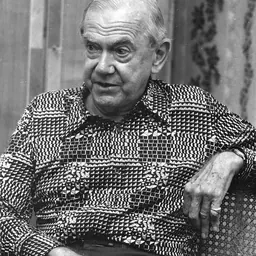
Having featured at the Irish Exhibition of Living Art, and been inspired by earlier editions of the exhibition, Ballagh was invited to show at Rosc in 1980. He was also invited, in 1987, to participate in a peace forum and associated major exhibition in the Soviet Union, at the Cosmos Hotel in northeastern Moscow, a rare invitation for an Irish artist. At the event he breakfasted with Gregory Peck, lunched with Yoko Ono and chaired a panel consisting of Norman Mailer, Gore Vidal and Graham Greene. One of his works also featured in 30 years, artists, places, a travelling exhibition of work acquired by Irish local authorities.
Recognition and leadership roles Ballagh received the Carroll Prize at IELA 1969,
He was a founding member of Ireland's national academy or "affiliation" of artists, Aosdána, in 1981, and its first chairperson (the leader of its presiding body, the Toscaireacht). He ceased active participation in the body in the early 1990s, after what he felt was undue pressure to declare his personal views in a debate about censorship.; In 2016, he received a Lord Mayor's Award in Dublin.
Two of his works won the Douglas Hyde Gold Medal at editions of the Oireachtas Exhibition.
Ballagh was the first chairperson of the Artists Association of Ireland, and the founding chairperson of the Irish Visual Artists Rights Organisation.
The former director of the Irish Museum of Modern Art (IMMA) once characterised Ballagh as more of an illustrator than an artist; nonetheless, IMMA holds a range of his works. Dorothy Walker's Modern Art in Ireland made almost no mention of Ballagh and his body of work. He has pursued this aim individually and in his roles in the Artists Association of Ireland,
Politics and republicanism In an interview with The Irish Times, Ballagh ascribes his "political awakening" to hearing news of civil rights protestors in Derry, Northern Ireland, being attacked by the Royal Ulster Constabulary (RUC) in 1968. In 1991, he co-ordinated the 75th-anniversary commemoration of the 1916 Easter Rising, during which he claimed he had been harassed by the Special Branch of the Garda Síochána. He has commented that the Easter Rising was "led by poets, actors, writers, musicians, social reformers, Irish language activists – a truly remarkable gathering of people..." which promotes studies of republicanism in an international context. It is based at the Pearse Centre at 27 Pearse Street, Dublin, once home to Pádraig Pearse.
Ballagh was on the committee of a major group campaigning for a "No" vote in Ireland's referendum on the Lisbon Treaty. A Sinn Féin source stated there had been "very informal discussions" and that Ballagh's nomination was "a possibility" but "very loose at this stage". On 25 July, Ballagh ruled out running in the election, saying that he had never considered being a candidate; his discussions with the parties had been about the election "in general" and he had no ambitions to run for political office.
Palestine Also in July 2011, Ballagh broke ranks with his colleagues involved with the travelling production of Riverdance over their decision to perform in Israel. He is an active member of the Ireland Palestine Solidarity Campaign, which has asked that artists and academics participate in boycotts of Israeli businesses and cultural institutions.
Closure of Irish galleries and museums In July 2012, Ballagh said he was "ashamed and profoundly depressed" at the en masse closure of Irish galleries and museums. He cited an example of some Americans and Canadians on holiday in Ireland. "They described most of the National Gallery as being closed along with several rooms in the Hugh Lane Gallery. I'm glad they didn't bother going out to the Museum of Modern Art in Kilmainham because that's closed too. At the point I met them, they were returning from Galway where they had found the Nora Barnacle Museum closed too." Ballagh condemned the hypocrisy of political leaders, saying: "I know arts funding is not a big issue for people struggling to put food on the table but we are talking about the soul of the nation."
Publications and appearances Ballagh published a book of Dublin photography, taken over a year on a Rolleiflex camera, accompanied by quotations from James Joyce, in the 1980s. The book focused on less-well-known or disappearing sights of the city. A Robert Ballagh Monograph was published in a limited edition in 2010, with a set of giclee prints. He released an autobiographical volume, A Reluctant Memoir, in 2018; it is not written as a chronological summary of his life but consists of a range of short pieces around major events.
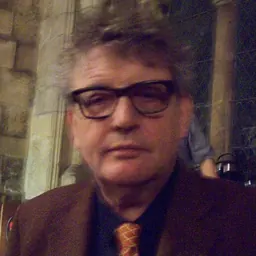
Documentaries were produced about Ballagh, by the BBC (directed by Paul Muldoon), and in Irish, by Igloo Films, in 2001 (directed by Anthony Byrne). In 2019, he appeared as a contestant on RTÉ's Celebrity Home of the Year, where his house finished in second place. He was the guest speaker at the 2012 Ledwidge Day commemoration at Islandbridge.
Personal life
Ballagh met his future wife Betty (Elizabeth Carabini, from a Dublin family of Italian descent) in 1965, when she was 16 and he was playing a musical gig.
The couple originally purchased one artisan's dwelling, then a row of them which they merged into a single architect-designed dwelling, with Ballagh participating in the design. The finished building, Ballagh House, was later profiled in Architecture Ireland, the official journal of architects in Ireland, and featured on a TV show. He later sued on grounds of negligence by the Health Service Executive and members of its staff, and received a settlement.
By the mid-2000s, he had two grandchildren. He had chemotherapy treatment for chronic lymphocytic leukaemia, and recovered fully; he subsequently received a diagnosis of type II diabetes. As of 2021, Ballagh still lived in Broadstone and kept his studio in nearby Arbour Hill.
Don’t just read it —
keep it.
Full-length biographies made to live with: read them, listen on the way to work, watch them tonight.
- E-book
- Audio
- Video
Instant download · yours to keep · every purchase keeps this site free
Important facts
People in Robert Ballagh's life
Named in this biography and alive at the same time


Related people
Same field, nearest in time


Contemporaries
People whose lives overlapped Robert Ballagh's



Frequently asked questions
Who is Robert Ballagh?
Irish contemporary artist, painter and designer (born 1943)
When was Robert Ballagh born?
Robert Ballagh was born on 22 September 1943 in Dublin.
What is Robert Ballagh's occupation?
Robert Ballagh is a painter and postage stamp designer.
What nationality is Robert Ballagh?
Robert Ballagh is Irish.
Sources & further reading
Cite this page
APA: Biography.guide. (2026). Robert Ballagh. https://biography.guide/robert-ballagh/
MLA: "Robert Ballagh." Biography.guide, https://biography.guide/robert-ballagh/.
Chicago: "Robert Ballagh." Biography.guide. https://biography.guide/robert-ballagh/.
Data last updated: 2026-09-20 · Spot an error? Report a correction.
Page generated 2026-09-27 05:18 UTC