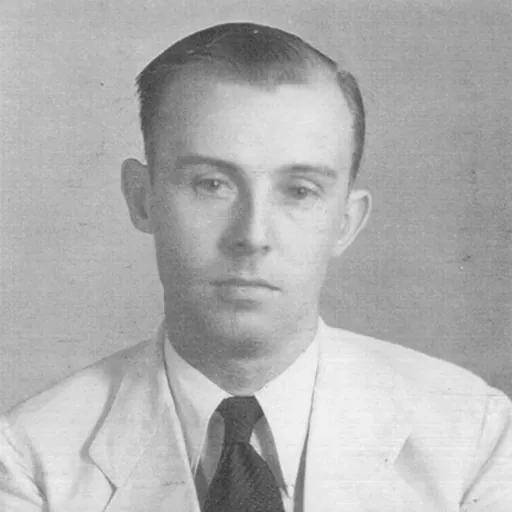
About Rob Nieuwenhuys
Lived 1908 – 1999 (aged 91). Rob Nieuwenhuys was a Dutch writer, literary scholar, literary critic, journalist and historian.
Robert Nieuwenhuys (30 June 1908 – 8 November 1999) was a Dutch writer of Indo descent. The son of a 'Totok' Dutchman and an Indo-European mother, he and his younger brother Roelof, grew up in Batavia, where his father was the managing director of the renowned Hotel des Indes.
His Indies childhood profoundly influenced his life and work. His Javanese nanny 'nènèk' (English: grandma) Tidjah and particularly his Eurasian mother created the benchmarks of his childhood environment. In his award winning book Oost-Indische spiegel, he states: "If I write about my childhood, I write about her world." and "My Indies youth was critical to my receptiveness to particular cultural patterns. It ingrained a relationship with Indonesia that is irreplaceable."
Nieuwenhuys is the Nestor of Dutch Indies literature.
Life Nieuwenhuys was born in Semarang, Dutch East Indies. In 1927 he (and his brother) moved to the Netherlands and enrolled in the University of Leiden, but he abhorred academic life and never completed his study at the Faculty of Arts. He did however become acquainted with Indonesian nationalists studying in the Netherlands and adopted anti-colonial convictions.
In 1935 he returned to the Dutch East Indies and befriended his mentor, the iconic Indo writer E. du Perron. Perron influenced him to study the literary work of P.A. Daum and upcoming writer Beb Vuyk. He joined anti-colonial magazines as a writer, researcher and critic.
In 1941 he was a conscript medic in the KNIL and from 1942 to 1945 a Japanese POW. In the Japanese concentration camp Tjimahi he was part of a small group of intellectuals, including Leo Vroman and the iconic Tjalie Robinson, that for a while was able to print a camp periodical named 'Kampkroniek' (Camp Chronicles) and a pamphlet named 'Onschendbaar Domein' (Inviolable Domain).
From 1945–1947 he stayed in the Netherlands to recuperate from the war and evaded the violence of the Bersiap period.
In 1947 he returned to his land of birth during the continuing Indonesian revolution and set up a cultural and literary magazine in an attempt to mitigate the Dutch-Indonesian alienation via art and literature. Although Indonesian intellectuals and artists were receptive to this unique forum political developments and strong anti-Dutch sentiments surpassed all good intentions. In 1952, 4 years into Indonesian independence, Nieuwenhuys repatriated to the Netherlands.
In the Netherlands Nieuwenhuys became a teacher and pursued a literary career. He became a highly influential literary scholar and author and won numerous awards throughout his career, among them the 1983 Constantijn Huygens Prize. He died in Amsterdam.
Nieuwenhuys' magnum opus is the authoritative literary classic Mirror of the Indies: A History of Dutch Colonial Literature (Original Dutch: Oost-Indische spiegel), the main reference book regarding Dutch Indies literature.
Prizes 1959 – 'Essay prize Amsterdam' for De zaak Lebak na honderd jaar 1973 – 'Special prize Jan Campert foundation' 4 Oost-Indische spiegel 1975 – 'Dr. Wijnaendts Francken prize' for Oost-Indische spiegel 1983 – 'Constantijn Huygens prize' for complete wok 1984 – #honorary doctorate of Leiden University
Publications 1932 – Een vergeten romantikus 1954 – Vergeelde portretten uit een Indisch familiealbum 1959 – Tussen twee vaderlanden 1961 – Tempo Doeloe, fotografische documenten uit het oude Indië, 1870–1914 (Alias: E. Breton de Nijs) 1962 – De pen in gal gedoopt; een keuze uit brieven en documenten van Herman Neubronner van der Tuuk. 1964 – De dominee en zijn worgengel, van en over François Haverschmidt 1966 – De onuitputtelijke natuur 1972 – Oost-Indische spiegel 'Mirror of the Indies: A History of Dutch Colonial Literature' translated from Dutch by E. M. Beekman (Publisher: Periplus, 1999) Book review. 1976 – Batavia, koningin van het Oosten 1979 – Een beetje oorlog 1981 – Baren en oudgasten, dl. I, fotografische documenten uit het oude Indië, 1870–1920 1982 – Komen en blijven 1987 – De mythe van Lebak 1988 – Met vreemde ogen 1990 – Oost-Indisch magazijn. De geschiedenis van de Indisch-Nederlandse letterkunde 1995 – De bevrijding in de Oost 1998 – Baren en oudgasten: Tempo doeloe, een verzonken wereld 1998 – Komen en blijven: Tempo doeloe, een verzonken wereld 1998 – Met vreemde ogen: Tempo doeloe, een verzonken wereld
Don’t just read it —
keep it.
Full-length biographies made to live with: read them, listen on the way to work, watch them tonight.
- E-book
- Audio
- Video
Instant download · yours to keep · every purchase keeps this site free
Important facts
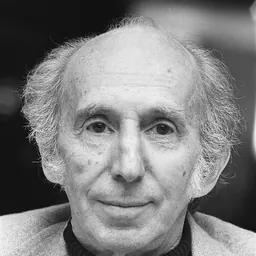
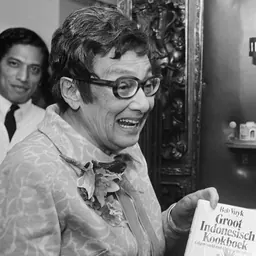
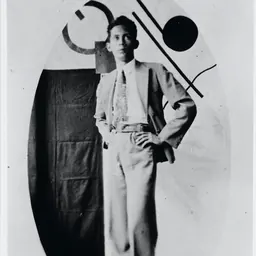
People in Rob Nieuwenhuys's life
Named in this biography and alive at the same time


Related people
Same field, nearest in time




Contemporaries
People whose lives overlapped Rob Nieuwenhuys's


Frequently asked questions
Who was Rob Nieuwenhuys?
Dutch writer (1908-1999)
When was Rob Nieuwenhuys born?
Rob Nieuwenhuys was born on 30 June 1908 in Semarang.
When did Rob Nieuwenhuys die?
Rob Nieuwenhuys died on 8 November 1999 in Amsterdam.
What was Rob Nieuwenhuys's occupation?
Rob Nieuwenhuys was a writer, literary scholar, literary critic, journalist and historian.
What nationality was Rob Nieuwenhuys?
Rob Nieuwenhuys was Dutch.
Sources & further reading
Cite this page
APA: Biography.guide. (2026). Rob Nieuwenhuys. https://biography.guide/rob-nieuwenhuys/
MLA: "Rob Nieuwenhuys." Biography.guide, https://biography.guide/rob-nieuwenhuys/.
Chicago: "Rob Nieuwenhuys." Biography.guide. https://biography.guide/rob-nieuwenhuys/.
Data last updated: 2026-09-23 · Spot an error? Report a correction.
Portrait: Wikimedia Commons · author & licence
Page generated 2026-09-27 05:08 UTC