
Rinaldo Boteram
Tapestry weaver and merchant from Brabant, active in Siena
About Rinaldo Boteram
Lived 1417 – 1484 (aged 66–67). Rinaldo Boteram was a tapestry weaver, tapestry dealer, merchant and designer.
Arnt van der Dussen, also known as Rinaldo Boteram, born in Brussels between 1417 and 1418, and died in the same city between 1484 and 1502, was a Brabant tapestry maker and merchant.
Arnt van der Dussen played a central role in the introduction and spread of Flemish tapestries in fifteenth-century Italy. For half a century, he travelled between Italy and the Burgundian Netherlands, establishing a network of contacts and clients and corresponding personally with important members of the Italian courts, such as the Marquise of Mantua, Barbara of Gonzaga.
Rinaldo Boteram is a minor figure in the history of art and the early Renaissance and, as with most people of his time and rank, there are only fragmentary traces of his itinerary, sometimes difficult to interpret, in various documents.
Despite this scarcity of documentation and therefore of historical analyses, the study of his life allows for a better understanding of the history of tapestry, but also of commercial and cultural exchanges between northern and southern Europe in the 15th century, as well as the evolution of morality and ideas in the West at the time of the First Renaissance.
Historical background
The 15th century was a period of transition for the Belgian provinces, but also for the entire West.
At the political level, the Belgian provinces were united under Burgundian rule, while the great city-states of northern Italy were ruled by influential families (the Sforzas in Milan, the Este family of Modena in Ferrara, the Gonzagas in Mantua, the Medicis in Florence). The Byzantine Empire also declined and the arrival of refugees in Italy led to a rediscovery of ancient philosophies which gave rise to the Renaissance.
Secondly, on an economic level, there was a shift in economic power from the County of Flanders to the Duchy of Brabant. Even though it remained the center of financial activity thanks to very active Italian bankers (the Medici branch in particular), Bruges lost control of international trade to Antwerp because of the silting up of the Zwin and unhelpful regulations. This prosperity boosted trade and led to an artistic and philosophical boom thanks to patronage: this was the First Renaissance and the origin of humanism.
This is the background to the life and career of Arnt van der Dussen, known as Rinaldo Boteram.
Biography
First name, last name, and nickname Since spelling was not standardised in the 15th century, the spelling of Arnt van der Dussen's first and last names varied greatly.
The first name Arnt is also written Aernt, Arent, Aert or Arnd and means Arnaud, Arnould or Renaud in French. In the same way, the Italian spelling of the name varies from one document to another: Arnaldo, Rinaldo, Rainaldo, Rainaldus, Renaldi or Renaldo.
On his arrival in Italy, Arnt van der Dussen adapted his father's first name to use it as a patronym: Wouter/Walter (Gauthier in French) became Gualtieri or Gualdire.
The origin of the nickname Boteram, which means "buttered toast" in Dutch, has not yet been found, but it was already used by his father and later by his children and grandchildren. A variation boterman indicates the possibility that his family produced or sold butter. he married Lysbeth Mostincx, daughter of Jan Mostincx, who gave him five children: Jan; Steven, who succeeded his father as a tapestry maker; Wouter, who became a medical doctor; Margaretha; Maria.
He also has two illegitimate children with Cathelyne Van de Bossche: Aert and Cathelyne.
Arnt van der Dussen's father, Wouter, came from a distinguished family from Dussen, whose main branch resided at Dussen Castle. Boteram's mother may have come from a family of Brussels upholsterers. As he is not mentioned as a "franc apprentice", he does not come from a family of upholsterers. It is this document that allows us to estimate his date of birth at around 1417–1418, as the age of apprentice upholsterers varies between 8 and 13 years old. He obtained his master's degree between 1432 and 1438 and either moved to Italy immediately afterwards i.e. "Renaud son of Gauthier, Flemish from Lower Germany, master upholsterer in the manner of Arras (historiated upholstery)". According to him, he left his country because of the "misfortunes of the times" (mali temporali). On 19 November 1438, he therefore obtained an annual grant of 20 gold florins from the Sienese for two years, during which time he undertook to teach his trade to two Sienese students while carrying out his activity in the city, in particular by making upholstery to decorate the Palazzo Publicco. This is in line with the analysis of Jacques Lavalleye who states that Rinaldo de Gualtieri, nicknamed Boteram of Brussels, was present in Ferrara in 1450 during the reign of Lionel d'Este.
During this period, main sources establish that Rinaldo Boteram settled in Venice: he was paid in Venetian currency (the ducato d'oro de Venezia) and his dealings with the Gonzagas were handled by a syer righo couet yn fonticho [a Venezen] who was probably a French banker based in Venice. ), tapestry banks (tapestry intended to cover a bench) and bedstead carpets, while selling several tapestries to court lords. Borso d'Este's successor, Hercules I, continued to buy from Boteram until 1481. It is therefore more than likely that Boteram even delivered tapestries to the Sforza of Milan, for which payment was then made via the Medici branch in Milan.
The Marquis of Mantua, Frederico Gonzaga, who seems to have little love for tapestries since he sent the tapestry-makers back to the court,
The exact date of his final return to Brussels is not known, but Viviane Baesens estimates it at 1481, highlighting his role as a municipal councillor in 1482 and 1484. Jean Lestocquoy questions the traditional hypothesis that identifies "Rinaldo di Gualtieri"/"Renaldo di Gualtieri de la Magna Basa" with the upholsterer Arnt Van der Dussen, known as Rinaldo Boteram.
However, this theory is ruled out by the cross-referencing of documents referring to the same work (The History of Joseph acquired by Duke Borso d'Este in 1457 from "Rinaldo di Gualdire"/"Renaud Boteram de Bruxelles"), by the rarity of the first name Gauthier (Walter/Wouter) in the Burgundian Netherlands of the time, and by the use of the term "Magna Basa" ("Lower Germany") to refer to the Netherlands from the 15th to the 17th centuries in Italy.
There is, however, a tapestry linked to Boteram's commercial activities: Judith taking Holoferne's head. This tapestry, which is currently in the collection of the Metropolitan Museum of Art in New York, was made in the Burgundian Netherlands around 1455-1465 and is believed to have been delivered by Boteram to the Court of Este.
Indeed, the description of a portière in the inventory of the tapestries of the Maison d'Este and delivered by Boteram is strikingly similar to the central section of the New York tapestry:
Or in French :
The place and reputation of Brussels upholsterers in 15th century Italy
According to Viviane Baesens,
We also know that Boteram was not the only Brussels weaver in Mantua: three weavers working at the court are said to be "from Brussels": Pietro, Enrico and Giovanni. For Viviane Baesens, it is likely that this Pietro from Brussels, who had been present in Mantua since 1450, was the "cousin Piero" mentioned by Boteram in a letter of 1474, and that he brought in workers and other members of his family or acquaintances. This letter also mentions a "Rigo", which Viviane Baessens assumes is also a relative of Boteram and that it is the Rigo who is found as an upholsterer in Ferrara in 1479. Arnt van der Dussen is one of the most representative examples, as he was successively employed by various city-states as a craftsman, teacher, intermediary or importer:
Frederick III of Montefeltro, Duke of Urbino, sending to the Austrian Netherlands for a master oil painter that he was unable to find in Italy; Francesco Sforza, Duke of Milan, sending the painter Zanetto Bugatto to Brussels to study with Rogier van der Weyden; Alfonso V, King of Aragon, gave 100 Castilian florins to the painter Lluís Dalmau in 1431 so that the latter could travel to the Burgundian Netherlands where he improved his technique and where he probably took part in the tapestry trade; Isabella I of Castile, Queen of Castile and León, was the patron who made most use of foreign artists. have highlighted the potential role of upholsterers such as Arnt van der Dussen in the influence of certain artistic trends and patterns between northern and southern Europe. Indeed, various artists were linked to the upholstery merchants. For Elisabeth Dhanens, it is possible that Rogier van der Weyden (who worked in Brussels) accompanied Boteram on his trip to Italy in 1450. Wauters even believes that van der Weyden may have participated in the upholstery trade.
Philosophical ideas and ambitions were also driven by trade: humanism - which stemmed from the rediscovery of the ancient philosophical heritage - was born in Italy and first reached the Burgundian Netherlands in the second half of the fifteenth century and then spread throughout Europe. The importance of the Burgundian Netherlands as a central node in the international trade of the time is reflected in the penetration of humanist ideas in the region: it was Italian merchants (including Boteram, as he traded on behalf of the powerful in Italy) who spread humanism as they arrived in Bruges and Antwerp.
Notes and references
Appendices
Related articles
Upholstery Patronage Renaissance Brussels Italian Renaissance
Don’t just read it —
keep it.
Full-length biographies made to live with: read them, listen on the way to work, watch them tonight.
- E-book
- Audio
- Video
Instant download · yours to keep · every purchase keeps this site free
Important facts
more
Aernt van der Dussen, Arnd van der Dussen, Renaldi di Gualtieri, Ranaud Wauters de Flandre, Rinaldo Gualtieri da BruxellesPeople in Rinaldo Boteram's life
Named in this biography and alive at the same time
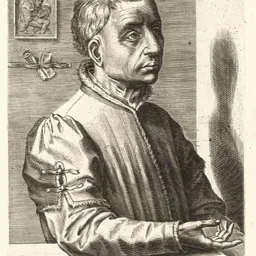
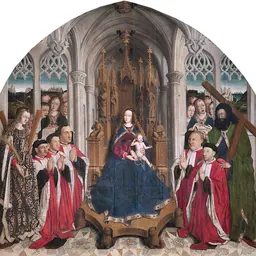
Related people
Same field, nearest in time


Contemporaries
People whose lives overlapped Rinaldo Boteram's


Frequently asked questions
Who was Rinaldo Boteram?
tapestry weaver and merchant from Brabant, active in Siena
When was Rinaldo Boteram born?
Rinaldo Boteram was born in 1417 in Brussels metropolitan area.
When did Rinaldo Boteram die?
Rinaldo Boteram died in 1484 in Brussels.
What was Rinaldo Boteram's occupation?
Rinaldo Boteram was a tapestry weaver, tapestry dealer, merchant and designer.
What nationality was Rinaldo Boteram?
Rinaldo Boteram's recorded nationality: Duchy of Brabant.
Sources & further reading
· DBpedia: Arnt van der Dussen
Cite this page
APA: Biography.guide. (2026). Rinaldo Boteram. https://biography.guide/rinaldo-boteram/
MLA: "Rinaldo Boteram." Biography.guide, https://biography.guide/rinaldo-boteram/.
Chicago: "Rinaldo Boteram." Biography.guide. https://biography.guide/rinaldo-boteram/.
Data last updated: 2026-09-20 · Spot an error? Report a correction.
Page generated 2026-09-27 05:08 UTC