
Rifaat al-Assad
Syrian former military officer and politician
About Rifaat al-Assad
Lived 1937 – 2026 (aged 88). Rifaat al-Assad was a politician and military personnel.
Rifaat Ali Suleiman al-Assad (; 22 August 1937 – 20 January 2026) was a Syrian military officer and politician. He was the younger brother of Hafez al-Assad and the uncle of Bashar al-Assad, who served successively as President of Syria. He is most famous for being the commanding officer of the ground operations of the 1982 Hama massacre.
After launching a failed coup attempt against Hafez al-Assad in 1984, Rifaat lived in exile in Europe for 36 years and returned to Syria in October 2021 after being found guilty in France of acquiring millions of euros diverted from the Syrian state. In September 2022, France's highest court, the Cour de Cassation, confirmed the ruling.
In August 2023, Switzerland issued an international warrant for Rifaat's arrest after its Federal Criminal Court demanded his extradition to prosecute him for his role in supervising ground operations of the 1982 Hama massacre. The warrant was issued as part of the proceedings related to the war crimes complaint filed in 2013 by the human rights organization "TRIAL International" at the Office of the Attorney General of Switzerland (OAG). In March 2024, the OAG charged Rifaat with numerous crimes committed in the February 1982 Hama massacre.
Early life and education Rifaat al-Assad was born to an Alawite family in the village of Qardaha, near Lattakia in western Syria on 22 August 1937. He studied Political Science and Economics at Damascus University and was later given an honorary PhD in Politics from the Soviet Academy of Sciences.
Early career Rifaat joined the Syrian Arab Army in 1958 as a first lieutenant, and was rapidly promoted after training in various Soviet military academies (mainly in the Yekaterinburg Artillery school). In addition to his military posture, Rifaat created the "League of Higher Graduates" (, ), which provided discussion forums on public affairs for Syrian post-graduates, outside the constraints of the Ba'ath party. With more than fifteen branches across Syria, this cultural project gathered tens of thousands of members. He had a pivotal role throughout the 1970s and, until 1984, many saw him as the likely successor to his elder brother. Hafez Assad appointed him second vice president in March 1984.
In 1976, he visited Lebanon as a guest of Tony Frangiyeh since they had close and personal ties.
On 28 June 1979, fifteen men were hanged in Damascus. They had been convicted of attempting to assassinate Rifaat al-Assad.
Foreign relations Numerous rumours tie Rifaat al-Assad to various foreign interests. Rifaat was close to King Abdullah of Saudi Arabia. Abdullah was married to a sister of Rifaat's wife, and Rifaat has on occasions—even after his public estrangement from the rulers in Syria—been invited to Saudi Arabia, with pictures of him and the royal family displayed in the state-controlled press.
In 1983, Rifaat met with PLO leader Yasser Arafat in an attempt to appease growing tensions between Syria and Arafat's loyalists.
Ion Mihai Pacepa, a general in the security forces of Communist Romania who defected to the U.S. in 1978, claimed that Rifaat al-Assad was recruited by Romanian intelligence during the Cold War. In Pacepa's 1996 novel Red Horizons, Romanian President Nicolae Ceaușescu is quoted as saying that Rifaat was "eating out of our hand" and went on to say: "Do I need a back channel for secret political communications? A way to inform Hafez secretly about my future discussions with Carter? Do I need to have somebody disappear in the West? Rifaat will take care of it. Now he can't do without my money." Pacepa later reasserted this allegation, describing Rifaat as "our well-paid agent" in a 2003 article in which he discussed the then Libyan leader Muammar Gaddafi.
Rifaat al-Assad contributed to the release of US politician and educator David S. Dodge on 21 July 1983. On 19 July 1982, Dodge was abducted by pro-Iranian militiamen, members of the Islamic Amal in Beirut, led by Hussein al-Musawi. He was first held in Lebanon and then kept captive in Iran until his release one year later. Through contacts in the Iranian regime of Khomeini, Rifaat was able to secure the release of Dodge and was publicly thanked by US president Ronald Reagan.
Hama massacre
In February 1982, as commander of the Defense Companies, he commanded the forces that put down a revolt in the city of Hama, by ordering his forces to shell the city with BM-21 Grad rockets, killing thousands of its inhabitants (reports of the total number of deaths range from between 10,000 and 40,000). This became known as the Hama Massacre. US journalist Thomas Friedman stated in his book From Beirut to Jerusalem that Rifaat later said that the total number of victims was 38,000.
Rifaat, however, has repeatedly denied playing any role in the Hama massacre. Rifaat al-Assad presented his version for the Hama massacre during the conference in Paris to form the Syrian National Democratic Council on 15 November 2011. He was also implicated in the 1980 Tadmor Prison massacre and acquired the sobriquet, the "butcher of Tadmor."
Rifaat al-Assad was also mentioned in a CIA report regarding drug smuggling activities in Syria during the 1980s, along with other Syrian officials such as Ali Haydar, Mustafa Tlass and Shafiq Fayadh.
Attempted coup d'état
When Hafez al-Assad suffered from heart problems in late 1983, he established a six-member committee to run the country composed of Abdul Halim Khaddam, Abdullah al-Ahmar, Mustafa Tlass, Mustafa al-Shihabi, Abdul Rauf al-Kasm and Zuhair Masharqa. Rifaat was not included, and the council consisted entirely of close Sunni Muslim loyalists to Hafez, who were mostly lightweights in the military-security establishment. This caused unease in the Alawi-dominated officer corps, and several high-ranking officers began rallying around Rifaat, while others remained loyal to Hafez's instructions.
In March 1984, Rifaat's troops, now numbering more than 55,000 with tanks, artillery, aircraft and helicopters, began asserting control over Damascus. A squadron of Rifaat's T-72 tanks took position at the central roundabout of Kafr Sousa and in Mount Qasioun, overlooking the city. Rifaat's forces set up checkpoints and roadblocks, put up posters of him in state buildings, disarmed regular troops and arbitrarily arrested soldiers of the regular Army, occupied and commandeered police stations, intelligence buildings, and state buildings; the Defense Companies rapidly outnumbered and took control over both the Special Forces and the Republican Guard.
In what at first seemed a compromise, Rifaat was made vice-president with responsibility for security affairs, but this proved a wholly nominal post. Command of the 'Defense Companies', which was trimmed down to an Armoured Division size, was transferred to another officer, and ultimately the entire unit was disbanded and absorbed into other units, like the 4th Mechanized Division, the Republican Guard, and the Airborne Special Forces Division. Rifaat was then sent to the Soviet Union on "an open-ended working visit". His closest supporters and others who had failed to prove their loyalty to Hafez were purged from the army and Ba'ath Party in the years that followed. Upon his departure, Rifaat acquired $US300 million of public money including a $US100 million Libyan loan. In 2015, he claimed that the money had been a gift from Crown Prince Abdullah of Saudi Arabia.
Exile in Europe
After Hafez exiled his brother following his abortive coup attempt in 1984, Rifaat lived in Europe for the next 40 years. Hafez allowed Rifaat to briefly return to Syria to attend his mother's funeral in 1992 but he was thereafter forced to return to Europe. He lived lavishly in exile,
In the 2010s, Rifaat owned a large property on the Costa del Sol, in Marbella, Spain; and a mansion in Avenue Foch in Paris, France.
After the death of Hafez's eldest son Bassel al-Assad in an auto crash in 1994, Rifaat sought to position himself as Hafez's successor, and returned to Syria again; however, Hafez named a younger son, Bashar al-Assad, instead, and maneuvered to eliminate all potential competition for Bashar's succession. Unhappy at being passed over, Rifaat returned to exile, where he established a London-based satellite television in 1997. Rifaat created a political party, also led by his son Somar, that criticized Hafez's regime and had contacts with various Syrian opposition figures. In 1999, Rifaat's supporters engaged in armed clashes with government forces in Latakia, leading to a crackdown that destroyed much of Rifaat's remaining network in Syria.
Distinctions
Ribbon Distinction Country Date Location Notes Reference 80px Order of Military Merit (Commander) Morocco 1974 Rabat Sharifian (Royal) Order of Military Merit in Morocco. Awarded by King Hassan II 80px Grand Cross of the National Order of the Legion of Honour France 1986 Paris Highest rank in the Order of the Legion of Honor in the Republic of France. Awarded by former president François Mitterrand
Criminal proceedings in Europe and return to Syria In Switzerland In December 2013, human rights organization "Trial International" filed criminal proceedings against Rifaat al-Assad. As commander of Defense Brigades that took part in the Hama Massacre, Rifaat was charged with organizing extrajudicial killings, large-scale torture, sexual violence, mass-rapes, summary executions and forced disappearances. In 2021, the Federal Office of Justice rejected the OAJ's request to issue an arrest warrant against Rifaat, on the ground that he was neither a Swiss national or resident.
In Spain and France Since 2014, Rifaat was accused of money laundering and aggravated tax fraud by French prosecutors. In addition, Spanish authorities have seized his assets and bank accounts in a money laundering investigation since 2017.
In June 2020, a Paris court sentenced Rifaat to four years in prison upon his conviction of money laundering and aggravated tax fraud by embezzling state funds from Syria and using them to build a property empire in Europe. (He was hospitalized in France in December 2019 with internal bleeding. ) Rifaat did not serve any of his jail sentence in France.
Return to Damascus In October 2021, Rifaat returned to Syria at the age of 84. President Bashar al-Assad allowed his uncle to return to the country after decades in exile in order "to avoid imprisonment in France". He returned to his former home in the Western Villas neighborhood of Mezzeh in Damascus. The next day, his daughter-in-law Rasha Khazem, the wife of his son Duraid Assad, was arrested along with her daughter Shams in Lebanon while they were attempting to fly out to Egypt.
Personal life and death Rifaat married four times and his polygamous marriages as well as the marriages of his children have produced strong alliances and ties with prominent families and prestigious clans within Syria and the Arab world. Tamadhin, another daughter, married a Makhlouf. Lama married Ala Fayyad, the son of Alawite General Shafiq Fayadh. Rifaat's eldest son, Mudar, married Maya Haydar, the daughter of the ultra-rich entrepreneur Muhammad Haydar from the prominent al-Haddadin Alawite tribe.
Rifaat died from complications of influenza in Dubai, on 20 January 2026, at the age of 88.
Following his death, French President Emmanuel Macron announced in July 2026 that France would return more than €50 million in frozen assets confiscated from Rifaat al-Assad's illicit gains to Syria for development projects, under a declaration of intent signed by French and Syrian officials.
Don’t just read it —
keep it.
Full-length biographies made to live with: read them, listen on the way to work, watch them tonight.
- E-book
- Audio
- Video
Instant download · yours to keep · every purchase keeps this site free
Important facts
Family & relationships
People in Rifaat al-Assad's life
Named in this biography and alive at the same time
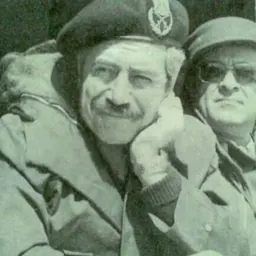
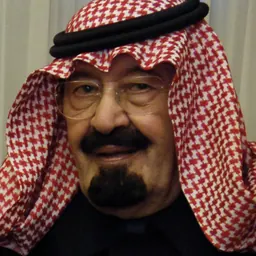


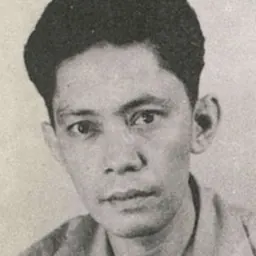



Related people
Same field, nearest in time



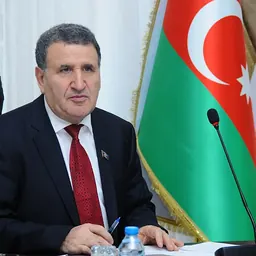
Contemporaries
People whose lives overlapped Rifaat al-Assad's


Frequently asked questions
Who was Rifaat al-Assad?
Syrian former military officer and politician (1937–2026)
When was Rifaat al-Assad born?
Rifaat al-Assad was born on 22 August 1937 in Qardaha.
When did Rifaat al-Assad die?
Rifaat al-Assad died on 20 January 2026 in Dubai.
What was Rifaat al-Assad's occupation?
Rifaat al-Assad was a politician and military personnel.
What nationality was Rifaat al-Assad?
Rifaat al-Assad's recorded nationality: First Syrian Republic, United Arab Republic, Syrian Arab Republic.
Sources & further reading
Cite this page
APA: Biography.guide. (2026). Rifaat al-Assad. https://biography.guide/rifaat-al-assad/
MLA: "Rifaat al-Assad." Biography.guide, https://biography.guide/rifaat-al-assad/.
Chicago: "Rifaat al-Assad." Biography.guide. https://biography.guide/rifaat-al-assad/.
Data last updated: 2026-09-20 · Spot an error? Report a correction.
Page generated 2026-09-27 05:25 UTC