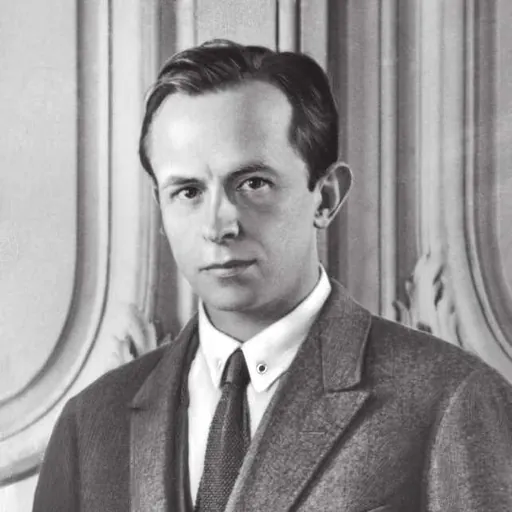
About Richard Vasmer
Lived 1888 – 1938 (aged 49). Richard Vasmer was a German and Russian numismatist, orientalist, historian and arabist.
Biography
Childhood and education
Vasmer was born on 9 October 1888 at 11 a.m. in a merchant family of Russian Germans (subjects of the German Empire) in Saint Petersburg. His father was Richard Julius Friedrich Vasmer (1853, Altona, Kingdom of Denmark – 1924, Berlin, Weimar Republic); his mother was Amalia Maria Julia, née Schaub (1862, Saint Petersburg – 1935, Berlin), daughter of academic architect K. A. E. Schaub. had an older sister, Maria. Richard was baptized in the Evangelical Lutheran rite on 16 January 1889 (Old Style). His godparent was V. V. Schaub.
In 1906, Vasmer enrolled in the Faculty of Philosophy at Leipzig University, studying until 1907. He studied Turkish, Persian, Arabic languages, and Arabic literature under Professor Hans Stumme. On 16 August 1907, he applied for admission to the "Arabic-Persian-Turkish-Tatar Department" of the Faculty of Oriental Studies, Saint Petersburg Imperial University, studying until 6 October 1910. The numismatics department had only two curators: head A. K. Markov and O. F. Retowski. The museum began hiring "inventory clerks" — employees for cataloging (the first, V. R. Focht, was hired in 1905, working until 1906). By 1909, under Markov and Retowski, four non-staff employees worked in the Numismatics Department: Focht again, S. A. Gamalov-Churaev, K. I. Simonalevich, and G. B. Meyer. In 1910, V. A. Shugaevsky and Vasmer were hired, followed by V. M. Alekseev and N. P. Bauer. including coins from nearly all pre-Mongol Muslim dynasties, Muslim exagia, weights, and stamps On 3 January 1914, Vasmer was granted the rank of Titular Councillor. On 26 October of the same year, he married Alida Pavlovna Nipp (1892–?), a subject of the German Empire. At the time of Vasmer's arrest, Alida worked as an assistant accountant at the Volodarsky Sewing Factory. In early December 1918, he signed a collective letter to People's Commissar of Culture Anatoly Lunacharsky and Vladimir Lenin requesting that exhibits evacuated to Moscow by the Russian Provisional Government not be displayed but returned to Petrograd for safekeeping. The letter was sent by Maxim Gorky, who added his signature. The Moscow exhibition was canceled, and by early 1920, all exhibits were returned to the Hermitage.
Since 13 December 1919, Vasmer worked as a research fellow in the Permanent Commission (later Section) of Numismatics and Glyptics of the Russian Academy of the History of Material Culture (RAIMK, later GAIMK). Later, In reality, the department was led by A. A. Ilyin after Markov. After the exhibition, he was able to devote sufficient time to scholarly research. he was elected a foreign corresponding member of the Royal Swedish Academy of Letters, History and Antiquities. In 1929, GAIMK underwent a "purge of class-alien elements," dismissing over half its staff, and the Numismatics and Glyptics Section was disbanded. or on 15 December 1931. On 11 March or 1 October 1930, Vasmer was reappointed head of the Eastern Numismatics Section of the Hermitage. In 1932, he was appointed professor. the Plenipotentiary Representation of the OGPU under the NKVD of the USSR in the Leningrad Military District arrested Richard Vasmer in the "Russian National Party case" ("Slavists case"). He was the last (or one of the last) Leningrad resident arrested in this case. He was charged under Article 58 of the Criminal Code of the RSFSR 1926, accused of "being part of a counterrevolutionary fascist organization" (referred to as Richard Richardovich in case documents). Spassky, Avtonomov, and Lindros were implicated to suggest preparation of terrorist acts: a Kharkov exhibition of antique weapons involving Hermitage exhibits was allegedly intended for "arming insurgent groups." In reality, Avtonomov and Lindros prepared exhibits (both were weapons collectors), while Spassky, who worked in the Kharkov museum until 1931, was uninvolved. Vasmer admitted his "guilt". on 29 March 1934 by the OGPU collegium. In both camps, he worked in the office of the Central Asian Labor Camps Administration. In 1935, his wife made apparently futile efforts to secure permission for him to work in Tashkent museums in his field. She wrote to Vernadsky, who was unaffected by the case, and he wrote to I. Yu. Krachkovsky. Alida Pavlovna's letter: Richard Richardovich Vasmer is in a concentration camp in the city of Tashkent and works in the Administration of Central Asian Camps (Tashkent, Lenin St., 31). He works in the office on various tasks, such as filing papers, courier delivery, etc. My request is that you employ my husband (like many other scholars) in his specialty. For example: 1) In Tashkent, there is a Museum (Lenin St., corner of Karl Marx St.), where Eastern coins are stored unpacked in boxes;
2) In Samarkand, there is also a Museum, where the late archaeologist Vyatkin worked; as Richard Richardovich informed, there is still no replacement there.
R. R. Vasmer has worked at the Hermitage for 24 years. During these years, and published 54 researches; except for one, all were published after 1917. A specialist's review and request regarding R. R. Vasmer would provide grounds for changing his employment from clerical work to his specialty.Vernadsky's letter: Some sources suggest he died in 1936 from pneumonia in Separate Labor Reeducation Camp He was rehabilitated on 28 November 1956 by the Military Tribunal of the Leningrad Military District. The rehabilitation decree stated: "…no objective evidence of the guilt of those involved in the case existed, and additional investigation materials indicate the case was fabricated through coerced confessions and false accusations of innocent individuals".
Contributions alt=Reverse and obverse of a coin of Ahmad ibn Muhammad, Saffarid emir. 958–959 Coin of Abu Ja'far Ahmad ibn Muhammad, Saffarid emir. 958–959 From 1910, Vasmer worked on cataloging Eastern coins at the Hermitage. His primary interest was Kufic coins (coins with inscriptions in the Kufic script) numismatic journals of his time: The Numismatic Chronicle, Zeitschrift für Numismatik, Berliner Münzblätter, Numismatische Zeitschrift, and others. He wrote for the English and German versions of the Encyclopaedia of Islam and for the international encyclopedic In 1930, Vasmer prepared a detailed manuscript describing the large Bezlyudovsky hoard of 1,200 dirhams found near Kharkiv; the coin catalog he compiled for this hoard was published only in 2014.
Periodization of dirham circulation in Eastern Europe Based on his work with these hoards, Vasmer drew conclusions about the patterns of dirham influx into Eastern Europe, noting differences in the composition of Arab coin hoards found in the region. "The first to view Kufic hoards as systematically formed coin complexes rather than random collections was R. R. Vasmer... From a chaotic mass of coins, a hoard became a source reflecting specific patterns. This opened the possibility of scientifically studying a hoard: how it was accumulated and under what circumstances it was buried" (G. A. Fyodorov-Davydov). "R. R. Vasmer's works brought clarity to phenomena previously seen as lacking system" (V. L. Yanin).
Vasmer first expressed the idea of these patterns in a report titled "Topography of Hoards with Ispekhbed Coins," delivered at a meeting of the Numismatics and Glyptics Commission of RAIMK on 23 June 1923. He later developed and refined this idea in articles such as "Kufic Coin Hoard Found in Novgorod in 1920" (1925), "Two Kufic Coin Hoards" (1927), "Zavalishensky Kufic Coin Hoard of the 8th–9th Centuries" (1931), and finally formulated it in the article "On the Publication of a New Topography of Kufic Coin Finds in Eastern Europe" (1933) as follows:The earliest hoards (800–825 CE) consist almost exclusively of Abbasid dirhams, with a significant proportion of African coins among them. This is followed by a period when the majority still consists of Abbasid dirhams, but these coins are minted in Asia, with a high percentage of coins minted in the domains of the Tahirids and almost no African coins (825–905 CE). The third period (905–960 CE) is characterized by the complete dominance of Samanids. Finally, in the hoards of the fourth period (960–1012 CE), alongside a mass of Samanid dirhams, there are also significant quantities of Buyids and Ziyarids."Vasmer, using the example of Eastern coin finds, developed a new historical approach to their systematization and study. He showed how the composition of coin finds systematically changes in certain periods and established that the composition of a find can fairly accurately determine the time of its formation". The debate between Vasmer and the historian of Rus P. G. Lyubomirov on the interpretation of numismatic data as a historical source was significant in forming the historical conclusions of this article: Lyubomirov believed that Arab dirhams penetrated Eastern Europe as early as the 7th century, while Vasmer noted that hoards with coins from this period were buried only in the 9th century.
Vasmer placed his observations within a broad historical context: he "studied the corpus of Eastern European hoards of the 9th–10th centuries with unparalleled thoroughness and reconstructed, based on the typological study of numismatic artifacts and Arab written tradition, the key stages of the compositional dynamics of monetary circulation in the context of the political history of the Islamic civilisation and its neighbors". The periodization of Kufic dirham circulation in Eastern Europe developed by Vasmer, with some refinements, is still accepted in scholarship today.
Conclusions on hoards with Arab coins found in the Baltic and Finland
Noting differences in the composition of Eastern European and Finnish hoards, Vasmer suggested in the article (1927) that dirhams were imported to Finland not from Slavic regions but from the West.
In East Slavic lands, coins of the Samanid emir Nuh II are frequently found, while in Baltic countries such coins are absent, but coins minted by the Marwanids, Uqaylids, and Ilek-khans are present. Vasmer explained in the article (1929) the differences in hoards from the last quarter of the 10th century by political events in Rus that hindered the export of Arab silver, namely the conflicts among the sons of Svyatoslav; this idea was later questioned.
Vasmer was the first to suggest that a coin hoard with Arab legends found in Kohtla-Järve in 1923 reflects Khazar minting — this hypothesis was questioned by V. V. Bartold, but was later confirmed by A. A. Bykov.
Evaluations and critics Dinar of Hormizd I Kushanshah, ruler of the Bactrian Kushano-Sasanian Kingdom. Circa 285–300 CE American historians Professors Thomas S. Noonan and Roman Kovalev describe Fasmer as "the greatest Russian specialist in Islamic numismatics of the 20th century". According to Tuukka Talvio, Fasmer's published works are "an impressive monument to too short a life. Numismatist Eduard von Zambaur described the scholar's activities as "highly fruitful".
As early as 1938, Swedish archaeologist Ture Arne published a brief obituary based on rumors of Fasmer's death, writing:Richard Fasmer was perhaps the foremost contemporary expert in Eastern numismatics. He worked in this complex field with remarkable speed and confidence and was able to draw interesting and important historical conclusions from the rich coin hoards discovered in the Soviet Union or neighboring countries. Like Russian scholars in general, he was extremely courteous and helpful to colleagues seeking his advice. The renowned Russian and Soviet Arabist Academician I. Yu. Krachkovsky wrote in his work "Essays on the History of Russian Arabic Studies," first published in 1950 (before Fasmer's rehabilitation), that, thanks to his thorough familiarity with numismatic and narrative materials, Fasmer, "in his exemplary and precise works," "contributed to clarifying a number of issues related to the history of the Caliphate, particularly Central Asia and the Caucasus". The future academician and historian V. L. Yanin described Fasmer's studies as "classic" in his candidate dissertation, defended in 1954, before the numismatist's rehabilitation. Archaeologist V. V. Kropotkin similarly praised Fasmer's works (in the monograph "Economic Connections of Eastern Europe in the First Millennium CE," Moscow, 1967. Historian Professor M. B. Sverdlov highlighted the broad scope of Fasmer's work, the abundance of material, the analysis of sources, and the rigor of his conclusions. According to historian and philologist V. S. Kuleshov: Fasmer's work style remains an unattainable pinnacle of Eastern numismatics in Russia and worldwide, and is characterized by a close integration of the tasks of documenting coin complexes and typological identification of coins with questions of source studies of the history of Islamic states, dynasties, and regions as reflected in numismatic artifacts and Arabic-language historiography. To an even greater extent than Kh. D. Fren, Fasmer masterfully utilized facts from the Arabic written tradition to clarify questions of the numismatic history of cities (mints), dynasties (issuers), and states (regions of minting) of the Abbasid and post-Abbasid periods. These facts are essential for the most precise identification of coins in Eastern European circulation during the Viking Age. <…> The most significant drawback of R. R. Fasmer's legacy in the field of numismatic source studies is his highly specialized and concentrated style, which is difficult for non-specialists to understand.
Legacy
To mark the 125th anniversary of Fasmer's birth, the Numismatics Department of the Hermitage held the Fasmer Numismatic Readings on 16 October 2013. To coincide with this anniversary, a collection of articles on the Bezlyudovsky hoard was published in 2014 by the Academy of Sciences of the Republic of Tatarstan.
As part of the "Last Address" project, on 26 October 2017, a commemorative plaque was installed in the courtyard of the Hermitage Theatre at 32 Palace Embankment, where Fasmer lived at the time of his arrest.
Max Fasmer dedicated his famous etymological dictionary to his father and brother, but in the Russian translation of the dictionary, the dedication was removed for political reasons, and it continues to be published without it. Oxford University historian Marek Jankowiak dedicated his article on Arab dirhams to the memory of Richard Fasmer.
Vasmer's works
Separate editions
[Vitebsk and Ugodichev hoards.]
Translation made by Vahan Inglizyan: Originally published in parts in the journal Handes Amsorya.
Articles
[Vasmer's additions are throughout the article and marked with initials R. V.]
[Description of Western European coins made by N. P. Bauer]
[Summary in German]
Articles on Oriental Numismatics (in German) in 2nd, unchanged ed. Berlin: de Gruyter, 1970.
[s. v. Māzandarān]
Don’t just read it —
keep it.
Full-length biographies made to live with: read them, listen on the way to work, watch them tonight.
- E-book
- Audio
- Video
Instant download · yours to keep · every purchase keeps this site free
Important facts
People in Richard Vasmer's life
Named in this biography and alive at the same time



Related people
Same field, nearest in time
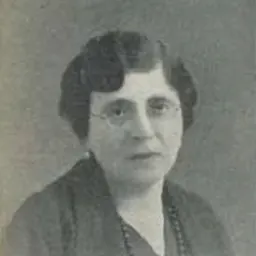



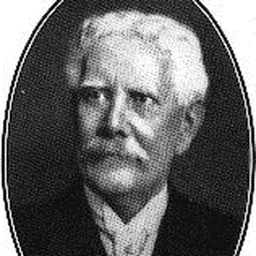
Contemporaries
People whose lives overlapped Richard Vasmer's

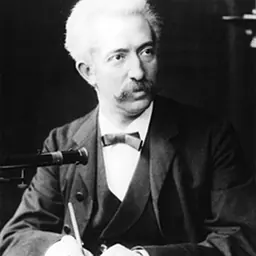
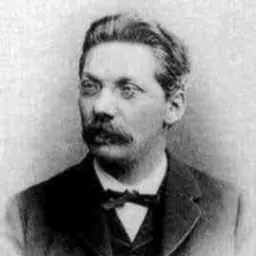


Frequently asked questions
Who was Richard Vasmer?
Soviet orientalist-numismatist (1888-1938)
When was Richard Vasmer born?
Richard Vasmer was born on 9 October 1888 in Saint Petersburg.
When did Richard Vasmer die?
Richard Vasmer died on 22 February 1938 in Tashkent.
What was Richard Vasmer's occupation?
Richard Vasmer was a numismatist, orientalist, historian and arabist.
What nationality was Richard Vasmer?
Richard Vasmer was German and Russian.
Sources & further reading
Cite this page
APA: Biography.guide. (2026). Richard Vasmer. https://biography.guide/richard-vasmer/
MLA: "Richard Vasmer." Biography.guide, https://biography.guide/richard-vasmer/.
Chicago: "Richard Vasmer." Biography.guide. https://biography.guide/richard-vasmer/.
Data last updated: 2026-09-22 · Spot an error? Report a correction.
Portrait: Wikimedia Commons · author & licence
Page generated 2026-09-27 05:01 UTC